
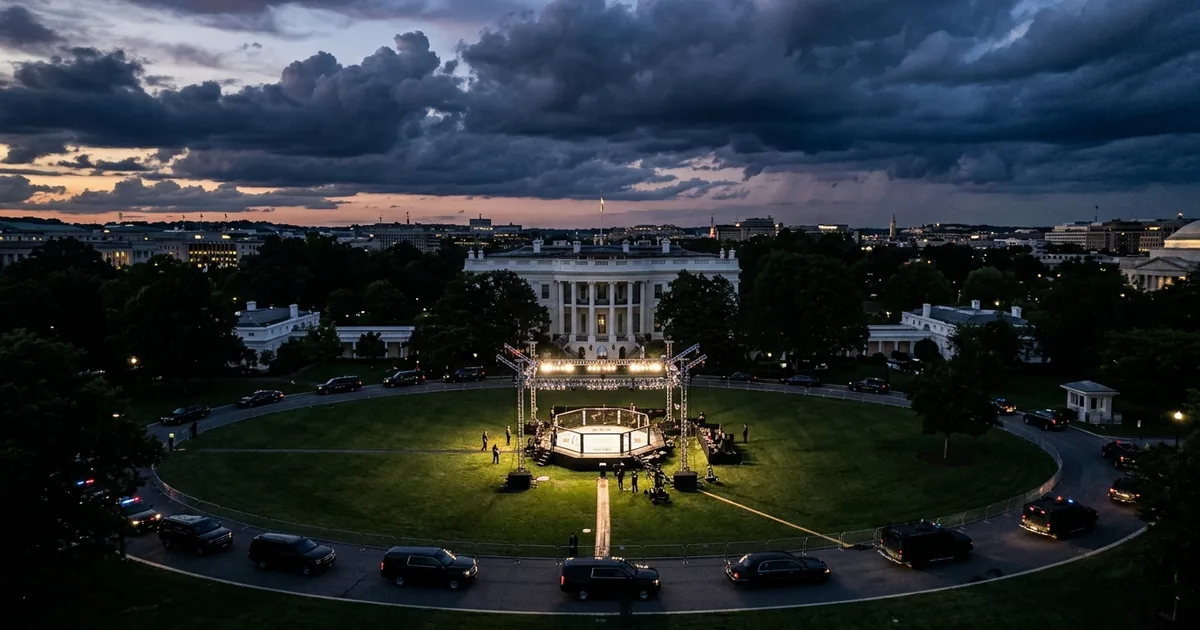
The FBI has arrested five people and identified 23 others in connection with an alleged plot to attack the UFC Freedom 250 event at the White House using explosive-laden drones and a pre-staged sniper team. The sheer operational ambition of this plan, if the allegations hold, represents one of the most sophisticated domestic terror plots disrupted in recent years, and it landed in the middle of a political moment where the domestic extremism conversation has been deliberately downgraded.
What Investigators Say They Found
The alleged scheme was built around a multi-phase assault designed to maximize casualties and chaos. According to federal officials who detailed the plot this week, the first wave involved explosive drones targeting buildings adjacent to the event, designed to trigger a mass evacuation and funnel panicked crowds toward a pre-positioned sniper team. A second wave allegedly planned to storm the White House gate itself during the confusion.
The plan’s organizational backbone ran through encrypted channels. The alleged ringleader, identified by the online moniker “Shepherd,” reportedly used Signal to coordinate staging locations, sniper positions, drone flight paths, escape routes, and communications protocols across a network spanning at least four states. That level of operational security and compartmentalization is not the hallmark of a lone-wolf fantasy. It mirrors the kind of planning that counterterrorism analysts associate with organized cells.
The FBI first learned of the threat on June 10, NBC News reported, and moved quickly to secure probable cause for an initial arrest in Cincinnati. Within days, the operation expanded to at least 12 FBI field offices coordinating across the country. All five people currently in custody are American citizens, and the Bureau has stated that no foreign nexus has been established.
The Motivation and What It Signals
According to court documents, at least one suspect told investigators the goal was to target “capitalist elites,” “billionaires,” and politicians who received donations from the American Israel Public Affairs Committee. That ideological framing places this squarely in the domestic extremism category that has been growing steadily on federal watchlists over the past several years.
The target selection itself tells a story. The UFC Freedom 250 was not some obscure event. It was a high-profile spectacle at the most heavily secured address in America, designed to project power and celebration. Choosing it as a target suggests the alleged plotters were making a political statement as much as planning an attack, selecting a venue where the symbolic value would amplify the impact.
Whether the plot had any realistic chance of success against White House-level security is a legitimate question. Counter-drone systems, sniper counter-teams, and Secret Service protocols make the perimeter around the White House among the hardest to penetrate in the world. But the gap between capability and intent matters in terrorism cases. Federal prosecutors are charging conspiracy and weapons-of-mass-destruction offenses, which carry potential life sentences, precisely because the preparation was allegedly serious enough to constitute a genuine threat regardless of ultimate feasibility.
Domestic Extremism in a Shifting Policy Landscape
This disruption arrives at an uncomfortable moment for the current administration’s counterterrorism posture. The FBI has been recalibrating its strategy under political pressure to prioritize cartel-related threats over domestic extremism investigations. Resources have been redirected, personnel reassigned, and the rhetorical emphasis has shifted decisively toward border security and transnational criminal organizations.
A 23-person domestic network allegedly coordinating explosive drone strikes and sniper positions across state lines does not fit neatly into that reorientation. The operational complexity described in the charging documents, the multi-state coordination, the encrypted command structure, the multi-phase tactical plan, suggests an organizational capacity that demands sustained intelligence resources to detect and disrupt. The fact that the FBI caught this one is a success story. The question it raises is whether the next network of this scale gets the same attention with fewer analysts watching the domestic space.
The use of consumer drones as potential weapons delivery systems adds another layer of concern. Security planners have warned about this threat vector for years. Drone technology is cheap, widely accessible, and increasingly autonomous. The Pentagon and Secret Service have invested heavily in counter-drone systems for hardened targets, but the alleged plan exploited a different vulnerability entirely: using drones to create panic and herd crowds rather than to directly strike a fortified position. That tactical adaptation is harder to defend against because it targets event security broadly, not just a single protected principal.
What Happens Next
The investigation remains active. With 23 identified members in the alleged network and only five in custody, more arrests could follow. Federal prosecutors are expected to present additional evidence as the cases progress through the court system, and the scope of the conspiracy charges suggests they believe the network extended well beyond the five people currently detained.
For the security establishment and the public alike, the takeaway is not just that this plot was stopped. It is that the organizational model it allegedly employed, encrypted coordination, drone weaponization, multi-phase assault planning, represents a blueprint. Whether other groups can or will replicate it is the question the FBI clearly felt was urgent enough to deploy a dozen field offices to answer.