
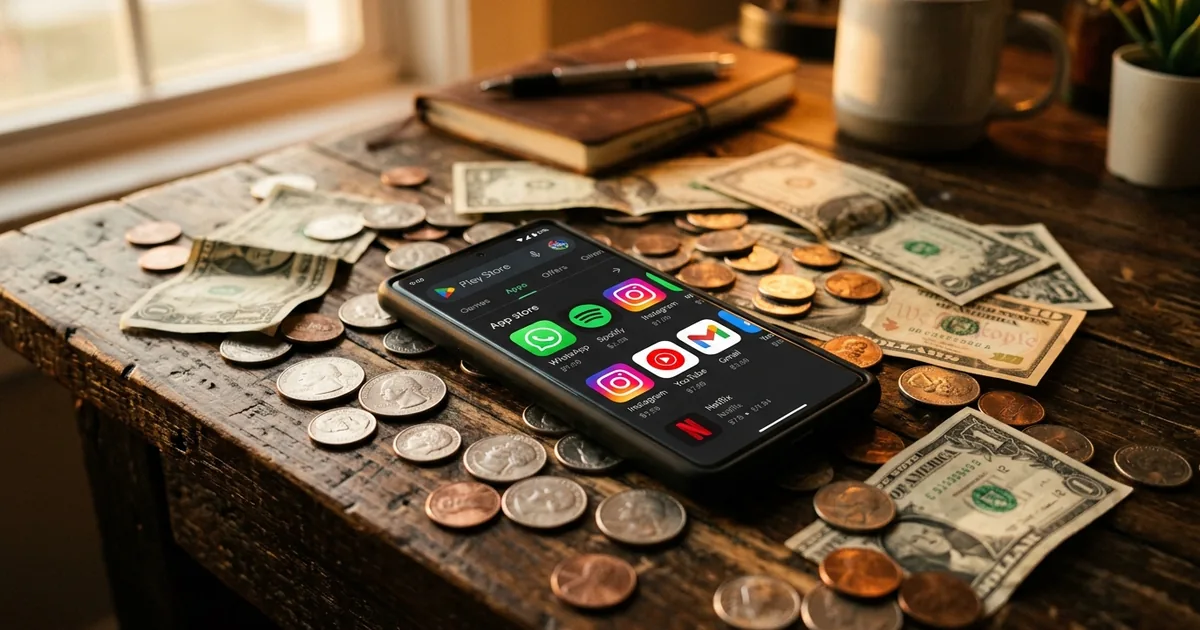
Starting June 30, Google is cutting its Play Store commission from 30% to as low as 10%, and for the first time, developers can legally direct users to pay outside of Google’s billing system.
This is not Google being generous. This is Google losing a courtroom battle to Epic Games and being forced to share the sandbox.
The New Fee Structure
The numbers tell the story. Under the old regime, Google took 30% of every transaction on the Play Store, with a reduced 15% rate for developers earning under $1 million annually. The new structure, which takes effect June 30, looks dramatically different.
Developers pay 10% on their first $1 million in annual earnings. Above that threshold, the rate splits based on how the user found the app: 20% for new installs, 25% for existing installs. Subscription revenue gets the most favorable treatment at just 10%, with a supplementary 5% fee if the developer uses Google Play Billing.
That last detail is the real headline. The supplementary fee structure means Google is acknowledging, for the first time, that its billing system is a service developers can choose, not a toll they must pay. Developers now have the explicit right to direct users toward external or alternative payment methods. Before this settlement, doing so was grounds for removal from the store.
For a developer earning $5 million annually, the difference is substantial. Under the old system, Google took $1.5 million. Under the new one, depending on the mix of new vs. existing users, the take could drop to somewhere between $900,000 and $1.1 million. That is real money, especially for mid-size studios and independent developers operating on thin margins.
How Epic Games Made This Happen
None of this would exist without Epic Games and its CEO Tim Sweeney, who has spent the better part of six years waging legal war against both Apple and Google over app store commissions. The fight started in August 2020 when Epic deliberately violated both companies’ payment rules by adding a direct payment option to Fortnite, daring Apple and Google to kick the game off their platforms.
Both companies took the bait, and Epic sued both. The Google case, unlike the Apple litigation, resulted in a decisive jury verdict finding that Google had illegally maintained a monopoly over Android app distribution. As Ars Technica detailed, the settlement formally ending that antitrust battle is what produced the fee reductions taking effect this week.
The distinction between the Google and Apple outcomes matters. Apple’s case resulted in a more ambiguous ruling that left the company’s core commission structure largely intact, though it was forced to allow some external payment links. Google’s loss was more comprehensive: a jury found monopoly behavior, and the settlement requires structural changes to how the Play Store operates, not just marginal fee adjustments.
The Rollout Timeline
The geographic rollout is staggered in a way that reflects both regulatory pressure and strategic calculation. Europe, the UK, and the US get the new rates starting June 30. Australia, Japan, and South Korea follow by the end of 2026. The rest of the world gets access by September 2027.
That ordering is not random. Europe has been the most aggressive regulator of app store practices, with the Digital Markets Act imposing its own set of requirements on platform companies. The UK’s Competition and Markets Authority has been actively investigating app store fees. The US is where the Epic lawsuit was litigated. These are the markets where Google faces the most immediate legal and regulatory risk, so they go first.
The delay for the rest of the world is worth watching. As TechCrunch reported when the settlement was first announced, Google structured the agreement to give itself maximum runway in markets where regulatory pressure is lower. Developers in Southeast Asia, Latin America, and Africa will wait over a year longer for the same terms their American and European counterparts get next week.
What This Means for the App Economy
The ability to direct users to external payment methods is potentially more significant than the fee reduction itself. Under the old system, a developer who wanted to avoid Google’s 30% cut had no legal way to tell users “hey, you can buy this cheaper on our website.” That information asymmetry was a core part of how Google maintained its commission rates: if users never knew alternatives existed, they would never seek them out.
Now developers can build that awareness directly into their apps. Expect to see in-app prompts, pricing comparisons, and direct links to web-based checkout flows. Some developers will pass the savings to consumers in the form of lower prices on external channels, creating a visible price differential that further erodes Google’s billing monopoly.
The subscription math is particularly interesting. At 10% base (or 15% with Google Play Billing), subscription apps now face a dramatically lower cost structure on Android than on iOS, where Apple still charges 15-30% depending on the program. For streaming services, productivity tools, and other subscription-heavy apps, Android just became a meaningfully more attractive platform from a margin perspective.
The Bigger Competition Question
Google’s concession raises an obvious question: what about Apple? The iPhone maker has made smaller concessions under regulatory pressure, particularly in Europe, but its core 30% commission structure remains intact in most markets. The Epic v. Apple case produced a less definitive result, and Apple has been far more aggressive about defending its payment monopoly in court and in lobbying.
The gap between Android’s new 20% ceiling and Apple’s 30% standard rate creates competitive pressure that did not exist before. If developers start building better Android-first experiences because the economics are more favorable, that shifts the platform calculus in ways Apple cannot ignore indefinitely.
For Google, the fee cuts are expensive in the short term, Play Store revenue will take a visible hit, but they represent a calculated bet that a more open ecosystem attracts more developers, more apps, and ultimately more revenue on a larger base. It is the same logic that made Android’s open-source model successful in the first place: compete on ecosystem size rather than per-transaction extraction.
What Developers Should Do Now
The immediate action item is straightforward: review your payment infrastructure before June 30. If you have been paying 30% and can now offer direct checkout at a lower cost, the math on building an external payment flow just changed dramatically. The supplementary 5% fee for Google Play Billing means the effective choice is between 15% (Google Billing) and whatever your external payment processor charges (typically 2.9% plus per-transaction fees).
For most developers, the answer is obvious. The era of Alphabet’s unchallenged platform dominance is giving way to something more competitive, and developers who move quickly on alternative payment options will capture the margin advantage first.
Tim Sweeney spent six years and untold legal fees to get here. Every developer who benefits from the new rates owes him a quiet nod of thanks, whether they play Fortnite or not.