
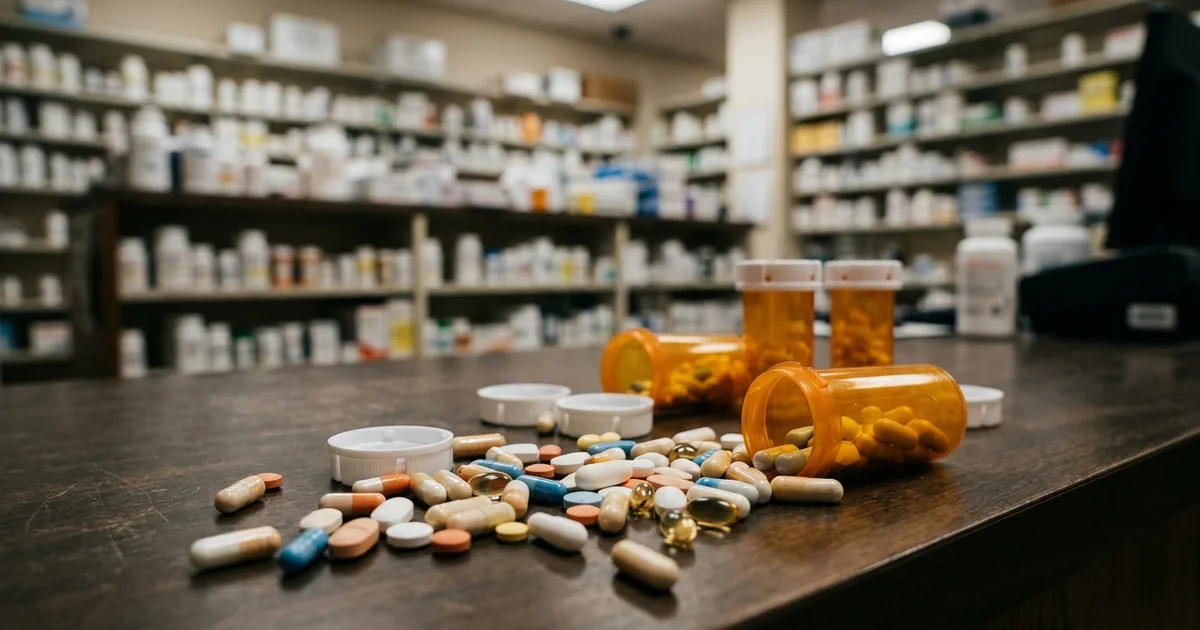
The FDA has recalled 11,460 bottles of Chlorthalidone tablets after the pills failed dissolution testing, meaning they may not dissolve properly in your body and could be flat-out ineffective.
If you take this common blood pressure medication, you need to check your bottle right now.
What Got Recalled
The recall covers two specific products: 100-count bottles with the code 64980-599-01 (batch RISA24001) and 1,000-count bottles with the code 64980-599-10 (batch RISB24002). Both are Chlorthalidone tablets, USP, at the 25-milligram dose. The manufacturer, India-based Inventia Healthcare Limited, initiated a voluntary recall on June 5. The bottles were distributed across the United States by Rising Pharma Holdings, Inc., a New Jersey-based pharmaceutical company.
If you are staring at a bottle of Chlorthalidone right now, flip it over. The product code and batch number are printed on the label. If yours matches either of those combinations, do not stop taking the medication on your own. Call your doctor or pharmacist first, because abruptly stopping blood pressure medication can cause dangerous rebound hypertension.
Why “Failed Dissolution” Matters
The technical reason for this recall, “failed dissolution specifications,” sounds bureaucratic but is actually alarming. Dissolution testing measures whether a pill breaks down properly in conditions that simulate your digestive system. If a tablet fails dissolution testing, it means the active ingredient may not be released into your bloodstream at the rate and amount that the drug is designed to deliver.
In practical terms: you could be taking your blood pressure medication every day, doing everything your doctor told you to do, and getting little or no therapeutic benefit. Your blood pressure readings might be creeping up, and you would have no way to know the problem was the pill itself rather than your body’s response to the drug.
This is not a contamination issue or a case where the wrong ingredient ended up in the bottle. The pills contain the right drug at the right dose. They just may not work properly once you swallow them. That distinction matters for how you think about the risk: this is not a “you might get sick from the pill” recall. It is a “the pill might not be protecting you” recall. For a drug that treats hypertension, that silent failure mode is genuinely dangerous.
The FDA’s Risk Classification
The FDA classified this as a Class II recall, which the agency defines as a situation where “use of or exposure to a violative product may cause temporary or medically reversible adverse health consequences.” That is the middle tier of the FDA’s three-level recall system. Class I is the most serious, reserved for situations where there is a reasonable probability of serious adverse health consequences or death. Class III is the least serious, covering products unlikely to cause any adverse health consequences.
Class II might sound reassuring compared to the worst-case scenario, but context matters here. Uncontrolled high blood pressure is one of the leading risk factors for heart attack, stroke, kidney disease, and heart failure. If you have been taking pills that do not dissolve properly for weeks or months, the “temporary” adverse consequence could be a sustained period of inadequately controlled blood pressure, and the medical consequences of that are not always reversible.
The FDA’s classification system assesses the product defect itself, not the downstream clinical outcomes that might result from the defect. A pill that does not dissolve is, in isolation, a moderate problem. A patient whose blood pressure spikes because their medication stopped working is a much more serious problem. The recall classification does not fully capture that second-order risk.
Chlorthalidone: A Widely Prescribed Drug
Chlorthalidone is a thiazide-like diuretic, one of the most commonly prescribed classes of blood pressure medication in the United States. It works by helping your kidneys remove excess sodium and water from your body, which reduces blood volume and lowers blood pressure. Doctors often prescribe it as a first-line treatment for hypertension, either alone or in combination with other medications.
The drug has been around for decades and has a strong evidence base. Multiple large clinical trials have demonstrated its effectiveness at reducing cardiovascular events. It is on the World Health Organization’s List of Essential Medicines. In other words, this is not some niche specialty drug; it is a workhorse medication that millions of Americans rely on every day.
That broad prescribing base is what makes a dissolution failure recall particularly concerning. As TODAY reported, the 11,460 bottles represent a relatively small fraction of the total Chlorthalidone supply in the US market, but for the patients who received those specific batches, the impact is immediate and personal.
What You Should Do
First, check your bottle. Look for the product codes and batch numbers listed above. If you have a match, contact your pharmacy. They should be able to replace the recalled medication with an unaffected batch or an alternative product.
Second, do not stop taking blood pressure medication without talking to your doctor. This point cannot be stressed enough. The risks of uncontrolled hypertension are serious, and abruptly discontinuing a diuretic can cause rebound fluid retention and blood pressure spikes. Your doctor can help you transition to an alternative medication safely.
Third, check your blood pressure. If you have a home monitor, take a few readings over the next several days and share them with your healthcare provider. If your numbers have been trending upward and you cannot figure out why, a defective medication batch might be the explanation.
As Fox Business reported, the recall has drawn national attention precisely because blood pressure medication is the kind of drug people take every day without thinking about it. You trust that the pill in the bottle does what it is supposed to do. When that trust breaks down, even for a specific batch from a specific manufacturer, it raises uncomfortable questions about pharmaceutical quality control and the FDA’s ability to catch problems before they reach patients.
The Manufacturing Quality Question
This recall originated with a product manufactured in India by Inventia Healthcare Limited. India is the world’s largest supplier of generic pharmaceuticals, producing roughly 20% of the global supply. The vast majority of Indian-manufactured generics meet quality standards and perform exactly as intended. But the country’s pharmaceutical industry has faced persistent scrutiny over manufacturing quality, with the FDA issuing warning letters and import alerts to Indian facilities at a higher rate than facilities in most other countries.
The broader question this recall surfaces is one of supply chain visibility. Rising Pharma Holdings distributed the product in the US, but the manufacturing and quality control happened on the other side of the world. When a dissolution failure occurs, how quickly does the information travel from the manufacturing floor to the patient’s medicine cabinet? In this case, the voluntary recall was initiated on June 5, but the WHO’s essential medicines framework and domestic regulatory processes create layers of delay between detection and patient notification.
For the 11,460 bottles in question, the most important thing is simple: check your medication, talk to your doctor, and do not assume the pill is working until you have confirmed your batch is not affected. Blood pressure is called the “silent killer” for a reason. A pill that silently stops working is a particularly cruel version of that problem.