
U.S. Defense Secretary Pete Hegseth is facing mounting outrage and legal scrutiny after reports that he effectively ordered a “no survivors” strike on an alleged drug‑running boat in the Caribbean — a move critics say crosses straight into war‑crime territory.
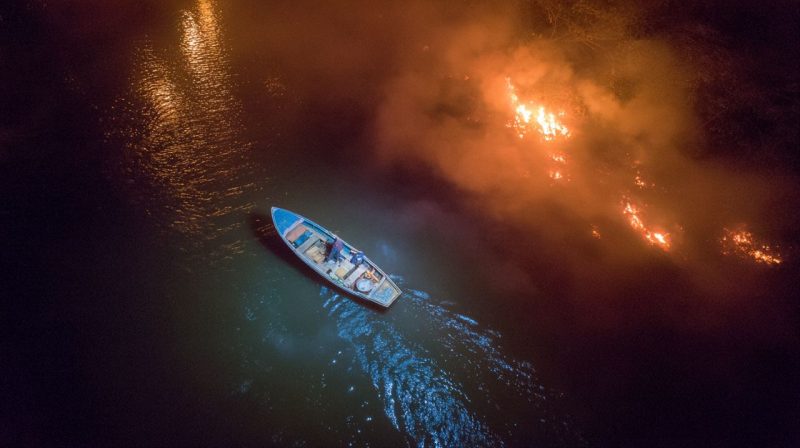
The controversy centers on a September 2 operation in the Caribbean, where U.S. forces targeted a suspected narcotics vessel with 11 people onboard. According to a detailed reconstruction of the mission, the first missile strike destroyed the boat but left two people alive, clinging to the wreckage.
What happened next is what’s now shaking Washington:
- Adm. Frank M. “Mitch” Bradley, then overseeing the mission from Fort Bragg, allegedly ordered a second strike that killed the survivors in the water.
- Two officials with direct knowledge said the order was meant to fulfill Hegseth’s verbal directive to “kill everybody” aboard the vessel.
Since September, U.S. forces have destroyed at least 22 vessels, killing more than 80 people across the Caribbean and eastern Pacific in what the Trump administration brands a new front in the war on “narco‑terrorists” linked to Venezuela’s Tren de Aragua gang and other cartels.
Hegseth Says It’s ‘Fake News.’ Critics Say It Looks Like a War Crime.
Hegseth has gone on offense, denying that anything illegal happened and blasting the coverage as a hit job.
In a statement and a post on X, Hegseth insisted:
- The operations are “lethal, kinetic strikes” by design.
- Current missions are “lawful under both U.S. and international law, with all actions in compliance with the law of armed conflict.”
- Every person targeted is allegedly “affiliated with a Designated Terrorist Organization.”
He’s also accused outlets reporting on the incident of “fabricated, inflammatory, and derogatory reporting to discredit our incredible warriors.”
The Pentagon’s top spokesman Sean Parnell called the broader narrative “completely false,” insisting that operations against “narcoterrorism” have been a “resounding success.”
But legal experts and lawmakers are openly questioning whether that line can survive contact with the Geneva Conventions.
The Law: Survivors in the Water Are Supposed to Be Rescued, Not Targeted
At the heart of the dispute is a very basic question: once you’ve blown up a boat and you’re looking at survivors in the water, what are you allowed to do?
Under the laws of war, including the Geneva Conventions, wounded or shipwrecked combatants must be collected and cared for, not deliberately killed. That’s not a gray area; it’s one of the foundational rules.
Legal and human‑rights experts argue that if the reporting is accurate and survivors were intentionally targeted:
- You’re no longer in “combat engagement” territory.
- You are in “premeditated killing outside of armed conflict,” which one expert flatly calls by its plain name: murder.
The Trump administration’s workaround is to say there is an armed conflict. Officials have argued that:
- Drug cartels designated as “foreign terrorist organizations” are “non‑state armed groups” at war with the United States.
- The U.S. is in a “non‑international armed conflict” with these groups — a framing that tries to pull the entire boat‑strike campaign under the laws of war and self‑defense.
But there are big problems with that claim:
- The alleged traffickers on these boats pose no imminent threat to the U.S. homeland, and there’s no battlefield in the conventional sense.
- Fentanyl — the crisis repeatedly cited by Trump and Hegseth — largely does not come from Venezuela, as narcotics experts have pointed out.
- An internal Justice Department memo reportedly attempting to shield U.S. personnel from future criminal prosecution does not block potential international or foreign‑court liability.
In other words: the legal story the administration is telling and the fact pattern emerging from these strikes may not line up.
Congress Pushes for Answers: Bipartisan Heat on Hegseth
The backlash on Capitol Hill is notable not just because it’s loud, but because it’s bipartisan.
- Sen. Roger Wicker (R‑Miss.), the Republican chair of the Senate Armed Services Committee, and Sen. Jack Reed (D‑R.I.), the top Democrat, have jointly pledged “vigorous oversight” and sent formal inquiries to the Pentagon about the boat strikes and the alleged “follow‑on” attack that killed survivors.
- A top Republican senator joining calls for detailed investigation signals that this isn’t going to stay in the partisan‑food‑fight bucket.
In the House, senior Democrats on the intelligence, armed services, and foreign affairs committees say the administration:
- Has not offered a credible legal rationale for more than 20 strikes that they describe as “extrajudicial killings”.
- Is using a “dubious” legal theory that looks designed to sidestep Congress’ constitutional power over war and peace.
Behind closed doors, some Pentagon officials have reportedly raised concerns about the legality and optics of the campaign. One senior military lawyer who questioned the policy was later sidelined, and a commander involved in overseeing the operations has stepped down.
Caribbean Fallout: Venezuela, Maduro, and a Bigger Chessboard
Zoom out from the individual boat strike and the pattern looks less like a narrow counter‑narcotics mission and more like a pressure campaign on Venezuela.
- Most of the targeted vessels reportedly departed from Venezuela, where U.S. political and economic pressure on President Nicolás Maduro has been steadily ratcheting up.
- Venezuelan officials have denounced the strikes as “extrajudicial executions” and violations of due process, and some regional governments are pressing for talks rather than unilateral U.S. military action.
- The scale of the U.S. deployment — roughly 15,000 troops, a carrier strike group, and military aircraft — looks less like a drug bust and more like pre‑positioning for wider conflict.
Meanwhile, Trump has been characteristically blunt about the underlying philosophy. When asked why he wasn’t going to Congress for authorization, he responded that the U.S. is “just going to kill people that are bringing drugs into our country,” adding: “They’re going to be, like, dead, OK.”
Hegseth’s alleged “kill everybody” directive is the bureaucratic version of that sentence.
Why This Story Matters
This isn’t just about what happened to two men in the water off Trinidad.
It’s about whether the U.S. government can:
- Declare itself in an “armed conflict” with loosely defined criminal networks,
- Use that framing to skip courts and due process entirely, and
- Conduct lethal operations far from any traditional battlefield — then retro‑fit the legal justification afterward.
If Congress decides this crosses the line into unlawful killing, the fallout wouldn’t stop with Hegseth. It could reshape how future administrations talk about terrorism, cartels, and the forever‑expanding “battlefield” of U.S. national security.
For now, the facts are still being pried loose. But one detail is already clear: the order that day in the Caribbean was not to seize a boat and prosecute smugglers. It was, allegedly, to leave no one alive.