
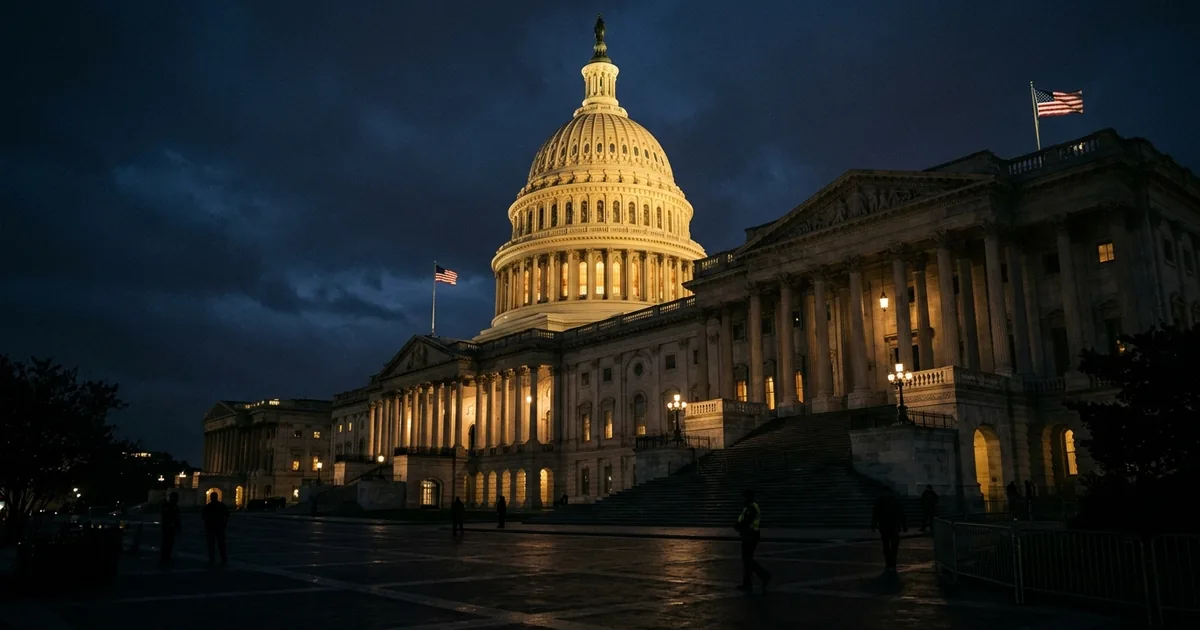
The Republican-controlled House on Tuesday squeezed through a $70 billion immigration enforcement package that funds ICE and Border Patrol through the end of Trump’s presidency, closing a bruising 75-day partial government shutdown that left the Department of Homeland Security running on fumes.
What the Bill Actually Does
The Secure America Act, which cleared the Senate last week and now heads to the president’s desk, delivers lump-sum appropriations covering both agencies through September 30, 2029. Immigration and Customs Enforcement stands to receive $38.5 billion for hiring, training, and paying personnel over that three-year window. Customs and Border Protection gets $22.6 billion earmarked for border patrol agents, support staff, and equipment.
Those are not annual budget numbers. They are multi-year war chests designed to insulate enforcement operations from the annual appropriations fights that have paralyzed Congress repeatedly since 2023. The reconciliation vehicle that carried the bill through the Senate is the same procedural shortcut both parties have used for major spending packages when they lack the 60 votes needed to overcome a filibuster. In this case, it means the $70 billion was passed with a simple majority in both chambers, bypassing the bipartisan consensus that immigration legislation has historically required.
The Vote That Almost Wasn’t
The margin tells the story: 214-212. Every Democrat voted no. So did Rep. Kevin Kiley of California, an independent who caucuses with Republicans and whose defection nearly sank the bill on the floor. Speaker Mike Johnson reportedly spent the final hours before the vote personally whipping holdouts from the party’s fiscal-hawk wing, several of whom balked at the price tag and the precedent of locking in spending through reconciliation rather than the traditional appropriations process.
The political calculus was straightforward: Republicans needed this win before the August recess, and they got it by a single vote.
The Shutdown That Forced the Deal
This bill did not materialize in a vacuum. For 75 days, the Department of Homeland Security operated under a partial government shutdown triggered by a partisan standoff over immigration enforcement reform. Democrats demanded that any new ICE and Border Patrol funding come with statutory guardrails on enforcement conduct, a position that hardened after the deaths of Alex Pretti and Renee Good at the hands of federal agents in Minnesota earlier this year.
Republicans refused to negotiate those conditions separately from the spending package, and the stalemate dragged on until Senate leadership brokered the reconciliation vehicle that bypassed the 60-vote filibuster threshold.
Why This Matters Beyond the Headlines
Strip away the partisan framing and the structural implications are significant. By funding enforcement through 2029, Congress has effectively removed ICE and Border Patrol spending from the annual budget fights that give the minority party its primary point of contact with immigration policy. Democrats lose their most reliable procedural tool for extracting reforms, and the administration gains operational certainty that no previous White House has enjoyed on enforcement.
The trade-off is that $70 billion in new spending arrives without the oversight mechanisms Democrats demanded. No independent review board for use-of-force incidents. No mandatory body camera requirements for ICE agents conducting interior enforcement operations. No statutory limits on detention capacity, which ICE has been expanding aggressively since Trump’s immigration crackdown escalated in early 2026.
The Fiscal Hawks Who Held Their Noses
Not everyone in the Republican conference was comfortable with the approach. Several members of the House Freedom Caucus had publicly questioned whether locking in $70 billion through reconciliation sets a precedent that future Democratic majorities could use to fund their own priorities without bipartisan buy-in. The counterargument, pressed by leadership, was simpler: a win is a win, and the party needed to show it could govern with its narrow majority before midterm campaigning begins in earnest.
The lone Republican defection from Kiley underscored a fault line that has dogged the party all session. Fiscal conservatives who won their seats promising spending discipline are being asked to vote for historically large enforcement budgets that will not be subject to annual review. The tension between border hawkishness and budget hawkishness is real, and it nearly killed this bill.
What Comes Next
Trump is expected to sign the bill within days. Once enacted, the spending authority kicks in immediately for the current fiscal year and extends through two more. That timeline matters: it means the next president, whoever that is, inherits an enforcement apparatus that is already funded and staffed at levels this country has never seen.
The question now shifts to the courts, where multiple civil liberties organizations have signaled they will challenge enforcement practices enabled by the new funding. The ACLU and National Immigration Law Center both released statements within hours of the vote promising legal action focused on due process protections for detainees.
The $70 billion figure also raises questions about what gets crowded out. Reconciliation bills require offsets or deficit increases, and this one adds to the deficit at a moment when the national debt is approaching $37 trillion. Every dollar spent on enforcement is a dollar not spent on asylum processing, immigration courts, or the legal immigration system that businesses have been begging Congress to modernize for years.
For the 75 days of shutdown, roughly 50,000 DHS employees worked without pay. They will receive back pay under the bill’s provisions. The policy debate over what this money buys, and what it costs, is just getting started.