
The U.S.
House voted 308-117 on Tuesday to make daylight saving time permanent across the country, a bipartisan margin that makes the bill look like a slam dunk. It is not. The Sunshine Protection Act now heads to a Senate where enough members have signaled opposition to stall it indefinitely, which means Americans may keep losing an hour of sleep every March for years to come.
What the Bill Actually Does
The Sunshine Protection Act, sponsored by Rep. Vern Buchanan of Florida, would lock the nation into the time currently observed from March through November, the “spring forward” setting where sunsets are later and mornings darker. States could opt out if they chose, but the default would be permanent summer hours. The bill has Trump’s explicit backing. He has called for ending the twice-a-year clock switch, framing it as a commonsense quality-of-life win, NBC News reported.
The appeal is obvious and broadly popular. Nobody enjoys the jarring Monday after the spring switch, and the health data backs up the annoyance: studies have linked the spring time change to spikes in heart attacks, car crashes, and workplace injuries. The American Academy of Sleep Medicine has long argued for ending the switches, though it favors permanent standard time, not permanent daylight saving time, because later sunrises disrupt circadian rhythms.
Why the Senate Is the Problem
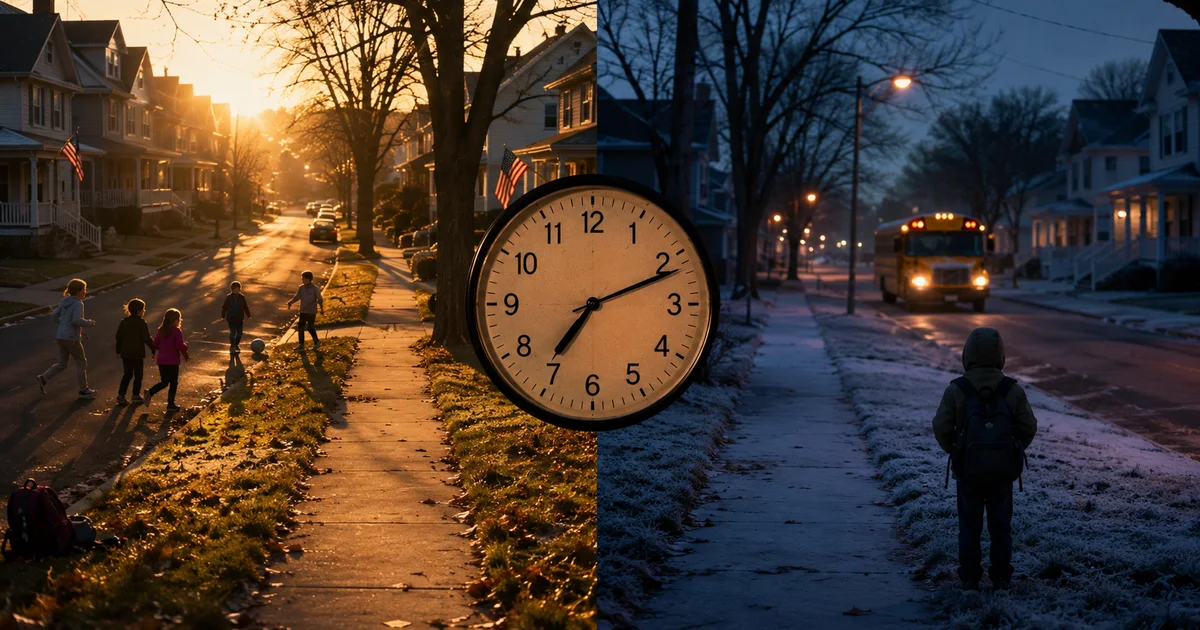
Here is where the geography kills the momentum. Several senators have lined up against the bill, and their objections are not ideological. They are cartographic. Under permanent daylight saving time, cities in the western portions of time zones, think Indianapolis, Detroit, parts of Kansas, and much of the northern Midwest, would not see sunrise until after 9 a.m. during winter months. For parents sending children to bus stops in the dark and commuters navigating icy roads without sunlight, the policy goes from abstract convenience to concrete safety risk.
Sen. Tom Cotton of Arkansas has told Senate Majority Leader John Thune that he will block a floor vote. Cotton’s objection is practical, pointing to the dark-morning commute problem and the disproportionate impact on agricultural communities that still organize work around natural light. He is not alone. The senators who voted against the bill in committee disproportionately represent states where sunrise would arrive after 8:30 a.m. in the winter.
The Structural Tug Between Coasts and Interior
The deeper story is a familiar American divide dressed in an unfamiliar outfit. The Sunshine Protection Act is overwhelmingly popular in Sun Belt states where the difference between DST and standard time is a matter of minutes, not lifestyle. Florida, Arizona, and southern California barely notice the clock change. For a voter in Miami, permanent DST means slightly more evening light for outdoor dining. For a voter in Bismarck, North Dakota, it means children walking to school in pitch darkness for three months of the year.
This is the same urban-rural, coast-interior tension that shapes debates about everything from broadband funding to agricultural subsidies, but here it plays out in the most personal unit possible: what time the sun comes up outside your window.
What Happens Next
If Thune brings the bill to the floor, it would likely pass, the House margin suggests bipartisan appetite. But Senate procedures give individual senators enormous power to delay, and Cotton’s willingness to block floor consideration means the bill could sit in legislative purgatory indefinitely. The Senate passed a similar bill unanimously in 2022, only for it to die in the House. Now the roles are reversed, and the inertia is just as strong.
The irony is thick. An issue with genuine bipartisan support among voters and a comfortable House majority may fail simply because the Senate’s procedural rules give veto power to a handful of members from cold, dark states. Americans who are tired of resetting their clocks twice a year may need to keep doing it because the sun rises too late in Wichita.