
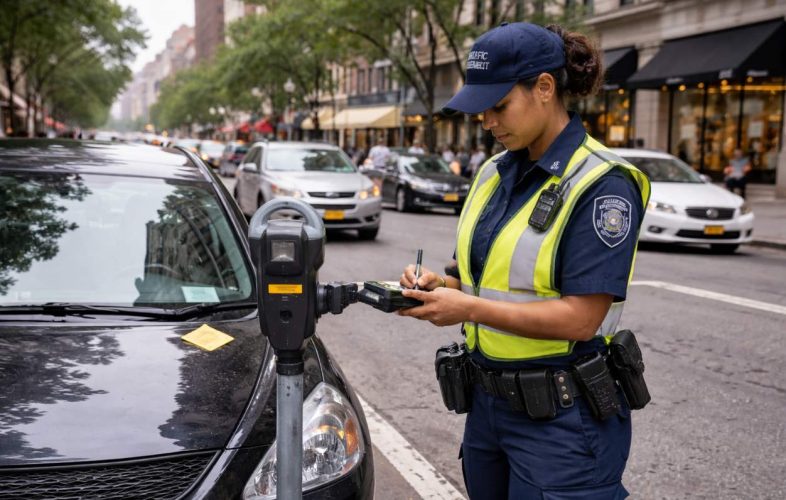
Every year, tens of thousands of people across the country apply for government jobs that don’t require a college degree, offer solid benefits, and come with real job security. Traffic enforcement agent positions consistently land near the top of that list—and for good reason.
But there’s a catch most applicants don’t take seriously enough: the written exam. It’s the first real filter in the hiring process, and a surprising number of otherwise qualified candidates fall short—not because they’re unprepared for the job itself, but because they walked into the test without studying the right material.
What Traffic Enforcement Agents Actually Do
Traffic enforcement agents—commonly referred to as TEAs—are civilian city employees. They monitor parking regulations, issue violations, assist with traffic flow at busy intersections, and report road hazards or abandoned vehicles. In New York City alone, the NYPD’s Traffic Enforcement Division deploys agents across all five boroughs every single day.
It’s a physically active, outdoor role with a structured schedule and clear advancement paths—which explains why it attracts a wide range of applicants, including many who are transitioning out of the private sector or entering public service for the first time.
What the Exam Actually Tests
The written portion of the hiring process typically covers reading comprehension, situational judgment, basic math and data interpretation, and the ability to follow written procedures. The questions aren’t tricky in the abstract sense—but they’re designed to test how well you process information quickly and apply it under time pressure.
That time pressure is where a lot of people stumble. If you’re not used to working through standardized test formats, the pacing alone can throw you off. The best way to counteract that is repetition—specifically, working through a realistic traffic enforcement agent practice test before exam day so the format feels familiar when it counts.
Why Most People Underprepare
Civil service exams have a reputation for being straightforward, and that reputation is both accurate and misleading. The concepts aren’t advanced, but the question phrasing, the answer structures, and the procedural rules tested can feel oddly specific if you’ve never seen them before.
Candidates who treat the TEA exam like a simple formality often end up on the wrong side of the passing score. Those who spend even a few weeks doing focused traffic enforcement agent test preparation consistently report feeling more confident and performing better—not because the test is harder than expected, but because they understood what to expect going in.
It’s also worth noting that most civil service exam announcements don’t come around every few months. If you miss the window or don’t score high enough, you might be waiting a full year or more before the next opportunity. That alone is reason enough to take prep seriously.
Where to Apply and What to Expect
Application procedures vary by city and state, but in New York—which runs one of the largest TEA programs in the country—all exam announcements and eligibility requirements are managed through the NYC Department of Citywide Administrative Services (DCAS). Bookmarking that page is step one for any serious applicant in the tri-state area.
Other cities post their civil service exam schedules through similar municipal portals. Check your local government’s HR or personnel department website for current listings.
The Bottom Line
Getting a traffic enforcement agent position is a realistic, achievable goal for a lot of people—and the written exam doesn’t have to be the thing that stops you. Treat it the way you’d treat any professional certification: prepare with purpose, use quality TEA exam preparation materials, and don’t walk in cold.
The job is stable, the pay is competitive for entry-level government work, and the career path is well-defined. A few weeks of focused preparation is a small price for what comes after.