
A man films federal immigration officers from a public sidewalk in Minneapolis. Moments later, a masked agent sprints toward him, slams him to the ground, and breaks three of his ribs. Then, while he’s in custody, officers swab the inside of his cheek and collect his DNA.
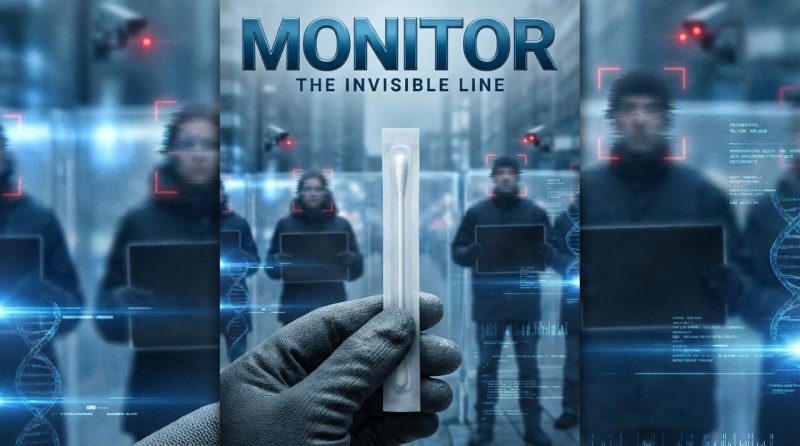
This isn’t a scene from a dystopian thriller. It happened in late January in Northeast Minneapolis, and according to an NPR investigation published this week, it’s part of a growing pattern. Federal immigration officers are collecting DNA samples from American citizens and legal residents arrested during protests against deportation raids, and the genetic data is being funneled into a national database maintained by the FBI.
The implications of this practice are enormous, and they extend far beyond immigration policy. What’s being built, case by case and swab by swab, is a biometric catalog of political dissent.
What NPR Found
The investigation documented cases across at least three states: Illinois, Oregon, and Minnesota. In each instance, the pattern was similar. Individuals observing or protesting ICE enforcement activity in their communities were detained by federal officers, sometimes violently, and had their DNA collected before being released.
The most detailed case involves a man identified as Ben, whose last name NPR withheld for his protection. Ben and his wife Gabby were driving to their home in Minneapolis when they received a message on an activist group chat that federal immigration officers were nearby. Ben began recording the officers’ activity from a public sidewalk, a practice that is unambiguously protected by the First Amendment.
Video reviewed by NPR shows what happened next. A masked federal officer ran at Ben, tackled him, and pinned him to the ground. He sustained three broken ribs and blunt chest trauma. While in federal custody, officers collected his DNA.
NPR found five additional cases with similar fact patterns. In every instance, the individuals were engaged in what civil rights attorneys describe as constitutionally protected activity: observing, filming, or peacefully protesting federal enforcement actions in public spaces.
The Legal Fiction Holding This Together
The Department of Homeland Security’s justification is technically accurate and substantively troubling. A DHS spokesperson told NPR that federal law requires DNA collection from anyone arrested by federal law enforcement, citing 34 U.S.C. § 40702 and 28 CFR § 28.12. Those statutes do exist, and they do authorize DNA collection upon arrest.
But that framing collapses under the weight of a single question: were these arrests lawful in the first place?
Erin Murphy, a law professor at NYU, put it directly. “What law enforcement would say is, ‘these were people that were facing charges.’ What are the charges they’re facing if it’s civil immigration authorities doing what seems to be unlawful interference with First Amendment rights?”
This is the critical point that DHS’s legal argument doesn’t survive contact with. The DNA collection statute presumes a valid underlying arrest. If the arrest itself is unconstitutional, because the individual was exercising their right to observe and document government activity in a public space, then the DNA collection built on top of that arrest is also unconstitutional.
The Supreme Court addressed this issue in Maryland v. King (2013), ruling that DNA collection from arrestees is permissible, but the majority opinion specifically grounded that holding in the context of lawful arrests for serious offenses. Tackling a bystander filming from a sidewalk doesn’t meet that standard by any reasonable interpretation.
Where Does the DNA Go?
This is where the story gets darker, because nobody will say.
NPR asked DHS directly where the DNA samples collected from protesters are being stored and how they’re being used. DHS did not respond. What we do know, from a Georgetown University report, is that between 2020 and 2024, DHS collected DNA from more than 2,000 U.S. citizens. Those samples were added to CODIS, the FBI’s national DNA database, the same system used to track convicted criminals and solve cold cases.
Think about what that means in practice. An American citizen films an ICE raid from a public sidewalk. They’re tackled, arrested on dubious grounds, and their genetic information is permanently entered into a federal criminal database. Their DNA now sits alongside samples from convicted murderers and sex offenders.
Stanford Law professor Orin Kerr raised the question that should be keeping civil libertarians up at night: what legal remedy exists when DNA enters a federal database based on a potentially invalid arrest? The answer, practically speaking, is almost none. Removing data from CODIS is extraordinarily difficult, and there’s no established legal process for individuals to challenge their inclusion based on the constitutionality of the underlying arrest.
The Architecture of Political Surveillance
Andrew Birrell of the National Association of Criminal Defense Lawyers called it what it is. “It looks like the government is creating this catalog of political dissidents.”
That language sounds extreme until you look at the pattern. The people being DNA-swabbed aren’t committing crimes. They’re not crossing borders illegally or resisting arrest. They’re standing on American sidewalks, holding phones, and watching their government enforce its immigration policies. For that, their genetic information is being harvested and stored indefinitely in a federal database.
This is how surveillance infrastructure gets built. Not through a single dramatic act of overreach that provokes immediate backlash, but through the quiet, bureaucratic accumulation of authority. Each individual case seems small. One arrest here, one DNA swab there. The legal justifications are technical enough to avoid easy headlines. And because the targets are immigration protesters, a group that much of the political establishment has already decided to marginalize, the usual institutional safeguards are slow to activate.
The First Amendment Problem Nobody Wants to Name
The chilling effect here is not theoretical. If you know that filming an ICE raid might result in your DNA being entered into a federal criminal database, you are less likely to film an ICE raid. That’s not speculation. That’s basic human behavior, and it’s precisely the kind of government action the First Amendment was designed to prevent.
The right to observe government activity in public spaces is foundational to a functioning democracy. Journalists rely on it. Citizen watchdogs rely on it. The accountability of law enforcement depends on it. When the government punishes that observation with physical violence and biometric data collection, it doesn’t matter what statute DHS cites to justify it. The effect is the same: silence.
Dozens of people have told NPR that federal officers informed them they were committing a crime while peacefully observing immigration enforcement. Civil rights attorneys say that’s flatly wrong as a matter of law. But when the person making that claim has a badge, a gun, and the authority to break your ribs and swab your DNA, the legal niceties don’t matter much in the moment.
What Happens Next
Eight months ago, the idea that federal agents would be collecting genetic material from American citizens exercising their First Amendment rights would have sounded like paranoid fantasy. Now it’s documented fact, and the question is whether anyone with the power to stop it will act.
Congress could pass legislation restricting DNA collection to individuals arrested for serious criminal offenses, as the Supreme Court’s Maryland v. King framework contemplated. The courts could intervene if any of the individuals whose DNA was collected bring Fourth Amendment challenges. State attorneys general in Illinois, Oregon, and Minnesota could open investigations.
But none of that will happen if this story stays buried. The machinery of biometric surveillance works best in obscurity, and right now, that’s exactly where it’s operating.