
Identity access management sits at the center of your security posture. You protect your data when you control who enters your systems and what they do once inside.
Strong identity controls reduce risk, limit fraud, and support compliance. You also streamline daily operations because your team spends less time fixing access issues and more time working.
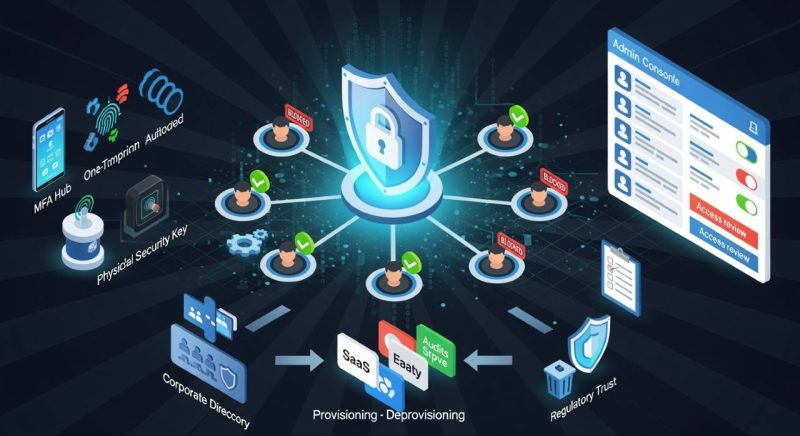
Why Identity Access Management Matters
Identity access management gives you a clear view of every user in your environment. You track accounts, permissions, and activity without guesswork. This creates fewer blind spots and faster decisions.
Strong identity controls reduce unauthorized access. Verizon’s Data Breach Investigations Report notes that stolen credentials remain one of the most common attack vectors. You lower your exposure when you tighten identity verification.
Identity access management also supports growth. You add new tools without losing control of your user base. You set standards across your applications. This reduces errors and helps your team work with confidence.
Identity access management builds trust with auditors and partners. You show how you assign access, review permissions, and enforce security rules. This supports regulatory requirements across sectors.
Key Components of Effective Identity Access Management
A strong identity program relies on clear, purposeful components. You choose tools and processes that support your goals and reduce complexity.
Authentication confirms user identity. This includes passwords, passkeys, and multi factor verification. You enforce checks that block unauthorized entry.
Authorization defines what each user is allowed to do. You assign permissions based on role, project, or task. This prevents unnecessary access and reduces internal risk.
Provisioning and deprovisioning control account lifecycles. You grant access when a user joins. You remove access when they leave or change roles. Fast action reduces exposure from orphaned accounts.
Monitoring tracks user activity. You review logs and alerts for suspicious behavior. You investigate unusual patterns to prevent misuse.
You need governance rules to keep access decisions consistent. This includes policies for password strength, approval workflows, and periodic access reviews.
How IAM Consulting Services Strengthen Your Security
Effective identity access management requires strategy and operational discipline. Many organizations seek support from specialists to avoid gaps and speed improvements. This is where IAM consulting services assist your team and strengthen your program.
Consultants guide you through identity assessments. You see where your system falls short. You also receive recommendations that align with your risk profile and resource limits.
They help you integrate authentication and authorization tools across your environment. You reduce duplicated systems and unify access controls. This lowers cost and simplifies management.
Consultants support role based access design. You assign permissions with precision and avoid role sprawl. This reduces confusion and shortens onboarding time.
You receive help with automation. This includes provisioning and deprovisioning tasks, policy enforcement, and monitoring alerts. Automation reduces manual errors and improves consistency across your systems.
Consultants guide you through compliance challenges. They prepare documentation, streamline review cycles, and integrate controls that support your regulatory requirements.
They also train your team. You gain internal knowledge that keeps your identity program strong long term.
Steps to Strengthen Your Identity Access Management Program
You improve your identity program when you follow structured steps that reduce guesswork.
Start with an audit. Review every account, permission set, and authentication method. Look for unused accounts, excessive privileges, and out of date security controls.
Define clear access policies. Write rules your team understands and follows without confusion. Include approval steps for new accounts and periodic reviews for existing ones.
Implement multi factor authentication. This adds a strong layer of protection. It reduces credential attacks and improves login integrity across your environment.
Standardize roles. Map access to tasks instead of individuals. This supports consistency and reduces permission creep.
Invest in monitoring. Use tools that alert you when unusual access patterns appear. Follow through with investigations to understand root causes.
Automate what you can. This includes onboarding, offboarding, and permission updates. Automation reduces delays and limits human error.
Review and refine your identity program often. Threats change and tools evolve. You stay secure when you adjust your methods to match your environment.
Moving Forward with a Strong Identity Strategy
Identity access management strengthens every part of your security stack. You protect sensitive assets, support your workforce, and maintain trust with partners. You gain stability when you treat identity controls as a core part of your operations.
Clear policies, strong tools, and consistent reviews create a secure foundation. Expert support helps you close gaps and speed results. Your organization benefits from a program that grows with your needs and reduces exposure from outdated practices.
Identity access management sets the stage for safe and efficient work. When you treat identity as a priority, you safeguard your systems and support your long term goals.