
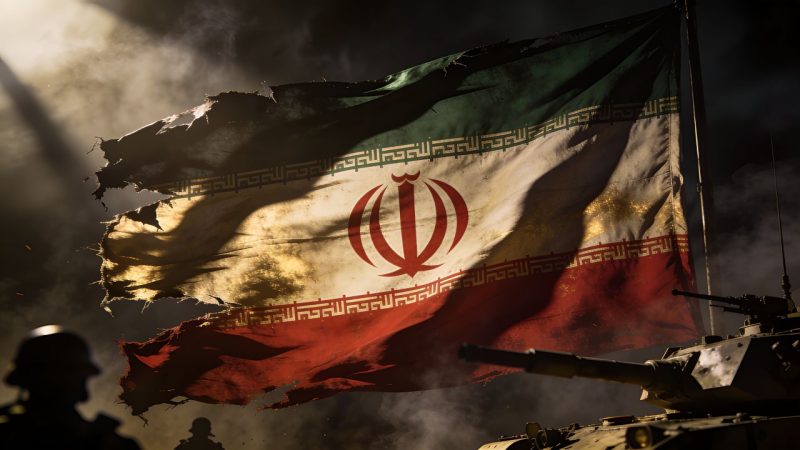
When Iran’s Foreign Minister Abbas Araghchi went on state television Wednesday and said “We do not want a ceasefire,” he was not posturing for a domestic audience. He was describing, with remarkable clarity, the fundamental problem with where this war stands on Day 26: the two sides are not negotiating over terms. They are negotiating over whether to negotiate at all.
President Trump’s 15-point peace proposal, delivered through back-channel intermediaries and subsequently leaked to international media, was rejected by Tehran within hours. In its place, Iran issued five conditions of its own, a counterproposal that the White House initially tried to downplay before the specifics became impossible to ignore. The conditions are not a compromise. They are a statement of maximalist war aims from a country that believes, not without reason, that it is winning the narrative even if not every battlefield exchange.
Iran’s Five Conditions, Unpacked
The five demands Iran put forward reveal exactly what Tehran calculates it can extract from this moment. First, a complete halt to all U.S. and Israeli military operations, including the targeted assassinations that have eliminated multiple senior Iranian military commanders since the conflict began. Second, binding international mechanisms guaranteeing the war will not resume, essentially demanding the kind of security architecture that took decades to build in Europe after World War II. Third, war reparations, financial compensation for the damage inflicted on Iranian infrastructure, cities, and population. Fourth, a simultaneous end to all U.S. and Israeli operations against Hezbollah in Lebanon and Iranian-backed militias in Iraq, treating the entire regional network as a unified front. Fifth, and most provocatively: international recognition of Iranian sovereignty over the Strait of Hormuz.
That last demand is the one that makes a near-term deal essentially impossible. The Strait of Hormuz is the narrow waterway through which roughly 20 percent of the world’s oil supply passes. Iranian sovereignty over it would give Tehran a legal and physical chokehold on global energy markets. No U.S. administration, regardless of party, could agree to that. Iran knows this. The demand may be less a sincere opening position and more a signal about how Tehran defines victory.
What Is Actually Happening on the Ground
While the diplomatic signaling played out in press conferences, the military situation continued its own grim logic. An Iranian strike this week sparked a massive fire at Kuwait International Airport, forcing flight diversions across the Gulf and sending oil futures briefly spiking. The U.S. military confirmed that approximately 1,000 troops from the 82nd Airborne Division are now deploying to the region, joining an already substantial American force posture that includes carrier strike groups and air assets across multiple Gulf states.
Congressional lawmakers emerged from a classified White House briefing on the war visibly shaken, with members of both parties describing the strategic picture as “unclear” and expressing alarm at the possibility of ground troops being committed without congressional authorization. The War Powers Resolution, technically requiring congressional approval for sustained combat operations, has once again become the piece of paper everyone references and no one enforces.
Casualties on all sides remain difficult to verify independently. Iran’s state media reports figures that are almost certainly undercounted. U.S. official statements acknowledge American service member deaths in smaller numbers than regional reporting suggests. The fog of this war is unusually thick, which benefits whoever controls the narrative, and right now neither side controls it cleanly.
The White House’s Awkward Position
Trump publicly declared, just days ago, that there had been “productive conversations” with Tehran. The Iranian rejection of his peace plan, delivered publicly and with pointed language, was a humiliation the White House is now managing with characteristic creative reframing. Spokesperson statements have characterized Iran’s counterproposal as evidence that “negotiations are continuing,” which is one way to describe being told your proposal is unacceptable.
The political dynamics at home are shifting in ways the administration cannot ignore. Polling from the past week shows declining American support for the war effort, with independent voters in particular moving toward skepticism about the absence of a clear endgame. Senate Republicans who initially rallied behind the president are now asking, quietly, what success looks like. There is no clean answer.
The economic pressure is real and building. Oil prices, briefly stabilized after Trump’s Truth Social post about productive conversations, have climbed again on the news of Iran’s rejection. Supply chain disruptions in the Gulf are hitting shipping insurance rates at levels not seen since the tanker war of the 1980s. The global economy does not have infinite patience for a conflict with no visible off-ramp.
What Day 26 Tells Us About What Comes Next
Wars do not end because one side runs out of soldiers. They end because one side runs out of will, resources, or both. Iran’s calculus appears to be that the United States will face domestic and economic pressure to negotiate before Iran’s resistance apparatus fractures. The U.S. calculus appears to be that sustained pressure will force Tehran to accept terms short of its maximalist demands.
Both calculations could be right. Both could be catastrophically wrong. What is clear is that the gap between where each side says it will settle and where a deal could actually be struck remains enormous. Iran’s five conditions are not a negotiating opening. They are a public declaration that this war, from Tehran’s perspective, is still in its early chapters.
Day 26 does not look like the beginning of an end. It looks like both sides settling in for a longer fight than either publicly acknowledges. The 82nd Airborne is not deploying to stand down. The Strait of Hormuz is not going to be handed to Iran by any U.S. administration. The conditions for a deal are not present today, and the people in the room know it.