
BREAKING NEWS WATCH THE LIVE STREAM HERE
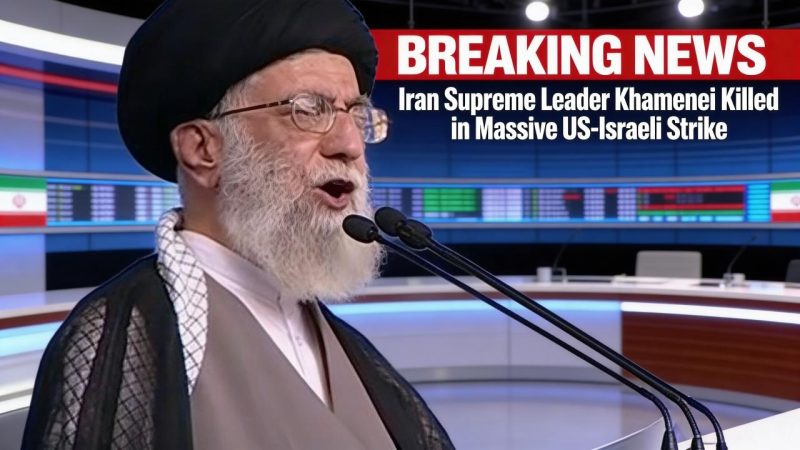
DEVELOPING: Iran’s Supreme Leader Ayatollah Ali Khamenei was killed in an Israeli airstrike Saturday as part of a massive joint U.S.-Israeli military operation, Israel’s ambassador to Washington told U.S. officials. An Israeli official separately confirmed to Axios that Khamenei is dead according to Israeli intelligence. Israeli Prime Minister Benjamin Netanyahu stopped short of a definitive statement but told the nation “there are many signs that this tyrant is no longer with us.”
Iran is disputing the claim. Foreign Minister Abbas Araghchi told NBC News that Khamenei is alive “as far as I know,” adding that “all high-ranking officials are alive.” But Iran has not produced a video or live appearance from the 86-year-old leader since strikes began Saturday morning, and Israel’s Channel 12 reported that Netanyahu was shown a photograph of Khamenei’s body recovered from his destroyed compound in Tehran.
The Largest Joint Military Operation in Decades
The operation, codenamed “Roaring Lion” by Israel and “Operation Epic Fury” by the Pentagon, represents the most significant joint U.S.-Israeli military action in the history of the alliance. Explosions rocked Tehran, Isfahan, Qom, Tabriz, Karaj, Bushehr, and Kermanshah as approximately 200 Israeli Air Force fighter jets struck over 500 military targets across western and central Iran.
President Donald Trump announced “major combat operations” in a video address, declaring the objective was to eliminate “imminent threats” from Iran, destroy its missile and nuclear programs, and ultimately topple the regime. “The hour of your freedom is at hand,” Trump told the Iranian people, urging them to “take over your government” when the strikes conclude.
U.S. strikes focused on Iran’s ballistic missile program, air defense systems, and IRGC command-and-control infrastructure. Israeli strikes targeted both military infrastructure and the country’s senior political and military leadership in what officials described as a decapitation strategy.
Iran’s Leadership Under Siege
The scale of the leadership targeting is staggering. According to Israeli and U.S. officials speaking to multiple outlets, the opening salvo simultaneously struck three sites where senior Iranian leaders had gathered. Among those targeted: President Masoud Pezeshkian, IRGC commander Mohammad Pakpour, Defense Minister Amir Nasirzadeh, top security adviser Ali Shamkhani, and former President Mahmoud Ahmadinejad.
Israeli officials told Reuters they assess that both Pakpour and Nasirzadeh were killed. A member of Tehran’s City Council confirmed that Khamenei’s son-in-law and daughter-in-law were also killed in the strikes. Israel targeted Khamenei’s sons as well, though intelligence assessments suggest they survived. Mojtaba Khamenei, widely discussed as a potential successor to his father, appears to have escaped.
“In our opening salvo, we went after targets that are high-profile, people involved in the plans to destroy Israel,” an Israeli security source told journalists. Seven missiles were confirmed to have struck the district in Tehran where Khamenei normally resides, an area that also houses the presidential palace and National Security Council.
Iran Retaliates Across the Middle East
Iran’s response was immediate and region-wide. Tehran launched dozens of ballistic missiles targeting Israel and U.S. military installations across the Persian Gulf, hitting or targeting bases in Bahrain, Qatar, Kuwait, the United Arab Emirates, Jordan, Saudi Arabia, and Iraq. Rocket trails from Israel’s Iron Dome defense system streaked across the skies over Jerusalem and Tel Aviv as Iranian missiles arrived.
“All American and Israeli assets and interests in the Middle East have become a legitimate target,” a senior Iranian official told Al Jazeera. “There are no red lines after this aggression.”
The Pentagon reported no U.S. combat casualties and described damage to American installations as minimal. Iran’s armed forces vowed operations “will continue with even greater force.” The Houthis in Yemen announced they would resume attacks in the Red Sea.
Devastating Human Toll
The Iranian Red Crescent reported more than 200 people killed and roughly 700 injured across 24 provinces. Among the most devastating individual strikes: 85 people, many of them children, were killed when a girls’ school in the southern city of Minab was hit, according to Iranian state news agency IRNA.
Iran’s Security Council instructed residents of Tehran and other major cities to stay in protected locations until further notice. Supermarkets in northern Tehran saw surges of panic buying, with bread, eggs, bottled water, and milk running out in many stores. Long queues formed at gas stations across the capital.
Succession Crisis Looms
If Khamenei’s death is confirmed, Iran faces a succession crisis with no clear resolution. The 86-year-old leader held power for 35 years after succeeding revolutionary founder Ayatollah Ruhollah Khomeini in 1989, making him one of the world’s longest-serving authoritarian rulers. As supreme leader, he controlled the judiciary, state media, and all security forces, including the IRGC.
Under Iran’s constitution, a council of clerics selects a new supreme leader. But with the IRGC commander, defense minister, and potentially other senior leaders killed in the same strikes, the regime’s chain of command is in disarray. Whether the IRGC moves to seize control or whether the strikes create the popular uprising that both Netanyahu and Trump have called for remains the defining question.
“The goal is to create all the conditions for the downfall of the Iranian regime,” an Israeli official told Axios, “but developments will also depend on the extent to which the Iranian people rise up.”
Global Fallout Already Spreading
The ripple effects are already massive. Dubai International Airport, the world’s busiest for international flights, shut down indefinitely. Airlines across the region cancelled flights through at least early next week. Oil markets and global shipping routes face severe disruption as Iran’s retaliatory strikes targeted Gulf states hosting U.S. military assets.
Saudi Arabia condemned Iran’s retaliatory strikes on neighboring Arab states. The European Union urged “maximum restraint.” Oman’s foreign minister expressed “dismay” and warned the U.S. “not to get sucked in further,” adding bluntly: “this is not your war.” The UN Security Council called an emergency session.
The operation had been planned for months, according to an Israeli security official who told Reuters that timing was set several weeks ago. Trump reportedly made the final decision to strike Friday after his envoys, Jared Kushner and Steve Witkoff, concluded that Iran’s latest counterproposal in nuclear talks was, in the words of a senior U.S. official, “bullshit” and intended only to buy time.
Lebanon’s Hezbollah condemned the strikes as a “blatant violation of international law.” Critics in Congress are already preparing a war powers resolution vote to block continued U.S. military operations. The International Atomic Energy Agency urged restraint to “avoid any nuclear safety risks,” noting no radiological impact has been reported so far.
This is a developing story and will be updated as new information becomes available.