
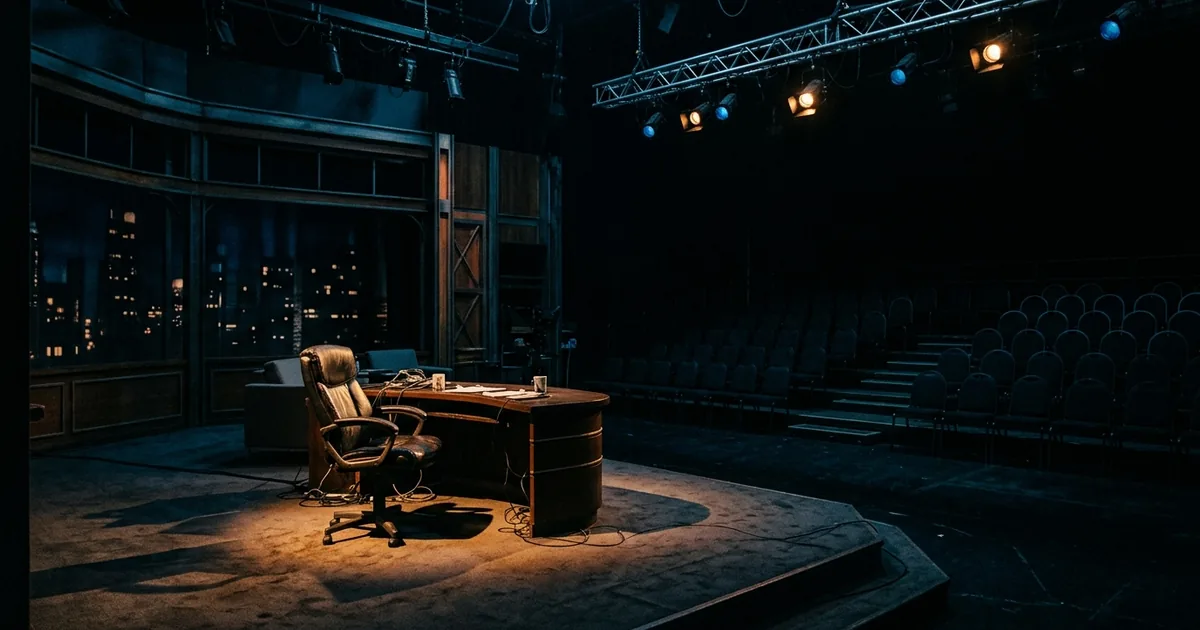
Jimmy Kimmel told Vulture in an interview published Sunday that he has been thinking seriously about when to end his 23-year run as a late-night host, framing the future of the format in terms that suggest he sees the walls closing in from every direction.
“We’re Being Poisoned”
The most striking line from the Vulture interview landed with the force of someone who has been holding it back for a while. Asked about the state of late-night television after CBS canceled “The Late Show with Stephen Colbert” last year, Kimmel said the genre is “not just dying of natural causes. We’re being poisoned.” He did not name the poison specifically, but the context points in several directions at once: political pressure on networks, the economics of streaming cannibalizing linear television, and a media environment where the advertisers and audiences that sustained late-night for decades are fragmenting faster than anyone expected.
Variety reported that Kimmel described feeling “a little bit defeated” by Colbert’s cancellation, which CBS attributed to “purely financial reasons” when it pulled the plug in July 2025, a full year before Colbert’s contract was set to expire. The cancellation stunned the industry and removed late-night’s most politically pointed voice from the air.
The Contract That Says Everything
Kimmel’s current deal with Disney runs through May 2027, but the terms of the extension tell their own story. In December 2025, he signed a one-year renewal instead of the standard three-year deal that has been the industry norm for established late-night hosts. A one-year extension is what you sign when neither side wants to commit to the long term, and both parties understand that the conversation about the show’s future is ongoing rather than settled.
The Wrap reported that Kimmel told the interviewer he had told ABC executives six years ago that he thought he was done when Biden was president, a remark that places his retirement thinking well before the current wave of cancellations and consolidation. The fact that he stayed through a second Trump term suggests the political moment kept him in the chair longer than he originally planned, but the tone of the Vulture interview reads like someone who has reached the limit of what urgency can sustain.
What Colbert’s Cancellation Changed
The loss of “The Late Show” did more than remove a competitor. It removed the model that Kimmel himself has been running: politically engaged late-night hosted by someone who cares about the news and is willing to take positions that make networks uncomfortable. When Colbert went off the air on May 21, Kimmel urged Colbert’s fans to cancel their Paramount+ subscriptions, a shot at CBS’s parent company that was remarkable coming from a host who depends on the goodwill of his own corporate parent.
That willingness to bite the hand is precisely what makes Kimmel’s retirement calculus complicated. He is, by his own description, the last late-night host who treats the format as a vehicle for political commentary rather than celebrity interviews. Late-night television lost three of its defining voices in the span of a year, and the replacements that networks are developing lean toward variety, games, and celebrity-driven formats that are cheaper to produce and less likely to generate political controversy.
The Bigger Picture
Kimmel’s “being poisoned” framing deserves more attention than a throwaway quote in a celebrity profile. What he is describing is a structural transformation of American media in which the institutions that supported independent editorial voices within corporate entertainment are being dismantled for economic and political reasons simultaneously. The advertisers do not want controversy. The networks do not want regulatory trouble. The streaming platforms do not want to pay late-night budgets when a game show costs half as much and generates no angry phone calls.
If Kimmel walks away in 2027, the format he leaves behind will look nothing like the one he entered in 2003. Whether that is a natural evolution or, as he put it, a poisoning, probably depends on whether you think American media is healthier or sicker than it was when he started. His answer, delivered in the careful language of someone who still has a year left on his contract, seems clear enough.