
Achraf Hakimi’s right flank at Parc des Princes is not just a tactical lane. It is a live-data event, one sprint at a time. Paris face Bayern München in the UEFA Champions League semi-finals on 28 April 2026, with the return leg set for 6 May, according to the official UEFA Champions League fixtures page.
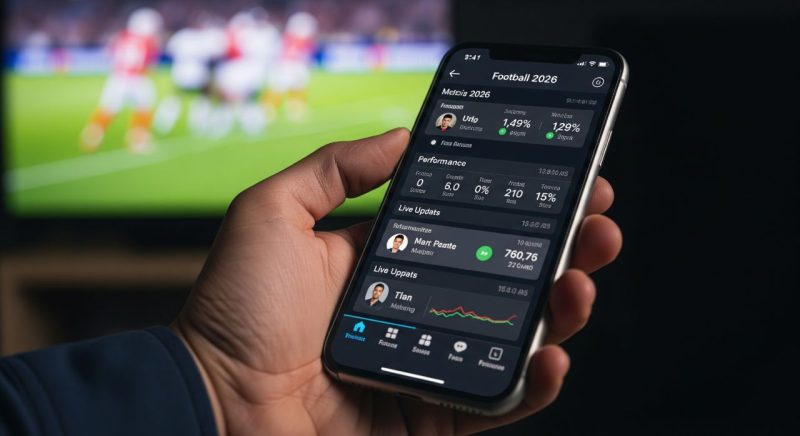
That timing matters. Live sports coverage no longer starts at kick-off and ends at the whistle. It follows team news, training clips, injury notes, odds movement, fan reaction and post-match tactical charts, often before a broadcaster has finished its first studio segment.
The Match Now Moves Faster Than Television
PSG vs Bayern Is Built for Second-Screen Viewing
The PSG-Bayern tie gives live coverage exactly what it wants: elite attacking width, fragile defensive spacing and enough recent history to keep every update meaningful. Reuters reported that PSG entered the semi-final with 12 knockout-stage goals, while Bayern had 16, and Luis Enrique again framed Hakimi and Nuno Mendes as attacking weapons rather than passive full-backs.
The African angle is sharp. Hakimi’s UEFA profile lists 11 Champions League appearances this season, 944 minutes, 37 ball recoveries and a top speed of 37.03 km/h, a rare combination for a defender who also pushes high into the final third. In live coverage, those numbers turn a routine overlap into a market signal, a fantasy-football prompt and a tactical argument.
Injury Updates Change the Story Before Kick-Off
Team news now lands with the force of a goal. Bayern’s Serge Gnabry was ruled out with an adductor tear, while Vincent Kompany’s side also had to manage attacking depth around the semi-final.
A missing winger changes pressing lanes. A doubtful midfielder changes build-up rhythm. A returning full-back changes crossing volume, and that information reaches viewers in seconds through live blogs, push alerts and tactical accounts.
| Live update | Why fans track it | Betting or viewing impact |
| Confirmed XI | Shows formation and role changes | Moves pre-match odds and player props |
| Injury alert | Explains sudden tactical reshuffle | Affects totals, corners and shots markets |
| Substitution | Signals fatigue or score-state shift | Changes live odds and momentum reading |
| VAR check | Freezes the match narrative | Creates sharp odds volatility |
| Heat map | Reveals territory and overloads | Helps judge pressure, not just possession |
Real-Time Updates Turn Fans Into Analysts
The Score Is Only One Layer
A 0-0 at half-time can feel dull on television and loud in the data. If PSG pin Bayern back for 15 minutes, force three corners and create two high-value cutbacks, live coverage shows pressure before the scoreboard does. That is where modern football viewing changed.
Fans stopped waiting for commentators to tell them what mattered. African football audiences understand this rhythm well. A Champions League night in Nairobi, Lagos or Accra often runs through WhatsApp groups, X clips, live-score apps and short tactical posts before the final whistle.
Casino Sessions Follow the Same Real-Time Logic
Live sports and online casino habits now share the same screen culture. People do not always sit for two uninterrupted hours; they check line-ups, watch ten minutes, answer messages, scan a heat map and return during stoppage time. During these pauses, comparison-minded users often review mechanics behind best casino slots Kenya while waiting for confirmed team news, because volatility, provider names and bonus terms can be assessed more calmly between match phases. This does not turn football analysis into casino strategy.
The same pattern appears during half-time. A viewer who has already checked possession chains and expected-threat charts may spend the break reading rules, payout tables and game formats rather than watching studio filler. For that kind of measured browsing, Melbet online slots fits naturally into the second-screen window, especially when users want a clear game lobby instead of a noisy search process. The smart habit is still the same as in live football: understand the format before reacting to the next flash of movement.
Why Uncertainty Makes Live Coverage Valuable
Tactical Control Does Not Kill Randomness
Luis Enrique can plan Hakimi’s high starting position. Kompany can set Bayern’s rest-defense structure. None of that prevents a deflection, a goalkeeper spill, a wet pitch or a late booking from changing the match.
Live coverage feels more honest than pre-match prediction. It admits that football is unstable. It lets the viewer update the model as the game breathes.
What to Watch in PSG vs Bayern
The tie should be read through specific triggers, not vague momentum.
- Hakimi’s average starting height against Bayern’s left-side pressure
- Kane’s touches between PSG’s centre-backs and midfield screen
- Bayern’s recovery runs after losing the ball in wide zones
- PSG’s first substitution if Vitinha’s midfield workload spikes
- Corner volume after 60 minutes, especially if Bayern defend deeper
Mobile Alerts Changed the Stadium Outside the Stadium
Fan Culture Now Reacts in Bursts
The old crowd roared first. Now the phone often vibrates before the replay appears. Live sports coverage turns every match into a chain of smaller events: yellow card, odds drop, xG spike, injury check, VAR review.
For African audiences, that speed matters because many fans follow European matches while commuting, working late or splitting attention across domestic football, basketball and entertainment feeds. The viewing experience is fragmented, but not weaker. It is denser.
The Risk Is Overreaction
Live data can sharpen judgment, but it can also trick the impatient viewer. A team may dominate ten minutes and still create nothing central. A striker may miss two chances and remain the best scorer on the pitch.
Good live sports coverage helps separate noise from evidence. Bad coverage turns every throw-in into a headline. The best reader waits for patterns: repeated overloads, tired legs, broken spacing, delayed defensive reactions.
The New Viewing Experience Is Analytical, Not Passive
What Real-Time Coverage Actually Adds
The value is not speed alone. Speed without structure is just flashing text. The best live coverage explains why the update matters: who moved, who reacted, which space opened, which player now looks exposed.
PSG vs Bayern works as a 2026 viewing test. Hakimi’s sprints are data points. Gnabry’s absence changes Bayern’s bench profile. Kompany’s touchline suspension alters communication rhythm on a night where one late full-back run can bend the whole tie.