
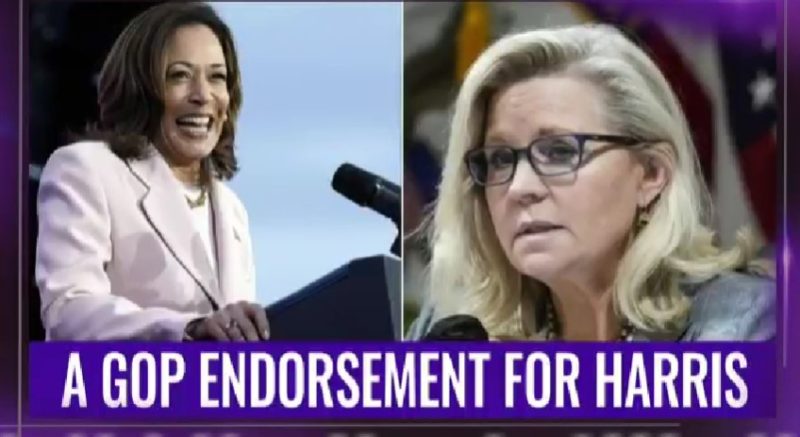
In a political turn that has sent ripples across both parties, former Republican Vice President Dick Cheney and his daughter, former Representative Liz Cheney, have both announced their endorsements for Vice President Kamala Harris
in the upcoming 2024 presidential election. Their joint stand marks a significant moment in U.S. politics, showcasing the deepening divide between traditional conservative values and the populism that has come to define Donald Trump’s influence on the GOP.
Liz Cheney’s First Break with the GOP
Liz Cheney, who has long been a vocal critic of Donald Trump, first revealed her intention to vote for Harris during an event at Duke University on September 4, 2024. The former Wyoming congresswoman explained that her decision was rooted in a profound concern for the future of American democracy. “I don’t believe we have the luxury of writing in candidates’ names, particularly in swing states,” she remarked. “As a conservative and someone who believes in and cares about the Constitution, I have thought deeply about this and because of the danger that Donald Trump poses, not only am I not voting for Donald Trump but I will be voting for Kamala Harris.”
For Liz Cheney, her stance against Trump began with his attempts to overturn the results of the 2020 election, which she described as a direct assault on democratic principles. This decision to endorse Harris is less about supporting Democratic policies and more about protecting the integrity of the U.S. Constitution. Cheney, who lost her seat in Congress after her outspoken opposition to Trump, sees this endorsement as a necessary step to safeguard the country from authoritarianism.
Dick Cheney Joins His Daughter
Just two days after Liz Cheney’s announcement, her father, Dick Cheney, a towering figure in Republican politics, followed suit with his own endorsement of Kamala Harris. On September 6, 2024, the former vice president released a scathing statement condemning Donald Trump as “the greatest threat to our republic” in U.S. history. Cheney, who served under President George W. Bush and was a central architect of U.S. foreign policy during the Iraq War, said, “He tried to steal the last election using lies and violence to keep himself in power after the voters had rejected him. He can never be trusted with power again.”
For Dick Cheney, this endorsement is a matter of principle rather than party loyalty. “As citizens, we each have a duty to put country above partisanship to defend our Constitution,” he declared. This alignment with Harris, a Democrat, reflects Cheney’s belief that Trump’s authoritarian tendencies pose an existential threat to American democracy—one that transcends typical political divides.
A Broader Reflection on the GOP’s Future
The Cheney family’s endorsements have sparked intense debate within Republican circles, highlighting the deepening fractures in the party. Liz Cheney’s decision to publicly support a Democratic candidate is emblematic of the internal struggle many Republicans face as they navigate a party reshaped by Trump’s dominance. Despite her conservative credentials and long lineage within the GOP, Liz Cheney has become an outcast among her former colleagues, having lost her House leadership position and her congressional seat due to her opposition to Trump.
While it’s unlikely that the Cheney endorsements will sway hardcore Trump supporters, they send a clear signal to moderates and conservatives who are increasingly alienated by the former president’s rhetoric and actions. These endorsements might also reflect a broader strategic move, aimed at rallying centrist voters who feel unrepresented by either political extreme. The Cheneys’ decision to publicly back Harris is a reminder that the stakes of the 2024 election, at least in their eyes, go beyond typical policy disagreements and delve into the preservation of democratic norms.
Strategic Voting in Swing States
Liz Cheney’s warning about the importance of swing states is a significant aspect of her endorsement. By urging voters to avoid protest votes or write-in candidates, she highlights the critical role that states like Pennsylvania, Wisconsin, and Michigan will play in deciding the election. Her message is clear: this is not an election to sit out or cast a symbolic vote; the stakes are too high.
Both Cheneys have made it clear that their endorsement of Harris is not an embrace of the Democratic Party’s policies but rather a statement against Trump’s threat to the republic. This moment serves as a litmus test for Republicans who, like the Cheneys, are disillusioned by the direction Trump has taken the GOP.
Public Reactions and the Road Ahead
Trump’s response to the Cheney endorsements has been characteristically caustic. The former president dismissed both Liz and Dick Cheney as irrelevant figures, labeling them as “RINOs” (Republicans in Name Only) and denouncing their legacy, particularly Dick Cheney’s role in orchestrating the Iraq War. However, the Cheneys’ stand speaks to a larger movement within the GOP—a rejection of Trumpism that may continue to grow, especially among establishment Republicans and moderates who feel alienated by the party’s current trajectory.
While it remains to be seen how these endorsements will affect the 2024 election, the Cheneys have placed themselves firmly on the side of defending the rule of law and democratic principles. Their decisions are emblematic of the choice facing many Republicans: continue supporting a populist, anti-establishment leader, or break ranks to protect the foundations of American democracy.
In this defining moment for the GOP, Liz and Dick Cheney’s endorsements of Kamala Harris highlight the widening rift within the party and could signal a broader shift as traditional conservatives reckon with the future of their political movement.