
Wisconsin’s Department of Revenue has moved to revoke the brewer’s permits at both Minocqua Brewing Company taprooms plus a warehouse permit, which would end the business. The disputed excise tax at the center of the case, by the owner’s own accounting, is about $500.
Kirk Bangstad, who owns the brewery and has spent five years turning it into a political billboard, says the enforcement is retaliation for his politics. That claim is going to get argued loudly on both sides for the next week, and it is not the most useful thing here. The useful part is that nobody disputes the escalation path: a contract-brewing tax question in June became a business-ending revocation notice in July, and the law in Wisconsin permits exactly that.
What the State Says Happened
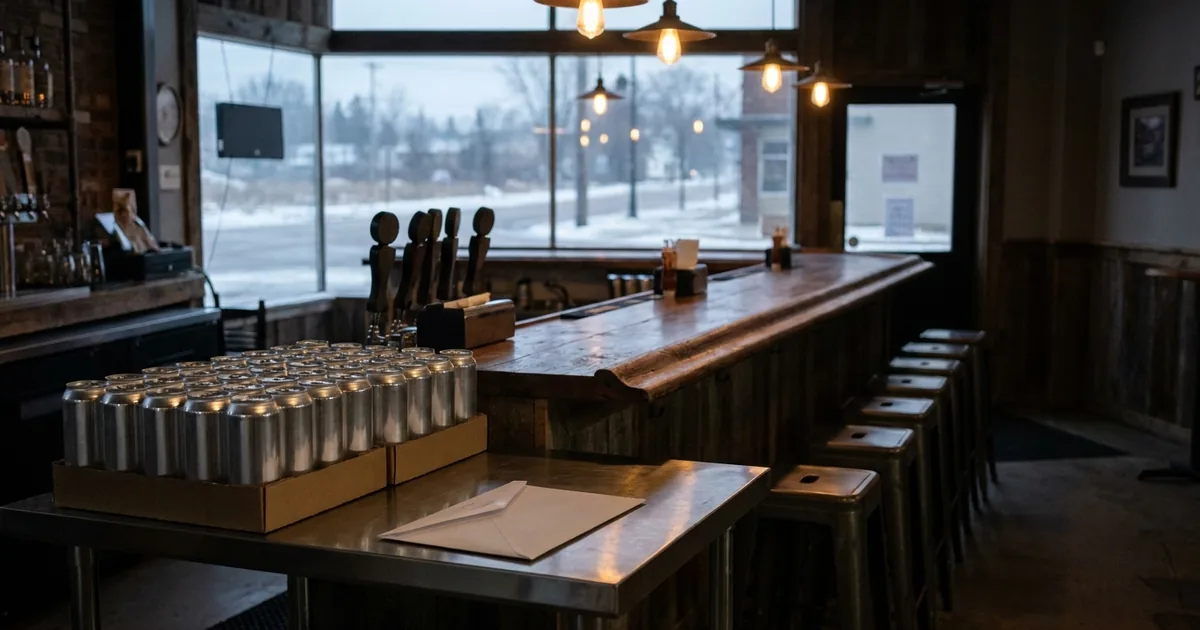
In June, the DOR’s Division of Alcohol Beverages inspected the company’s Minocqua and Madison taprooms and seized roughly 1,200 cans of beer that had been brewed by an Illinois contract brewer and moved into Wisconsin. Regulators say the company had not obtained the permits required to bring that beer across the state line and had not paid Wisconsin tax on it. Bangstad valued the seized inventory at about $25,000 and pegged the unpaid excise tax at roughly $500. He sued in Dane County Circuit Court, arguing the state took the beer without first giving the brewery a chance to write the check.
Then came the escalation. Wisconsin Public Radio reported the revocation notices covering both brewer’s permits and an alcohol beverage warehouse permit. The Department of Revenue, asked about the timing, said it is dedicated to fair and consistent enforcement of alcohol beverage regulations and takes action when the laws are not followed, which is the sentence agencies keep on file for exactly this question.
The revocation takes effect August 4. That is also the appeal deadline, and the company can keep pouring while an appeal is pending. Bangstad told WJFW that he will fight the state and that officials will have to pry him out of his taprooms first.
Wisconsin’s Alcohol Law Is Built for This
Here is the structural piece almost every version of this story skipped. Alcohol in Wisconsin runs on a three-tier system, a Prohibition-era architecture that separates producers, wholesalers and retailers and requires a permit at nearly every seam between them. Contract brewing, where a small brand pays a bigger brewery to make and can its beer, sits awkwardly inside that architecture, and moving the finished product across a state line triggers its own permit and tax obligations. Those rules are real, they are not obscure, and a brewery that ships in canned beer from Illinois is expected to know them.
What the system does not have is proportionality. The remedy for a small tax delinquency and the remedy for a serious public-safety violation come out of the same drawer: seize the product, revoke the permit. A liquor permit is a license to exist, and the agency that issues it has enormous discretion over whether you keep it. That discretion is normally invisible, because agencies normally use it against businesses nobody is watching.
Which is why the retaliation question, however it resolves, is the wrong place to put all the weight. If the DOR wanted to end a brewery over politics, it would not need to invent anything. It would only need to enforce the existing rules at full strength, on a schedule of its choosing, against a company that gave it a real violation to work with. Prove intent inside that structure. It is nearly impossible, which is the actual problem.
The Politics Are Not Incidental
Bangstad has not been subtle. The brewery ran a promotion offering free beer the day Donald Trump dies, funds a political action committee, and has functioned as a piece of progressive messaging with a taproom attached. He ran for the state Assembly and lost. He has fought the Town of Minocqua before, and in telling CBS News that the order to close is payback for supporting liberals he added that distributors and retailers had dropped his beer over his politics and that far-right posts online preceded this investigation.
None of that makes his tax filings correct. All of it makes him a plausible target, and it means the state now owns the burden of looking evenhanded. A revenue department that has quietly settled comparable delinquencies with a payment plan, and there will be a record of whether it has, will have a hard time explaining why this one went to revocation over roughly $500. That comparison is the appeal, and it is discoverable.
Americans have watched a version of this movie all year at the federal level, where the licensing power sits with the FCC instead of a state revenue office. When the FCC leaned on ABC’s licenses over a late-night monologue, the mechanism was the same: a regulator with discretionary authority over whether a business may continue operating, applying it to a party it dislikes, while insisting the enforcement is routine. The politics of the two cases run in opposite directions. The vulnerability is identical, and it belongs to whoever holds the permit rather than to whoever holds the opinion.
What to Watch by August 4
Three things will tell you which story this is.
Whether the DOR produces a comparison set. If the agency can show a pattern of revoking permits for unpermitted interstate shipments and unpaid excise tax, the retaliation claim thins out fast. If it cannot, the pattern is the case.
Whether the Dane County suit gets a hearing before the appeal deadline. Bangstad’s procedural argument, that he was never given the chance to pay, is narrow and unglamorous and the kind of thing courts actually grant.
Whether anyone in the legislature notices the proportionality gap. A permit system with one remedy for every violation gives every future administration the same lever over any licensed business in the state, whoever is holding the taps.
A brewery with a $500 tax problem probably should not be one appeal away from closing. That is true when the owner is insufferable, and it is true when the owner is on your side.