
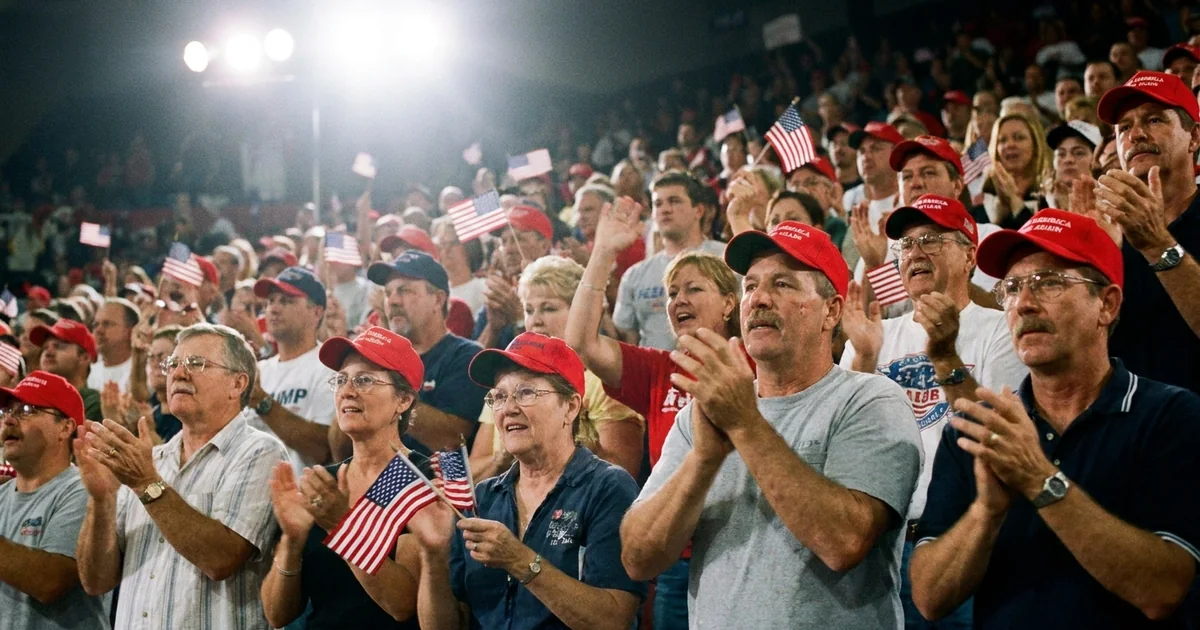
The crowd in Grand Island, Nebraska, cheered. On Monday night, in the middle of a rally for Sen. Pete Ricketts, Donald Trump said “They can take out a city. Let them take out Los Angeles. Let them take out San Diego,” and the audience applauded. Then he added, “This is a very small price to pay.” The president of the United States told a room of supporters that the destruction of two American cities is an acceptable cost of his war, and the room clapped. We think that sentence, and that applause, say more about where the MAGA movement has arrived than any platform or policy paper could.
A Small Price, Paid by Other People
No context makes this better. Trump invited an enemy to destroy American cities, called it “a small price to pay,” and moved on. The people who would pay that price are not at the rally. They are in the two cities he named, which sit in a state that votes against him. And it came days after he told TIME he had extended the Iran war by choice, not necessity. He chose to prolong a war, and he is now telling Americans that losing their cities is acceptable.
The White House says he meant the opposite. Its rapid-response account claimed the U.S. is fighting to stop Iran from being able to take out LA and San Diego with a nuclear weapon, and Communications Director Steven Cheung called the reaction a “media freakout.” That is spin, and it is the same spin every time: say the ugly thing, let the crowd cheer it, then tell everyone who heard it that they misunderstood. If the point was deterrence, nothing required “let them,” “small price,” or a pause for applause. He said what he said.
California heard it plainly. Gov. Gavin Newsom called it “deranged and dangerous,” and the state announced it would monitor threats. Los Angeles Mayor Karen Bass said a president’s job is to protect the country, not threaten it. San Diego Mayor Todd Gloria: “San Diego is not collateral damage. We are not expendable. And we are never a ‘small price to pay.'” Even Jim Desmond, a Navy veteran running for Congress as a Republican in San Diego County, said “No American city is expendable.” When a Republican in a swing seat has to say that out loud, the party’s silence everywhere else is a choice.
Is It 25th Amendment Time?
Politically, yes, in the sense that a president who cheers the loss of American cities should not be trusted with the military. Procedurally, it is a trap, and anyone selling it as imminent is selling false hope. Section 4 of the 25th Amendment requires the Vice President and a majority of the principal officers of the executive departments to declare the president unable to do the job. That is Trump’s own Vice President and Trump’s own Cabinet, a group selected for loyalty. If he objects, they must reaffirm within four days, and Congress then has 21 days, with two thirds of both chambers required to keep him out.
We have seen how that ends. In April, after Trump posted that “a whole civilization will die tonight, never to be brought back again,” more than 70 members of Congress called for his removal, and Rep. Sam Liccardo of California said the Cabinet must invoke the amendment. Not one Cabinet member moved. That refusal is its own indictment: the people closest to him have heard all of it and decided it is fine.
So the remedy is not in the Cabinet room. It is in Congress, which can force war powers votes and cut off the funding for a war the president admits he stretched out, and it is in the electorate, which votes in four weeks. Every Republican who stays quiet about this should be asked, on the record and on the ballot, whether Los Angeles and San Diego are a price they are willing to pay too. Democracy is the only mechanism left that does not depend on the loyalty of Trump’s appointees, and it is the one that works.