
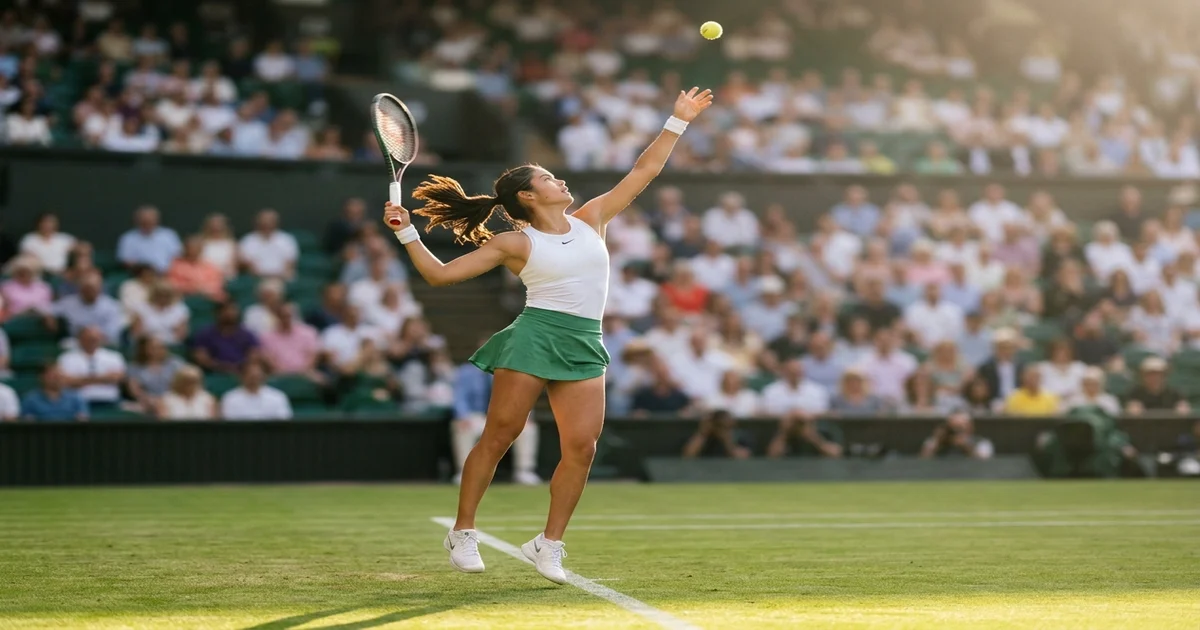
Naomi Osaka has won four Grand Slam titles, built one of the most devastating serve-and-power games in tennis, and turned her personal journey into a cultural touchstone for an entire generation of athletes.
The one thing she had never done was win consistently on grass. That changed Friday in Bad Homburg, and the timing could not be better.
A Surface She Could Never Crack
Osaka rolled through Wang Xinyu 6-3, 6-3 in sweltering 37-degree heat at the Bad Homburg Open to reach the first grass-court final of her career. She entered as the No. 6 seed and has not dropped a set all tournament, the kind of dominance she routinely displays on hard courts but has never managed on the slippery, low-bouncing surface that has traditionally neutralized her power baseline game.
The numbers tell a clear story. Osaka owns two Australian Open titles and two US Open trophies, all on hard courts. At Wimbledon, her previous best was a third-round exit. Grass has been the outlier, the one major surface where her game did not translate. A semifinal at the 2018 Nottingham Open was the closest she had come to a grass-court final before this week.
What makes Friday’s breakthrough significant is not just the result but the manner of it. Osaka’s serve was virtually unreturnable in the semifinal, and her movement, historically her biggest vulnerability on grass, looked fluid and confident throughout. She played like someone who has figured out how to adapt her weapons to a surface that used to blunt them.
The Comeback Arc Gets a New Chapter
This run hits differently when you remember where Osaka was two years ago. She stepped away from the tour for over a year, a stretch that included the birth of her daughter Shai and a candid reckoning with the mental health pressures of elite competition that made her one of the most important voices in professional sports. The return has been gradual. There were early-round exits, ranking rebuilds, and the slow process of finding her timing against opponents who had continued to evolve while she was away.
Bad Homburg is the strongest signal yet that the comeback is not just real but accelerating. A deep run at a Wimbledon warm-up event, without dropping a set, against quality opponents, on her weakest surface? That is not a player grinding her way back to relevance. That is a player peaking at exactly the right moment.
Her Nike Wimbledon dress sold out instantly after its reveal earlier this week, a reminder that Osaka’s commercial and cultural pull remains enormous regardless of her ranking. But the tennis itself is what matters now, and the tennis has been excellent.
Muchova Is No Pushover
Saturday’s final against Karolina Muchova will be a genuine test. The Czech entered Bad Homburg as the fourth seed and has her own grass-court pedigree, having reached the Wimbledon semifinals in 2021. Muchova’s game is built on variety and touch, the kind of unpredictable shot-making that can disrupt power players by changing the rhythm of rallies. She slices, she drop-shots, she comes to the net at awkward moments. If Osaka wants the title, she will need to impose her tempo against an opponent who thrives on disrupting it.
The Wimbledon Math
Osaka will carry the 14th seed into Wimbledon when the tournament opens on Monday. That seeding means she avoids the top players until the later rounds, giving her time to build confidence on the grass courts of the All England Club. If she wins the Bad Homburg final against fourth-seeded Karolina Muchova on Saturday, she will arrive at Wimbledon with a grass-court title, something she has never had.
The draw matters, but form matters more. Osaka’s serve-driven game should, in theory, translate beautifully to grass. Huge first serves that skid low, aggressive returns that rush opponents, and the willingness to come forward and finish points at the net are exactly what Wimbledon rewards. The question was always whether she could trust those weapons on a surface where the footing is uncertain and the ball behaves differently off the bounce. Bad Homburg suggests she can.
For tennis fans looking to watch her Wimbledon run, the storyline writes itself: a four-time Grand Slam champion, a mother, a mental health advocate, playing the best grass-court tennis of her life at the one major that has always eluded her. Whether she lifts the Venus Rosewater Dish or flames out in the first week, the trajectory that brought her to this moment is one of the best stories in sports right now.