
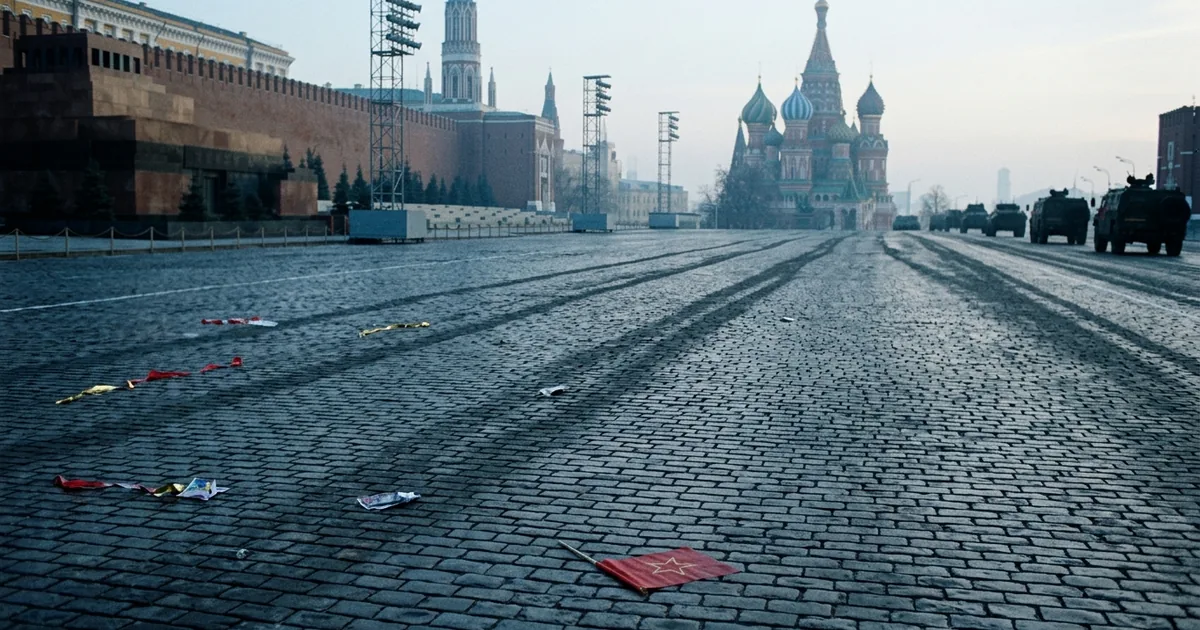
From Red Square on Saturday, Vladimir Putin told reporters the four-year war on Ukraine was “coming to an end” and floated meeting Volodymyr Zelensky in a third country, his most flexible line on a face-to-face since Moscow’s full invasion in 2022. The framing is conciliatory. The conditions underneath are not.
The Red Square Message, Decoded
Putin chose the optics carefully. The Victory Day parade is Russia’s most-watched televised event, and the line he delivered after walking the cobblestones, “I think the matter is coming to an end,” landed as headline-ready optimism (per Al Jazeera, May 2026). It was the same speech where he declared “victory has always been and will be ours.”
That second sentence is the one to read first. Putin did not say the war was ending because the parties had narrowed their differences. He said it was ending because Russia is winning, and the only remaining question is when Ukraine accepts the bill.
A “Meeting” That’s Actually a Signing Ceremony
The third-country offer is being parsed as a concession. It isn’t. Putin specified that any sit-down with Zelensky abroad would happen “only after a peace treaty aimed at a long-term historic perspective is finalised.” Translation: the meeting is the signing ceremony, not the negotiation. By the time the two leaders are in the same room, every line has already been drafted and Kyiv has already agreed.
That is a posture, not a breakthrough. It hands Russia control of the diplomatic clock and keeps Putin out of any setting where he might be questioned in real time. For a leader who has not met Zelensky face-to-face in any format since the war began, “I’ll show up to sign what you’ve already conceded” is not flexibility. It is the opposite.
What’s Still on the Table (and What Isn’t)
Look at the demand sheet and the “ending” framing collapses. Russia still wants international recognition of every occupied territory plus the parts of Donbas, Zaporizhzhia, and Kherson it claims but doesn’t fully control. It still wants Ukraine permanently barred from NATO. It still wants Kyiv’s military capped. And it still wants the sanctions architecture rolled back.
Ukraine’s positions have not converged. Zelensky still insists on full Russian withdrawal, the return of prisoners and the kidnapped children, war-crimes accountability for Russian commanders, and security guarantees with Western teeth. The UK and France went further, signing a Paris “declaration of intent” in January to put their own troops on Ukrainian soil once a ceasefire holds. Putin has explicitly ruled that out.
So when the Kremlin’s preferred messenger tells reporters the war is wrapping, what is actually wrapping? Not the territorial dispute. Not the security architecture. Not the question of Ukrainian sovereignty inside its 1991 borders. The thing that’s wrapping is the diplomatic patience of an American administration that wants this off its 2027 ledger.
The Ceasefire That Wasn’t
The window in which Putin made his remarks was supposed to be a working pause. Donald Trump announced a three-day ceasefire and a thousand-for-thousand prisoner swap to coincide with Victory Day (per CBS News, May 2026). Zelensky agreed in writing, with the line “Red Square is less important to us than the lives of Ukrainian prisoners who can be brought home.”
The ceasefire collapsed on contact. Within twelve hours of taking effect, Zelensky’s office logged 1,820 Russian violations, including a drone strike on a kindergarten in Sumy that killed two people. Russia reported downing 264 Ukrainian drones and shut thirteen southern airports as Kyiv targeted a Yaroslavl oil facility 700 kilometers inside Russia, per Defense News.
Both sides spent Victory Day attacking each other while Putin spent it telling cameras the war was ending. The asymmetry is the point. The ceasefire was never a pause. It was a stage.
Where This Leaves Trump
The Trump administration has spent six months trying to land a deal it once said was 90% done. Three rounds of US-Russia-Ukraine talks in the UAE and Switzerland between January and February produced no breakthrough, and a round in Geneva ended with Ukraine making its fastest battlefield gains in two years rather than a settlement. The remaining 10% turned out to be the ten percent that matters: who keeps the land, who joins NATO, who guards the line.
Putin’s Red Square framing is calibrated to that audience. By saying the war is “ending,” he gives Trump a quotable win and an excuse to lean harder on Kyiv to close. By making the “meeting” contingent on a finished treaty, he ensures the only thing Trump can deliver to Zelensky is a take-it-or-leave-it draft authored in Moscow.
Ukraine’s read of this is unsentimental. Zelensky accused Putin of “utter cynicism” after the Victory Day truce, and his press team has stopped pretending Russia is bargaining in good faith. For Kyiv, the question now is not whether Putin will sign a deal. It is whether the United States will keep weapons flowing while Russia tests how much pressure the White House will absorb before pushing Ukraine to capitulate.
What to Watch
Three signals will matter more than any Red Square line over the next thirty days. First, whether Trump extends the three-day window into a longer truce, which he hinted at but has not delivered. Second, whether the prisoner swap actually completes on schedule, since that is the only thing both sides agreed to in writing. Third, whether the next round of talks happens at the negotiator level, where Rustem Umerov flew to Miami last week for exactly this purpose, or whether Putin succeeds in dragging it directly to a leaders’ summit where the terms are pre-cooked.
A war that has lasted longer than Soviet involvement in the Second World War does not end because one side declares it over. It ends when the territorial line either gets ratified or gets contested into stalemate. Putin chose Saturday to push for the first. Ukraine and its remaining allies will spend the next thirty days deciding whether they can still force the second.