
A Bengaluru-based deep-tech company has secured its fifth Indian patent for a rare-earth-free electric motor. If it scales, its impact could extend well beyond the automotive sector. Many experts argue China doesn’t need to fire a missile to rattle Western economies or the dollar index. It only needs to restrict access to rare earth elements. And in April 2025, it did exactly that. Beijing imposed export controls on seven heavy rare earth elements and their related magnets — the precise inputs that power the electric motors in almost every EV on the road.
European and American automakers were then forced to cut production while licensing approvals fell below 25% in some industrial sectors. China’s leverage here is not geological — it holds only about 35% of global rare earth reserves. Its power comes from processing those minerals.
According to the International Energy Agency’s 2024 figures, China accounts for approximately 91% of global rare earth refining and separation, and 94% of the sintered permanent magnets used in EV motors. Control the processing, and you control the industry.
That is the context in which Bengaluru-based Vimag Labs — an Accel-backed startup that raised $5 million in a Series A round that closed in January 2026 — should be viewed.
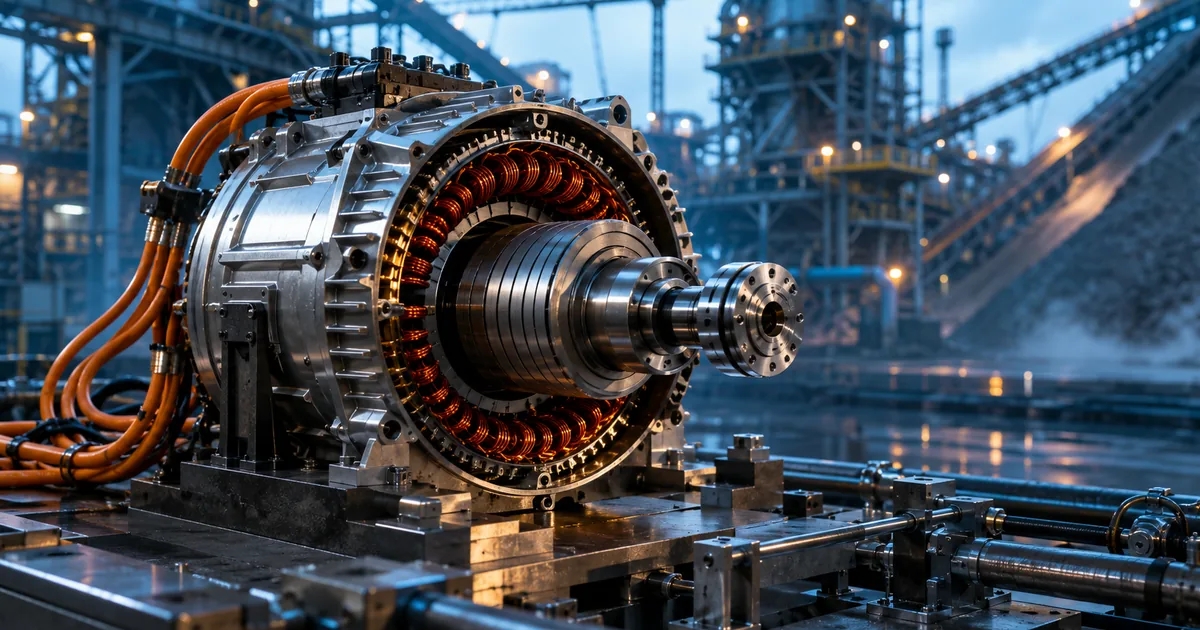
Vimag’s Virtual Magnet Synchronous Motor (VMSM) generates its magnetic field in real time using power electronics and proprietary control algorithms, eliminating the need for any rare earth permanent magnet. Its fifth Indian patent, titled A Robust Rotating Transformer Excited Synchronous Motor and Its Control, protects the core architecture of this platform.
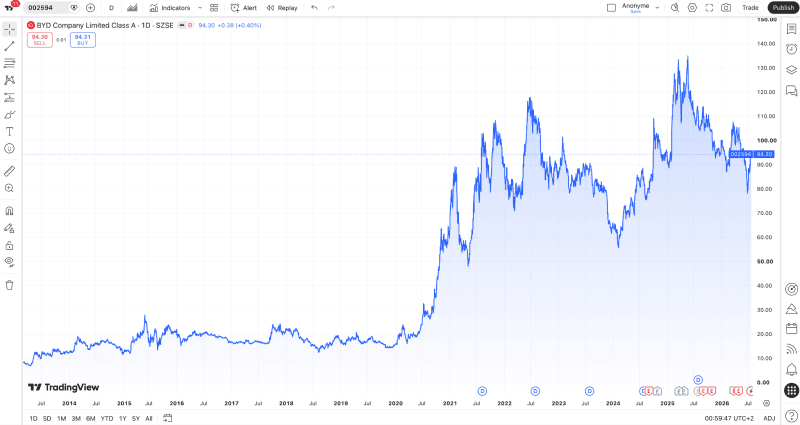
The approach belongs to a class of motors known as Electrically Excited Synchronous Motors (EESMs) rather than being an invention unique to Vimag. Even so, the company’s implementation could eventually shake up the stock screener, particularly given how companies such as BYD have built their competitive advantage through near-end-to-end control of the production chain, driving their remarkable growth.
Renault has been building a variant of this technology since 2012. What is new here is the specific implementation, the five patents protecting it, and, of course, the strategic timing. If the technology is validated for commercial scale, the competitive landscape changes fundamentally. A material the industry no longer needs cannot be weaponized.
Analysts estimate it would take the West 15 to 30 years to rebuild an independent rare earth supply chain. Building a motor that requires none at all simply skips that problem.
Here the story becomes more interesting than the motor itself. India holds an estimated 6.9 million tonnes of rare earth reserves, placing it among the world’s largest rare earth reserve holders. It has historically lacked China’s processing infrastructure to monetize them.
Vimag’s approach sidesteps that constraint entirely. India does not need to match China’s refining capacity. It would be selling the solution that makes refining capacity irrelevant.
Vimag is also developing a custom chip to reduce the cost of the power electronics at the heart of the VMSM platform. That shift lines up with India’s broader semiconductor ambitions under its Production Linked Incentive Scheme. Most importantly, the motor’s core inputs (copper, steel, and semiconductors) are all materials that India can increasingly obtain domestically or through allied nations’ supply chains.
The strategic value of potentially becoming the country that could neutralize China’s rare earth leverage extends well beyond export revenues. Vimag is already scaling operations across India, Europe, and the United States.
India licensing this technology to Western automakers would mark a genuine shift: the country would no longer be a cost-efficient manufacturer of foreign designs. It would be an exporter of intellectual property solving a Western strategic vulnerability.
The defence dimension compounds this. Rare earth dependence is not only an EV problem. Military systems such as radar, precision-guided munitions, and the motors powering autonomous platforms share the same exposure.
Vimag has explicitly identified defence applications as part of its product roadmap. A brushless, software-defined motor free of Chinese-origin materials is not a civilian luxury; it is a defence procurement argument heard in defence ministries from Brussels to Washington.
Everything ultimately hinges on one question: can the VMSM match the performance of permanent magnet motors at production scale and at a competitive cost? No independent bench data has been published. Even Valeo and MAHLE (well-capitalised Tier 1 suppliers working on a comparable brushless EESM known as iBEE since 2022) do not expect commercial production before 2028.
Vimag is a $5 million company running pilots. But the geopolitical problem it is attempting to solve is worth far more than that. If the technology proves commercially viable, India will have exported not just a product, but a structural solution to one of the defining supply chain vulnerabilities of the decade.