
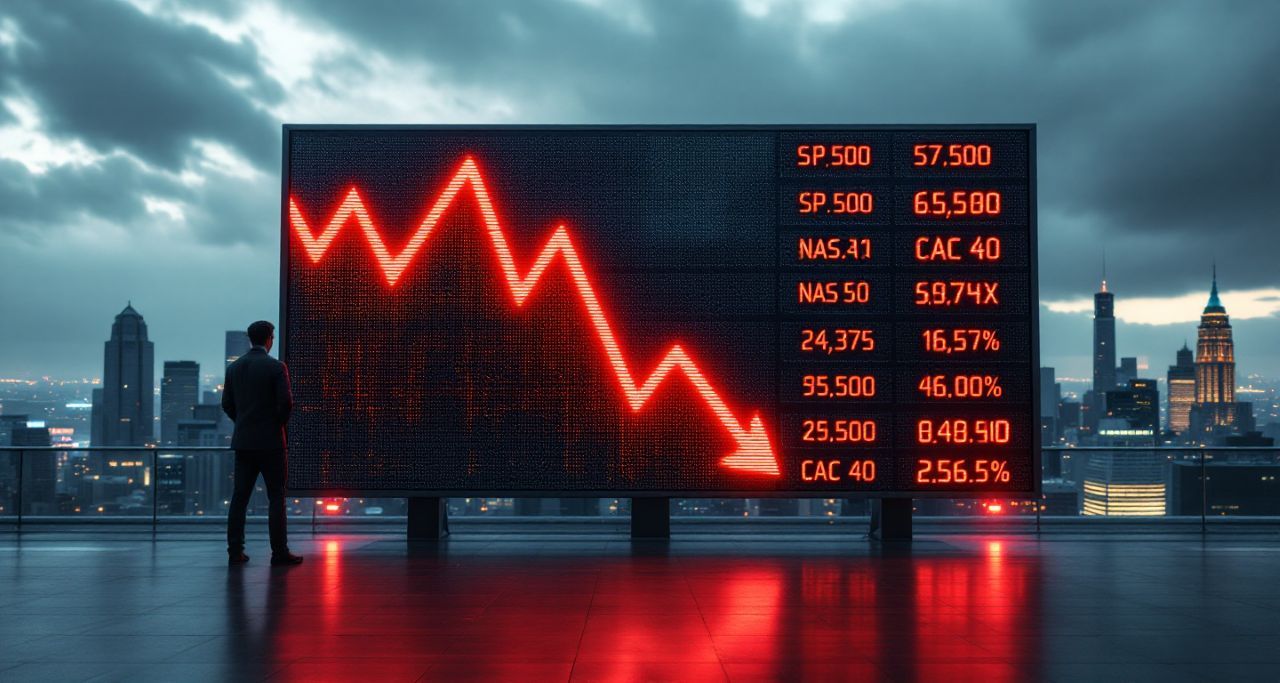
The worst week for risk assets in years is getting worse. Bitcoin just crashed through $70,000, silver posted its biggest single-day collapse since 1980, and the Nasdaq has shed over 4% in a brutal tech selloff that shows no signs of slowing down.
Welcome to February 2026, where everything investors thought they knew about market stability is getting stress-tested in real time.
The carnage started Friday when President Trump nominated Kevin Warsh as the next Federal Reserve chair. What should have been calming news for Wall Street, given Warsh’s reputation as an institutionally minded choice, instead triggered a cascade of liquidations that has wiped out hundreds of billions in market value across asset classes. The so-called “Warsh Shock” has become shorthand for the fastest unwinding of speculative positions in recent memory.
Bitcoin Falls Below $70,000 For First Time Since 2024
As of Thursday morning, Bitcoin is trading near $69,000, its lowest level since November 2024. The cryptocurrency has plummeted roughly 40% from its October 2025 record high of $126,000, wiping out over $200 billion in market value in just the past week alone. Ethereum has fared even worse on a percentage basis, dropping 24% over seven days to trade around $2,100.
The crypto Fear and Greed Index has collapsed to 14, deep in “extreme fear” territory and the lowest reading since late 2025. More than 90 of the top 100 cryptocurrencies are bleeding red, and the total market cap has cratered from nearly $3 trillion at the start of the year to roughly $2.5 trillion today. That is $410 billion in evaporated value in just over a month.
The damage extends well beyond spot prices. U.S. spot Bitcoin ETFs have recorded over $3 billion in net outflows since mid-January, with more than 50% of ETF assets now underwater. Strategy, the corporate Bitcoin treasury leader formerly known as MicroStrategy, saw its stock tumble as Bitcoin broke below its average cost basis of $76,000. Crypto exchanges are getting crushed too, with Coinbase, Gemini, and Bullish shares down between 40% and 60% over the past three months as trading volumes evaporate.
Silver Posts Worst Day Since 1980 As Precious Metals Crash
The precious metals market experienced what can only be described as a historic implosion. Silver crashed 31.4% on Friday, its worst single-day performance since the Hunt Brothers silver collapse in March 1980. Gold dropped 9% the same day, unwinding months of safe-haven gains in a matter of hours.
The irony is almost too much to process. Investors had been piling into gold and silver as hedges against potential Fed instability and dollar debasement under a Trump-aligned central bank chair. Warsh’s nomination, rather than triggering the inflationary chaos markets feared, signaled exactly the opposite: a hawkish, independent Fed chair who will prioritize price stability over accommodative policy.
Michael Burry, the famed “Big Short” investor, warned that Bitcoin’s ongoing decline could wipe out companies holding large BTC reserves and that up to $1 billion in precious metals positions were liquidated in forced selling cascades. The contagion is spreading exactly as traders feared it would.
Tech Sector In Full Retreat As AI Spending Spooks Investors
The stock market has not escaped the carnage. The S&P 500 hit a seven-week low on Thursday, while the Nasdaq has strung together multiple days of losses exceeding 1%. The culprit is a violent rotation out of technology stocks that has accelerated with each passing session.
Alphabet poured gasoline on the fire Wednesday night when it projected 2026 capital expenditures of up to $185 billion, roughly $60 billion more than Wall Street expected. Deutsche Bank said the announcement “stunned the world” while noting that in the current flux surrounding AI investments, it is unclear whether that is bullish or bearish. Investors apparently decided bearish, sending Alphabet shares down 5% in after-hours trading.
Advanced Micro Devices took a 17% hit after its first-quarter guidance underwhelmed analysts. Qualcomm dropped nearly 10% on memory shortage warnings. Software stocks are in freefall, with the WisdomTree Cloud Computing Fund logging its longest losing streak of the year. ServiceNow, Salesforce, Workday, and Adobe have all hit fresh 52-week lows.
The so-called Magnificent Seven tech giants have collectively lost hundreds of billions in market capitalization this week. Microsoft, Meta, Nvidia, and Amazon are all trading lower, with only Apple managing to buck the trend on relative iPhone strength.
The Warsh Effect: What It Means For Markets
Kevin Warsh is not the political stooge some feared Trump would install at the Fed. His nomination represents a pivot toward orthodox monetary policy that markets have greeted with relief and pain in equal measure. Relief because central bank independence appears preserved. Pain because that independence comes with hawkish credentials.
Warsh served at the Fed from 2006 to 2011, navigating the Global Financial Crisis while developing a reputation as an inflation hawk who pushed back against quantitative easing. He resigned after publicly opposing the Fed’s second round of balance sheet expansion. Now he returns at a time when investors had been pricing in continued policy accommodation.
The dollar strengthened immediately on his nomination, which is exactly what crushed gold, silver, and Bitcoin. A stronger dollar makes commodities more expensive for foreign buyers and reduces the appeal of non-yielding assets. Higher-for-longer interest rate expectations reduce the present value of growth stocks and speculative assets.
Barclays has noted that the S&P 500 historically logs average drawdowns of 5%, 12%, and 16% over the one, three, and six-month periods after a new Fed chair takes the helm. If history is any guide, this selloff may only be getting started.
Where Markets Go From Here
Compass Point analysts argue the crypto bear market is in its “final innings,” with Bitcoin likely to bottom between $60,000 and $68,000 absent a broader equity bear market. That $60,000-$68,000 zone represents where long-term holders have historically shown buying conviction. Below that, the next support is around $55,000, a level that would require what analysts call “a major risk-off shock similar to 2022.”
John Blank, chief equity strategist at Zacks, is less sanguine. He told CNBC that Bitcoin could hit $40,000 this year, noting that previous crypto winters have seen 70% to 80% declines from all-time highs. From Bitcoin’s October peak of $126,000, that would put the bottom somewhere between $25,000 and $38,000.
For stocks, the picture is equally uncertain. Morgan Stanley’s Mike Wilson remains bullish on 2026 despite the near-term volatility, arguing that easier fiscal, monetary, and regulatory policy across multiple geographies will ultimately support risk-taking. But he acknowledges the “run it hot” approach will not be smooth.
The immediate focus now turns to Friday’s employment report and Warsh’s upcoming Senate confirmation hearings. Markets will be parsing every word for clues about the future path of rates and Fed policy. Senator Thom Tillis has vowed to block the nomination until an investigation into the Fed’s building renovation is resolved, adding another layer of uncertainty to an already jittery market.
For now, traders are doing what traders do in times of uncertainty: selling first and asking questions later. The contagion has spread from crypto to precious metals to tech stocks, and the question is no longer whether the selloff will continue but how far it will ultimately go.