
The Supreme Court just handed Donald Trump the most significant legal defeat of his second presidency, and his response tells you everything you need to know about how this White House operates when it loses.
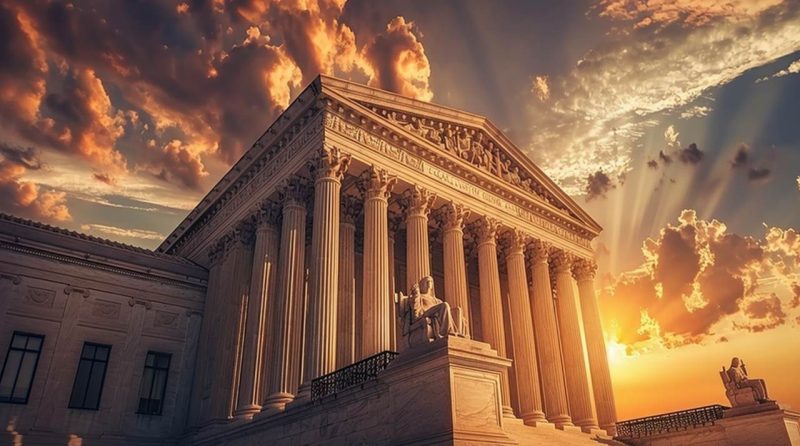
In a 6-3 ruling delivered Friday morning, the nation’s highest court declared that Trump’s sweeping tariff regime, imposed under the International Emergency Economic Powers Act (IEEPA), was flatly illegal. Chief Justice John Roberts, writing for the majority, did not mince words: the Constitution gives Congress the power to tax, not the president. And no amount of emergency declarations changes that fundamental fact.
Within hours, a visibly furious Trump stood in the White House and called the justices in the majority “very unpatriotic and disloyal to the Constitution,” a remarkable attack on a branch of government that includes two justices he personally nominated. He then signed an executive order imposing a new 10% global tariff under a completely different law, because if there’s one thing this administration does consistently, it’s refuse to take no for an answer.
What The Court Actually Said
The ruling was both sweeping and surprisingly straightforward. Roberts noted that before Trump, no president had ever used IEEPA to impose tariffs. The law, passed in 1977, was designed for economic emergencies involving foreign threats, not for unilaterally restructuring global trade.
The majority opinion highlighted that IEEPA does not explicitly mention tariffs, and the administration could point to no statute where Congress had ever suggested the law’s language could be stretched to cover import duties of this magnitude and scope.
Roberts was joined by the court’s three liberal justices (Sotomayor, Kagan, and Jackson) along with two fellow conservatives: Neil Gorsuch and Amy Coney Barrett. Both were Trump nominees, which explains the president’s particularly personal fury at the result. Trump told reporters the decision was “an embarrassment to their families,” referring to Gorsuch and Barrett by name.
The three dissenters, Justices Thomas, Alito, and Kavanaugh, argued the tariffs were lawful under the statute’s text. But even Kavanaugh, in his dissent, acknowledged that the refund process triggered by this ruling “is likely to be a mess.”
The $175 Billion Question Nobody Answered
Here’s where things get really interesting, and really expensive. As of mid-December, IEEPA tariffs had generated roughly $130 billion in revenue, according to U.S. Customs and Border Protection. The Penn Wharton Budget Model now estimates the total collected under these struck-down duties exceeds $175 billion.
That money was paid by importers, which means companies like Costco, Toyota, and hundreds of others are already lining up in court to get it back. The Supreme Court’s opinion was conspicuously silent on whether refunds are required. This was deliberate, and it sets up what could be the most complicated financial unwinding in modern trade history.
Illinois Governor JB Pritzker has already demanded $1,700 per family in refunds, framing the tariffs as an illegal tax that consumers ultimately paid through higher prices. He’s not wrong on the economics, even if the legal path to actual household refunds is far murkier than a press release suggests.
Trump’s Immediate Counterpunch
True to form, Trump did not spend long mourning the loss. Friday evening, he announced via Truth Social that he had signed a new executive order imposing a 10% global tariff under Section 122 of the Trade Act of 1974. That law allows the president to impose a temporary surcharge of up to 15% for 150 days to address balance-of-payments deficits.
The key word there is “temporary.” After 150 days, congressional approval is required to extend the duties. This is a very different legal footing than the IEEPA authority Trump had been using, which carried no such time limit. The new tariff takes effect Tuesday at 12:01 a.m. ET.
The White House also announced that U.S. Trade Representative Jamieson Greer will pursue Section 301 investigations of “most major trading partners” on an accelerated timeline. Section 301 is the same authority used to impose tariffs on China during Trump’s first term, and it requires more procedural steps but is considered far more legally durable.
For some countries, this actually means lower tariff rates in the near term. The European Union, for instance, had agreed to a 15% tariff rate under a deal negotiated with the Trump administration. Those IEEPA-based duties are now void. Under the new 10% global rate, Europe gets a temporary discount. China’s situation is more complex, with its total rate dropping to 35% (down from higher combined IEEPA and Section 301 rates), though that could climb again as new investigations proceed.
Wall Street Celebrated (With Caveats)
Markets reacted exactly the way you’d expect when a major source of economic uncertainty gets removed, even partially. The S&P 500 rose 0.69% to close at 6,909.51, the Nasdaq gained 0.9%, and the Dow added 230 points. Retail stocks led the charge, with Abercrombie & Fitch up 5.5%, Dollar Tree gaining 4%, and Victoria’s Secret surging 5.6%.
Jeff Kilburg, CEO of KKM Financial, called the ruling “a green light for equity bulls,” noting that tariff uncertainty has been an emotional undercurrent in markets since last April’s Liberation Day chaos. Other analysts were more measured. Wolfe Research’s Tobin Marcus cautioned that “we fully expect that the tariffs will be reconstituted under other authorities.”
Renaissance Macro’s Neil Dutta put it bluntly: “I don’t think we have heard the last from Trump and tariffs.”
What This Actually Means Going Forward
Let’s be clear about what survived and what didn’t. The ruling only invalidates tariffs imposed under IEEPA. Duties enacted under Section 232 (steel and aluminum tariffs) and Section 301 (the China-specific tariffs from Trump’s first term) remain fully in effect. Those represent roughly a third of all Trump-era tariff revenue.
What died was Trump’s ability to wake up one morning, declare an emergency, and slap whatever tariff rate he wanted on whatever country he chose. That’s what made the IEEPA approach so powerful and so constitutionally questionable. Roberts’s opinion makes clear that this kind of sweeping economic power requires explicit congressional authorization.
Rachel Ziemba, adjunct senior fellow at the Center for a New American Security, told Al Jazeera the ruling will “rein in Trump’s ability to threaten tariffs against any country for any reason.” She expects Congress may still approve tariffs on China and possibly secondary sanctions, but broader measures like the reciprocal tariffs or fentanyl-related duties on Canada and Mexico are unlikely to survive the legislative process.
The 150-day clock on Trump’s new Section 122 tariffs starts Tuesday. That puts the expiration right around mid-July, perfectly timed for a summer showdown with Congress. If Republican leadership can’t or won’t pass legislation to extend or replace these duties, Trump’s tariff agenda effectively expires with the fireworks.
The Bigger Picture
This ruling is about more than tariffs. It’s the Supreme Court drawing a line around executive power in a way that echoes its student loan ruling against Biden. The “major questions doctrine,” which Roberts cited (though that portion didn’t garner a full majority), essentially says that when a president claims vast new powers with enormous economic consequences, they need to show Congress specifically gave them that authority.
For consumers, the immediate impact may be modest. Many of the trade deals negotiated over the past year will need to be renegotiated or shifted to new legal authorities. Prices on imported goods may see some relief, but the 10% global replacement tariff and surviving Section 232 and 301 duties mean the era of free-flowing cheap imports is not returning.
For businesses, the refund question looms largest. If courts ultimately require the government to return $175 billion in illegally collected tariffs, the fiscal implications are staggering. That money would flow back to importers, not directly to consumers, though competitive pressure should eventually push some savings downstream.
And for Trump, this is a president who built his economic brand on tariffs now watching his signature policy get dismantled by a court he helped build. His fury at Gorsuch and Barrett is telling. These are not justices who oppose tariffs on principle. They simply refused to let a president bypass Congress to impose them.
That distinction matters. The Constitution was designed with exactly this kind of check in mind. Whether you love tariffs or hate them, the question was never really about trade policy. It was about who gets to make that call. On Friday, the Supreme Court reminded everyone that it’s supposed to be Congress.