
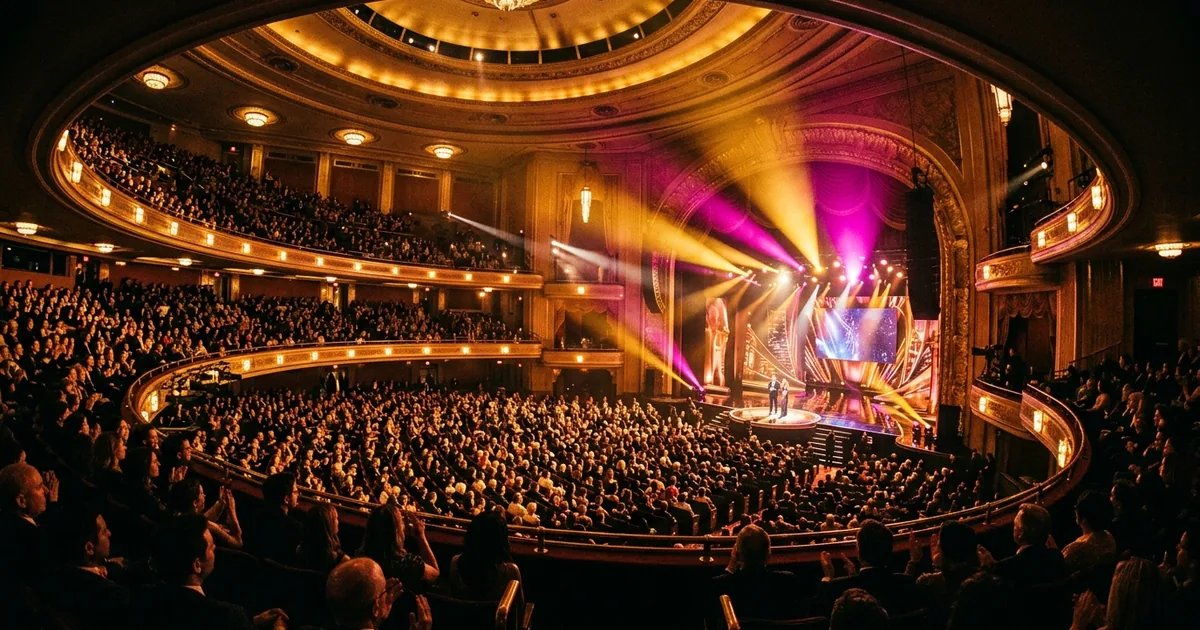
Pink descended from the ceiling of Radio City Music Hall dressed as Peter Pan on Sunday night, and from that moment the 2026 Tony Awards belonged to her.
The Grammy-winning singer’s first turn as host delivered one of the best opening numbers the ceremony has seen in years, setting the tone for an evening that crowned Schmigadoon as Best Musical, celebrated a historic playwriting achievement, and watched John Lithgow become the oldest man ever to win a competitive acting Tony. Broadway came to play, and for once the show matched the stakes.
Pink Understood the Assignment
Hosting the Tonys is a thankless job that has defeated better performers than most people realize. Pink made it look effortless. After the Peter Pan entrance, which involved actual aerial rigging and the kind of physical commitment that Broadway veterans respect, she pivoted to a Chicago 30th anniversary tribute that had the theater community on its feet. Performing “All That Jazz” while executing genuine Fosse choreography as Velma Kelly is not something you phone in, and Pink clearly did not.
The choice to book a rock star as host rather than a comedian or actor was a risk. The Tonys have struggled with ratings for years, caught between serving their core theater audience and attracting the broader viewership that CBS needs to justify the broadcast. Pink threaded that needle by being genuinely entertaining without condescending to the art form, a balance that previous hosts have frequently botched.
Schmigadoon Takes Best Musical in a Four-Award Sweep
The biggest win of the night went to Schmigadoon, adapted from the Apple TV+ series, which collected four Tonys including the top prize. The show’s journey from streaming comedy to Broadway heavyweight is a case study in how IP moves across platforms in 2026. What started as a loving pastiche of golden-age musicals proved it had the substance to hold a live stage, not just a small screen.
The win validates a model that Broadway has been experimenting with for years: taking properties that already have built-in audiences from film, television, and streaming and translating them for the stage. It is a commercial strategy, sure, but Schmigadoon’s four-award haul suggests the artistic execution matched the business logic.
Bess Wohl and John Lithgow Write Themselves Into History
The evening’s most significant historical moments came in the play categories. Liberation won Best Play, making writer Bess Wohl only the second American woman to win in that category and the first in nearly 40 years. That statistic is both a celebration of Wohl’s achievement and an indictment of how long the theater establishment took to recognize women writing at the highest level.
John Lithgow’s Best Actor win for his portrayal of Roald Dahl in Giant was the night’s feel-good story. At 80 years old, Lithgow set a record as the oldest man to win a competitive acting Tony, and he did it 53 years after winning his first Tony for The Changing Room in 1973. The standing ovation he received was not just for the performance. It was for a career that has spanned five decades across theater, film, and television without ever losing its edge.
The Revival Categories Honored Classics Done Right
Ragtime picked up Best Revival of a Musical along with acting wins for Joshua Henry and Caissie Levy, a result that felt both deserved and timely. The show’s themes of immigration, racial tension, and American identity hit differently in 2026 than they did in 1998, and this production leaned into that contemporary resonance without abandoning the original’s emotional architecture.
Death of a Salesman won Best Revival of a Play, continuing its remarkable track record of critical recognition across multiple Broadway productions. Arthur Miller’s text remains one of those theatrical documents that each generation discovers anew, and the 2026 production clearly found something fresh in its examination of the American dream’s failure points.
For anyone tracking the broader cultural conversation, the Tonys offered a snapshot of where live performance sits in the entertainment hierarchy. In a year dominated by streaming wars, AI-generated content, and attention-span anxiety, the awards reminded audiences that the theatrical experience remains irreplaceable. A singer flying through the air, an 80-year-old actor earning a standing ovation, a playwright breaking a four-decade drought: these are moments that demand physical presence and shared breath, and no algorithm can replicate them.