
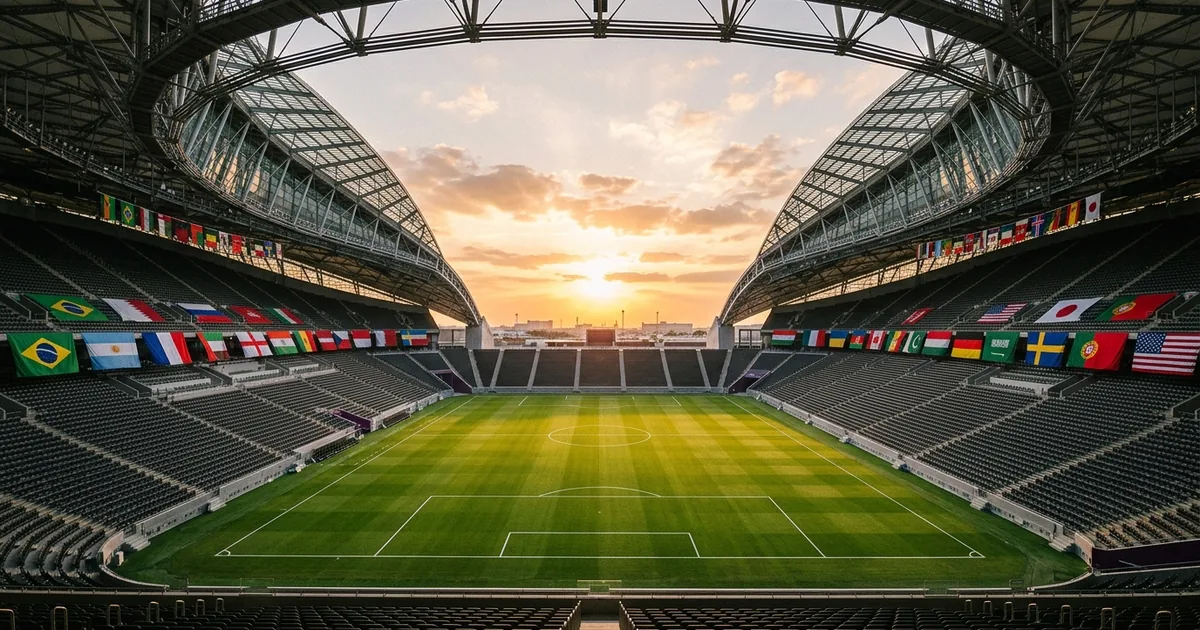
The 2026 FIFA World Cup begins Wednesday with Mexico facing South Africa at Estadio Azteca in Mexico City, launching the largest tournament in the event’s 96-year history across three countries and 48 teams. This is the first World Cup held on American soil since 1994, the first ever shared between three host nations, and the moment that will test whether the United States can pull off the most logistically ambitious sporting event the world has ever attempted.
What Makes This Tournament Different From Every Other
The numbers alone tell the story. This World Cup expanded from 32 teams to 48, adding 16 additional nations and dozens of extra matches. Games will be played across 16 venues in the United States, Canada, and Mexico, from MetLife Stadium in New Jersey to BC Place in Vancouver to the Azteca in Mexico City. The geographic footprint spans roughly 3,000 miles north to south, and the time zone spread means viewers worldwide will need to rearrange their schedules to follow their teams.
For the United States specifically, this is a generational sports moment. The 1994 World Cup remains the highest-attended in history, and organizers expect this edition to shatter those records. Los Angeles, which hosts a FIFA countdown concert on June 10 featuring Ava Max, Major Lazer, and Davido, is treating the tournament as a citywide cultural event rather than just a sporting one. In the Bay Area, Santa Clara’s monthly night market went soccer-themed this weekend as the first local matches approach.
The Political Backdrop Nobody Can Ignore
The tournament arrives at a politically charged moment for its primary host nation. Border czar Tom Homan announced over the weekend that he is reviewing plans to deploy “more ICE agents than you have ever seen” to New York City, one of the World Cup’s marquee host cities. The threat came as a direct response to Governor Kathy Hochul signing legislation limiting cooperation between local authorities and federal immigration enforcement, and it has set up a collision between the administration’s immigration agenda and the international goodwill a World Cup demands.
New York City Mayor Zohran Mamdani renewed his call to abolish ICE on Saturday, escalating a standoff that could define the atmosphere around matches at MetLife Stadium. The optics of a massive immigration enforcement surge in a city welcoming fans from around the globe would be, to put it gently, complicated.
FIFA has historically insisted that host nations provide welcoming environments for international visitors, and a visible ICE presence at or near World Cup venues would test that expectation in ways no previous tournament has faced. Whether the administration scales back enforcement operations during the tournament or doubles down remains an open question with enormous implications for how the world perceives America as a host.
On the Pitch, the Competition Is Wide Open
The expanded 48-team format means more nations than ever have a path to the knockout rounds, and the early group-stage matchups reflect that openness. Traditional powers like Brazil, Argentina, France, and Germany are expected to dominate, but the expanded field gives dark horses from Africa, Asia, and CONCACAF realistic routes to surprise results.
The host nations have their own storylines. The US men’s national team enters with home-field advantage and the pressure of a country that has warmed considerably to soccer since 1994 but still expects results to match the investment. Mexico plays the tournament opener and carries the weight of being the most decorated CONCACAF team in World Cup history. Canada, competing in just their second World Cup ever, brings an enthusiastic fanbase and a squad that qualified on merit.
For American sports fans who are still finding their footing with the global game, this World Cup is designed to be accessible. Matches in local time zones, venues in familiar cities, and a bracket format that rewards upsets mean casual viewers have more reasons to tune in than any previous tournament, something LNC explored when covering earlier international sporting events.
Two Days Out, the Energy Is Already Building
The countdown concerts, themed night markets, and wall-to-wall media coverage are all part of the pre-tournament ritual that makes the World Cup unlike any other event in sports. But the real measure of this tournament’s success will come over the next five weeks, as millions of fans travel between host cities, billions watch from home, and the world judges whether three nations can deliver the operational excellence that the biggest stage in sports demands.
Wednesday’s opening whistle is not just the start of a soccer tournament. It is the beginning of a month-long global spotlight on North America, with all the opportunity and scrutiny that entails. The field is set. The stadiums are ready. The only question is whether everything around them is too.