
Defense Secretary Pete Hegseth fired Navy Secretary John Phelan on Wednesday, effective immediately, making him the latest senior defense official to be pushed out during an active military conflict with Iran. The Pentagon framed the departure with its usual boilerplate gratitude, but Reuters quickly confirmed what everyone already suspected: Phelan was fired.
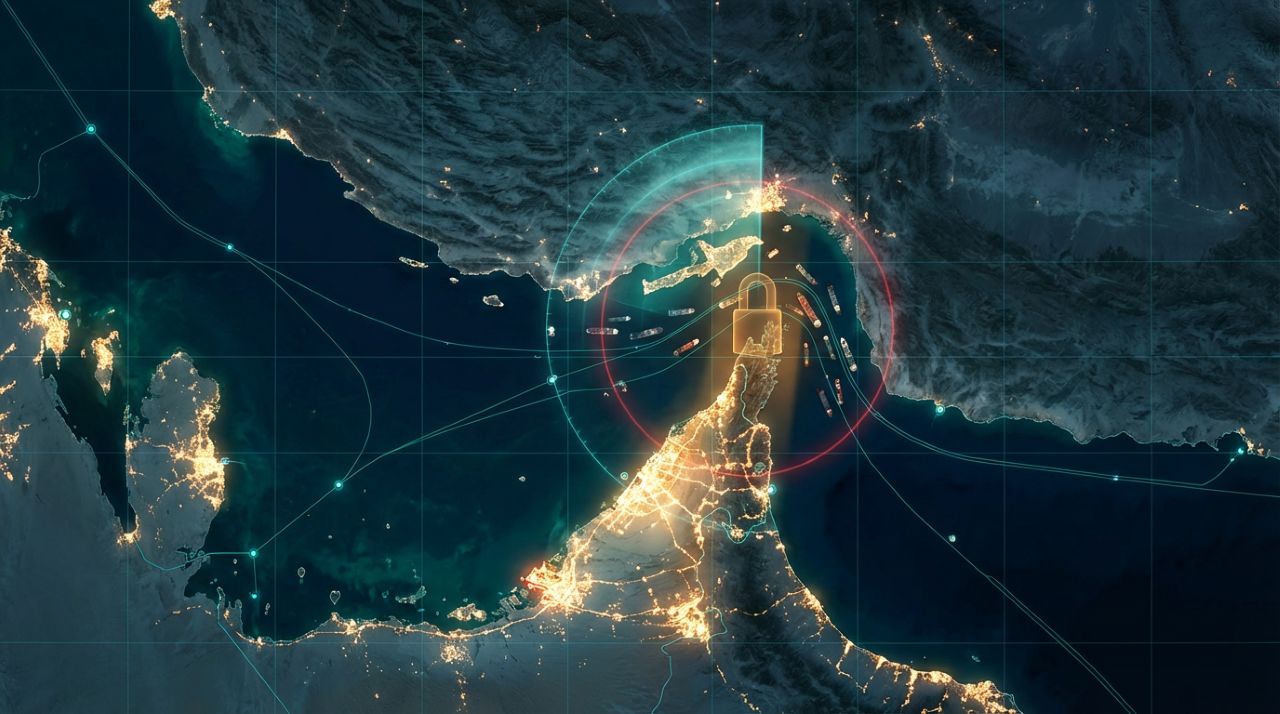
The timing could not be worse. The U.S. Navy is currently enforcing a high-stakes blockade of Iranian ports near the Strait of Hormuz, one of the most critical oil-shipping chokepoints on the planet. A fragile two-week ceasefire announced on April 7 has done little to calm markets or ease the operational burden on American naval forces. And the man running the Navy’s civilian leadership just got shown the door because, according to a source familiar with the situation, he “didn’t understand he wasn’t the boss.”
THE HEGSETH PATTERN: LOYALTY OVER COMPETENCE
Phelan’s ouster follows a now-familiar script from Hegseth’s Pentagon. Just three weeks ago, the Defense Secretary fired Army Chief of Staff General Randy George, a decorated combat veteran of Iraq and Afghanistan, along with two other generals, while elements of the 82nd Airborne Division were literally being deployed to the Middle East. One U.S. official described that wartime firing as “insane.”
Hegseth has now fired more than a dozen senior military officers since taking office. The Joint Chiefs Chairman, the head of the Defense Intelligence Agency, the Army’s chief of chaplains, the commander of Army Transformation and Training Command, and the U.S. military’s envoy to NATO’s military committee have all been pushed out. The common thread is not incompetence or misconduct. It is perceived disloyalty, association with the Biden administration, or simply clashing personalities.
The Phelan situation adds a new wrinkle to the dysfunction. According to Axios, the core issue was that Phelan had a direct line to Trump, whose Mar-a-Lago estate sits near Phelan’s Palm Beach mansion. Hegseth felt Phelan was bypassing the chain of command by going directly to the president. A Pentagon insider told the outlet that Phelan and Hegseth simply “did not get along.”
Let that sink in. The Navy Secretary was fired during an active naval blockade not because he was failing at his job, but because his boss at the Pentagon felt threatened by the man’s proximity to the president.
WHO WAS JOHN PHELAN?
Phelan was confirmed by the Senate 62-30 in March 2025 and served roughly 13 months as the 79th Secretary of the Navy. He had zero military experience before taking the job. He was a private equity executive, major art collector, and significant Republican donor who founded the investment firm Rugger Management LLC. His primary connection to defense was an advisory role with Spirit of America, a nonprofit supporting the defense of Ukraine and Taiwan.
His tenure was marked by internal friction with his own undersecretary, Hung Cao. Reports surfaced that Phelan and his chief of staff had reassigned aides who were supposed to help Cao navigate his new role, centralizing authority within the Secretary’s office. That turf war, combined with the Hegseth power struggle, created a toxic leadership environment at the top of the Navy during the most significant naval operation since the Iraq War.
ENTER HUNG CAO
The man now running the Navy is Hung Cao, a 25-year Navy veteran and retired captain who served as a special operations officer specializing in explosive ordnance disposal and deep-sea diving. Cao came to the United States as a refugee from Vietnam in 1975 and went on to graduate from the Naval Academy with a degree in ocean engineering, later earning a master’s in applied physics from the Naval Postgraduate School.
His military credentials are real, including combat deployments to Iraq, Afghanistan, and Somalia. But his political credentials are equally notable. Cao ran for Congress in Virginia’s 10th district in 2022 and lost, then ran for U.S. Senate in 2024 against Tim Kaine and lost again, 54% to 45%. During his Senate campaign, he compared the Biden administration to Vietnam’s communist regime and appeared in campaign videos blaming Biden for the criminal cases against Trump.
The Senate confirmed him as Under Secretary on a party-line 52-45 vote in October 2025. Unlike Phelan, Cao is described as someone Hegseth trusts completely, which in this Pentagon appears to be the qualification that matters most.
THE POLLING COLLAPSE
All of this military chaos is unfolding against a backdrop of devastating poll numbers for the president. A brand new AP-NORC poll released this week found Trump’s overall approval at just 33%, down from 38% in March. His approval on the economy has cratered to 30%. Only 23% of Americans approve of how he is handling the cost of living. Seventy-three percent now describe the economy as poor, up from 66% just two months ago.
The numbers are historic in their severity. A separate Strength In Numbers/Verasight poll conducted April 10-14 found Trump’s net approval on prices and inflation at negative 46 points, the worst rating on any single issue in the history of that survey. That number has deteriorated every single month of 2026: negative 31 in January, negative 35 in February, negative 40 in March, and now negative 46 in April.
The Silver Bulletin aggregate, run by Nate Silver, shows Trump’s net approval at negative 16.6, essentially unchanged since the ceasefire announcement. The Iran war itself remains deeply unpopular, and the gas price shock it triggered has turned the economy from Trump’s strongest issue into his most dangerous vulnerability.
Even Trump’s own party is cracking. CNN polling found the share of Republicans who strongly approve of his job performance has dropped from 52% in January to 43% now. His economic approval among Republicans has fallen 14 points. When your base starts to wobble, the floor is no longer guaranteed.
THE MIDTERM WARNING SIGNS
Democrats have led the generic congressional ballot in every monthly poll this year, with margins ranging from 5 to 10 points. The Verasight poll put the gap at Democrats plus 7 among registered voters. Morning Consult’s tracker shows Trump underwater by 9 points on overall job performance, with 60% of independents disapproving.
The political analyst G. Elliott Morris, who runs the Strength In Numbers poll, wrote bluntly this week that if April’s numbers hold through the fall, “Republicans should be preparing for significant losses, at all electoral levels.” The fundamentals a president needs to protect his party in the midterms, a growing economy, a public that feels secure, a sense that the country is on the right track, are all moving in the wrong direction simultaneously.
FIRING PEOPLE IS NOT A STRATEGY
There is a pattern here that should alarm anyone who cares about American national security, regardless of party. Pete Hegseth, a former Fox News weekend host with no prior military command experience, has systematically dismantled the senior leadership of the United States military during an active shooting war. He has fired the chairman of the Joint Chiefs, the Army chief of staff, the head of military intelligence, the Navy secretary, and more than a dozen generals and admirals.
Five former Secretaries of Defense, including Jim Mattis, Trump’s own first-term Pentagon chief, warned in an open letter that these dismissals “raise troubling questions about the administration’s desire to politicize the military.” They cautioned that talented Americans may choose not to serve if they believe they will be held to a political standard rather than a professional one.
Meanwhile, the voters are watching. They see gas prices climbing, a war with no clear exit strategy, and a president whose response to every institutional challenge is to fire someone and replace them with a loyalist. The polls suggest that act is wearing thin. The question now is whether anyone in this administration is paying attention to the numbers, or whether the next firing is already being planned.