
President Donald Trump announced a framework on June 14 to halt the fighting across the Middle East, reopen the Strait of Hormuz, and lift the United States blockade of Iranian ports, with a memorandum of understanding set for signing on June 19. It is the closest thing to an exit ramp this conflict has produced since the crisis began in February, and it is also a document held together almost entirely by questions nobody has answered yet.
What the Framework Actually Commits To
The announced terms are sweeping on paper. Mediators described a memorandum of understanding meant to end the conflict formally within 60 days of signing, reopen the world’s most important oil chokepoint to commercial traffic, and wind down the American port blockade that ran from mid-April to late May. Trump framed it as a finished deal. The mediators framed it as an intention. Those are not the same thing, and the space between them is exactly where this holds or comes apart.
Strip away the announcement language and what remains is a sequencing problem. Iran wants sanctions relief and the blockade gone. Washington wants verifiable, permanent freedom of navigation through the strait. Israel wants security guarantees it can audit on its own terms. Each side holds something the others need, and none of them trusts the order in which the concessions are supposed to arrive. This is the part of dealmaking that does not photograph well, and it is the part that decides whether a signing ceremony becomes a peace or a pause.
The Strait Is the Whole Ballgame
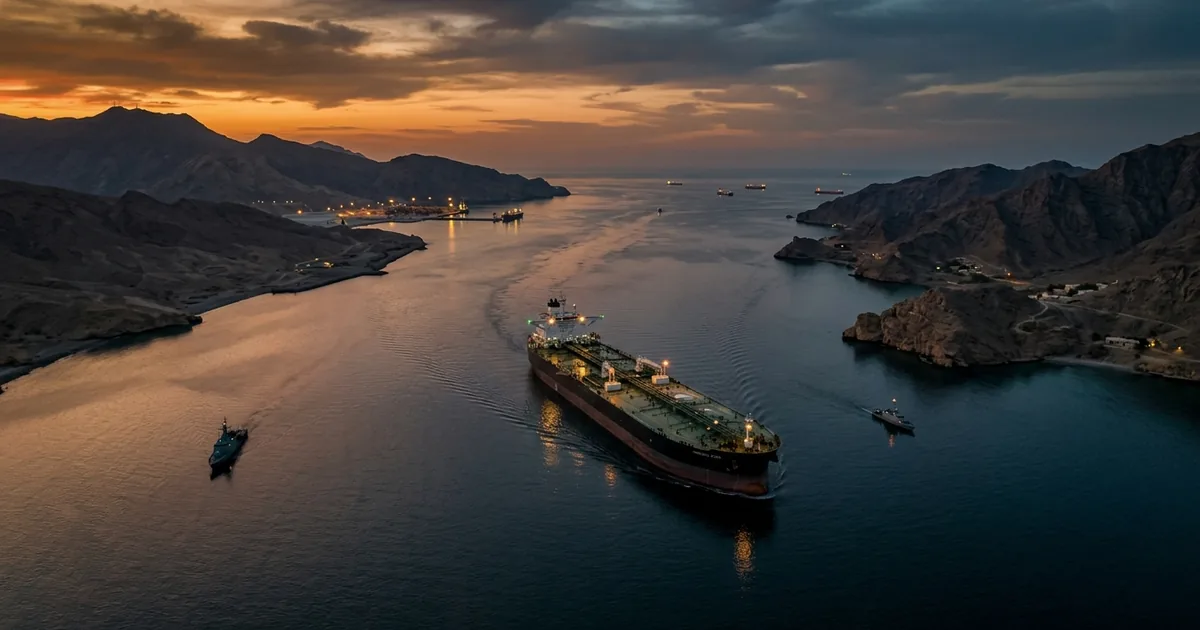
Roughly a fifth of the world’s traded oil moves through the Strait of Hormuz, which is why the Iranian Revolutionary Guard Corps spent the spring boarding merchant ships, issuing passage warnings, and laying sea mines there. Reopening it is the headline promise of the framework, and it is also the promise most exposed to bad faith.
The friction point is money. Secretary of State language this month has been blunt: any Iranian tolling system on vessels transiting the strait would, in Washington’s view, make a diplomatic deal unworkable. Tehran has floated the idea anyway. Radio Free Europe/Radio Liberty reported that real ambiguity still surrounds whether Iran will try to charge fees for passage, a detail that sounds technical and is in fact the entire dispute. A strait that reopens with a tollbooth attached is not a reopened strait. It is a renegotiated one, and the framework does not say which version June 19 is supposed to deliver.
That uncertainty has a price tag the markets read in real time. The same chokepoint logic that crashed and spiked crude all spring is now pricing the ceasefire’s credibility week to week, and traders are not waiting for a signature to make up their minds. A clean reopening calms the energy complex. A contested one keeps a war premium baked into every barrel.
Israel’s Footprint Problem
The framework’s other soft spot showed up within hours of the announcement. Israeli Defense Minister Israel Katz said on June 15 that Israeli forces would remain in Lebanon, Syria, and Gaza indefinitely, a statement that landed less as a footnote than as a counteroffer. Washington and Tehran can agree to reopen a waterway. Neither controls what Israel does with troops it has no intention of withdrawing.
This is the institutional reality the announcement glosses over. A 60-day clock implies a tidy endpoint, but indefinite occupation has no endpoint by design. For Iran, the presence of Israeli forces across three of its neighbors is not a side issue to the strait. It is the strategic environment the strait sits inside, and a ceasefire that ends the naval standoff while leaving the ground footprint frozen in place asks Tehran to accept a status quo it went to war to change. Diplomats can call that a framework. Tehran’s hardliners will call it a surrender with extra steps.
The negotiation track that stalled through the spring keeps running into this same wall, and the new framework does not move it so much as paper over it for a news cycle. A deal Washington spent months trying to negotiate collapsed in late May over precisely these sequencing and sovereignty questions. Announcing a fresh framework does not retire those questions. It reschedules them.
A 60-Day Clock and the Politics Underneath It
There is a domestic read here too, and it is worth saying plainly. A signed framework with a 60-day horizon gives the White House a deliverable to point at, and the timing is not incidental in a midterm year. Ending a Middle East war is the kind of line a president runs on. The risk is that the announcement gets graded as the achievement, and the implementation, which is where wars actually end, gets treated as a formality.
It is not a formality. A detailed accounting of the 2026 Iran war is a reminder of how much hinges on enforcement, verification, and the question of who polices the waterway once the shooting stops. Frameworks are cheap. Inspection regimes, demining timelines, and the unglamorous machinery of guaranteed passage are expensive, slow, and easy to sabotage. The next 60 days are not a countdown to peace. They are a stress test of whether anyone meant it.
What to Watch After June 19
The signing, if it happens, is the easy part. The tells come after. Watch whether Iran’s first post-signing statements mention tolls. Watch whether Israel reframes “indefinitely” into anything with a date. Watch whether the first commercial tanker through Hormuz moves without an incident, because one mined hull or one boarded crew resets the entire board. A ceasefire that survives its first month becomes a fact. One that does not becomes the reason the next escalation is worse. Right now this is a framework, which is to say it is a promise with a deadline, and the Middle East has buried a long line of those.