
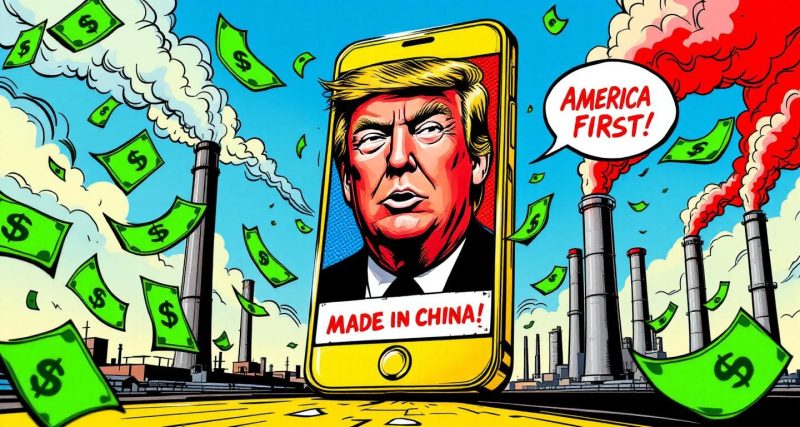
President Donald Trump rolled out two heavily-branded government initiatives this week, putting his name front and center on programs promising to help American families with prescription drug costs and children’s savings accounts. But policy experts are questioning whether TrumpRX and Trump Accounts deliver substantive reform or amount to expensive political marketing exercises ahead of the 2026 midterms.
TrumpRX: Cash-Pay Drug Discounts Launch With Limited Reach
The White House unveiled TrumpRx.gov on February 5, positioning it as a revolutionary prescription drug pricing platform that would end “Big Pharma price-gouging” for American patients. The website aggregates discounts on 43 brand-name medications from five pharmaceutical companies: AstraZeneca, Eli Lilly, EMD Serono, Novo Nordisk, and Pfizer.
Trump called it “the most impactful prescription price reset in the history of our country” at a White House event featuring CMS Administrator Mehmet Oz. The administration secured deals with 16 drug companies total, with more medications expected to be added to the platform in coming months.
The catch: TrumpRX only works for people paying cash without insurance. About 84% of Americans have prescription drug coverage, according to the Department of Health and Human Services. For most insured patients, using insurance remains cheaper than TrumpRX’s cash prices.
“There’s no clear advantage for most people to use TrumpRX to purchase their medications,” Juliette Cubanski, deputy director of the Medicare policy program at KFF, told reporters. The program primarily benefits uninsured patients or those whose specific medications aren’t covered by their insurance plans.
Healthcare policy researchers noted TrumpRX isn’t fundamentally different from existing discount platforms like GoodRx or Mark Cuban’s Cost Plus Drugs. Dr. Ben Rome, a health policy researcher at Brigham and Women’s Hospital, pointed out that generic alternatives often cost less than TrumpRX’s brand-name discounts. For example, the generic version of heartburn medication Protonix costs around $30 with a GoodRx coupon, while TrumpRX offers the brand-name version for $200.
The website prominently features Trump’s name in its branding and marketing materials. Trump told supporters the drug pricing initiative “should win us the midterms,” according to reporting by The Washington Post, explicitly tying the healthcare program to his political objectives.
Trump Accounts: $1,000 Seed Money With Corporate Backing
Trump Accounts launched in a separate initiative targeting American children born between January 1, 2025, and December 31, 2028. The program provides a one-time $1,000 contribution from the U.S. Treasury invested in index funds, accessible when the child turns 18.
Major corporations quickly lined up to match the government contribution for their employees’ children. JPMorgan Chase, Bank of America, Wells Fargo, Charles Schwab, BlackRock, BNY, Intel, and Charter Communications all announced $1,000 matching programs. Billionaire Michael Dell pledged $6.25 billion to provide $250 supplements to 25 million children in lower-income ZIP codes.
Treasury Secretary Scott Bessent positioned Trump Accounts as President Trump’s “most enduring legacy” and “the largest merger in history between Main Street and Wall Street” during a January 28 speech. The administration projects that a single $1,000 deposit could grow to approximately $500,000 by retirement age, assuming historical market returns continue.
The accounts function essentially as custodial traditional IRAs with special rules. Parents can contribute up to $5,000 annually, and investments are limited to low-cost index funds. The official trumpaccounts.gov website launches July 4, 2026, though parents can sign up now through IRS Form 4547 when filing 2025 tax returns.
Already, about 500,000 families have elected to open Trump Accounts during the first three days of the 2026 tax filing season, according to Treasury Department figures.
The Branding Question
Both programs prominently feature Trump’s name in ways unprecedented for federal government initiatives. Previous presidents have typically avoided attaching their personal brands to government programs, though exceptions exist like Obamacare (the Affordable Care Act’s colloquial name, not its official designation).
TrumpRX’s website declares “Thanks to President Trump, the days of Big Pharma price-gouging are over” and describes the initiative as “rewriting the script.” Trump Accounts marketing materials emphasize the president’s name throughout, with the official website stating “Donald J. Trump: A tax-advantaged investment account that belongs entirely to them.”
The timing matters. Trump explicitly connected TrumpRX to electoral strategy in private remarks, according to The Washington Post. The Trump Accounts initiative received Treasury Department promotion at a dedicated summit featuring the president just days before the midterm election campaign season intensifies.
Corporate America’s enthusiastic embrace of Trump Accounts also coincides with the banking industry facing pressure on other fronts. JPMorgan announced its $1,000 matching program one week after Trump sued the bank and CEO Jamie Dimon for $5 billion over alleged politically motivated debanking. Major banks are simultaneously pushing back against Trump’s call for a 10% credit card interest rate cap.
Real Impact Versus Marketing Impact
Policy experts acknowledge both programs may help some Americans, but question whether the benefits justify the political fanfare.
For TrumpRX, uninsured patients and those needing medications not covered by insurance could see genuine savings. The program’s focus on expensive GLP-1 weight loss drugs (Wegovy, Zepbound) addresses a real gap in insurance coverage for obesity medications.
For Trump Accounts, the $1,000 seed money plus employer matches could meaningfully boost retirement savings for children whose families maintain the accounts. Michael Dell’s $6.25 billion commitment specifically targets lower-income families who might benefit most from early investment exposure.
But the programs’ limitations are equally clear. TrumpRX excludes the 84% of Americans with prescription drug coverage, who generally pay less using insurance. Generic medications usually cost less than TrumpRX’s brand-name discounts. And the website currently lists only 43 drugs, a fraction of commonly prescribed medications.
Trump Accounts primarily benefit families who already have stable enough finances to let $1,000 grow untouched for 18 years. The accounts do nothing to address immediate childcare costs, healthcare expenses, or housing affordability that strain family budgets today.
Benjamin Jolley, a senior fellow for health care at the American Economic Liberties Project, summarized the TrumpRX dynamic concisely: “It’s nice that they are aggregating coupons in one place. But it’s a convenience to check the website to see the coupons all in one place for the first time.”
Whether these programs represent substantive policy innovation or sophisticated political branding, Americans will find out as both initiatives roll out through 2026. What’s certain: Trump’s name will be attached to whatever results emerge.