
THE IS A BREAKING STORY PLEASE WATCH LIVE HERE
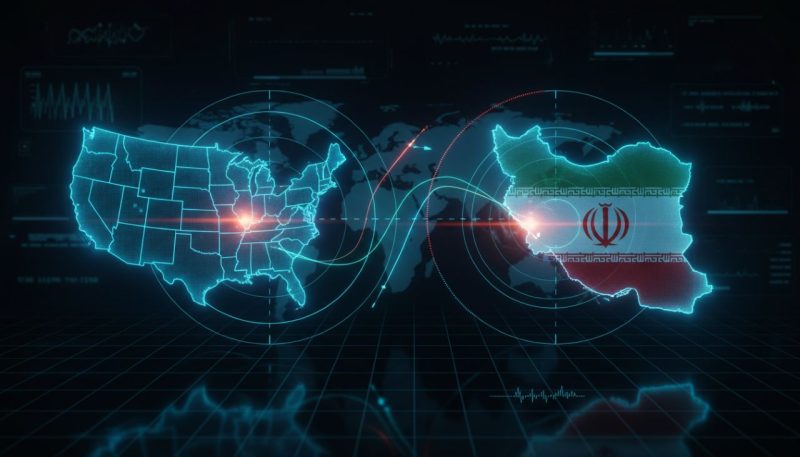
The United States and Israel launched a coordinated military assault on Iran early Saturday morning, striking targets across Tehran and multiple Iranian cities in what President Donald Trump called “major combat operations” and the Pentagon designated “Operation Epic Fury.” The strikes came less than 48 hours after nuclear negotiations in Geneva ended without a deal, and after months of military buildup that had been the largest American deployment to the Middle East since the Iraq War.
Iran immediately retaliated, launching missiles at Israel, and then expanding its strikes to U.S. military bases across the Persian Gulf region, including installations in Qatar, Kuwait, the United Arab Emirates, and Bahrain. The region is now engulfed in an active, multi-front conflict with no clear endpoint in sight.
What Happened
Israel struck first, launching missile attacks on targets inside Iran just after 9 a.m. local time on Saturday. Israeli Defense Minister Israel Katz labeled it a “preemptive attack” intended to “remove threats to the State of Israel.” Israel dubbed its operation “Roaring Lion,” while the U.S. designated its parallel campaign “Operation Epic Fury.”
Within minutes, the U.S. confirmed its own strikes were underway. According to officials, dozens of American attack sorties launched from aircraft carriers and bases scattered across the Middle East, targeting Iranian military infrastructure, missile production facilities, and naval assets. Reuters reported the strikes were carried out by both air and sea.
Explosions rocked Tehran, with missiles hitting areas near the offices of Supreme Leader Ayatollah Ali Khamenei, the presidential palace, and the National Security Council. Additional strikes were reported in Qom, Kermanshah, Isfahan, Karaj, and western Iran. Communications across Tehran went down shortly after the attacks began, and the internet monitoring organization NetBlocks confirmed a near-total shutdown of connectivity inside Iran.
Three sources briefed on the operation told ABC News that both Khamenei and Iranian President Masoud Pezeshkian were among the direct targets of the first wave of Israeli strikes. A Fox News report confirmed that while Israel was targeting Iranian leadership, the U.S. was focused on military targets and ballistic missile sites it deemed an “imminent threat.”
Trump’s Address: “We Can’t Take It Anymore”
In a prerecorded eight-minute video posted to Truth Social at 2:30 a.m. EST, Trump framed the operation as a response to 47 years of Iranian hostility toward the United States, beginning with the 1979 embassy hostage crisis. He said the Iranian regime had “rejected every opportunity to renounce their nuclear ambitions” and warned that Iran was developing missiles that could eventually reach the American homeland.
“We are going to destroy their missiles and raze their missile industry to the ground,” Trump declared. “We are going to annihilate their navy.” He acknowledged the operation could produce American casualties, saying “the lives of courageous American heroes may be lost, and we may have casualties. That often happens in war.”
Perhaps the most striking element of Trump’s address was his explicit call for regime change. Addressing Iranian citizens directly, he said: “When we are finished, take over your government. It will be yours to take. This will be, probably, your only chance for generations.” He also offered Iranian military and police “complete immunity” if they laid down their weapons, warning that those who refused would face “certain death.”
Israeli Prime Minister Benjamin Netanyahu echoed those themes, saying the joint attack would “remove the existential threat posed by the terrorist regime in Iran” and “create the conditions for the brave Iranian people to take their destiny into their own hands.”
Iran Strikes Back
Iran’s response was swift and broad. The Islamic Republic launched multiple barrages of ballistic missiles at Israel, triggering air raid sirens across the country and activating its missile defense systems. Explosions were reported in northern Israel as interceptors engaged incoming fire. Israel declared a nationwide 48-hour state of emergency, closed its airspace, shuttered schools and workplaces, and moved hospital operations underground.
But Tehran didn’t limit its retaliation to Israel. Iranian forces launched missiles at U.S.-linked military installations across the Gulf, targeting Al Udeid Air Base in Qatar, Al-Salem Air Base in Kuwait, Al-Dhafra Air Base in the UAE, and the U.S. Fifth Fleet headquarters in Bahrain. The UAE reported one fatality in Abu Dhabi from intercepted missile debris. Bahrain confirmed attacks on sites within its borders. Qatar said it “successfully thwarted” multiple strikes. Saudi Arabia also reported engaging its air defenses, condemning what it called “brutal Iranian aggression.”
A senior Iranian official told Al Jazeera that “all American and Israeli assets and interests in the Middle East have become a legitimate target” and that “there are no red lines after this aggression.” The Iranian army later announced it had launched “dozens of attack drones” at Israel in what it called a “first extensive drone offensive operation.”
How Diplomacy Collapsed
The timeline of how the world got here reads like a slow-motion collision. Nuclear negotiations between the U.S. and Iran had been ongoing since April 2025, mediated by Oman. Three rounds of indirect talks produced incremental progress but no breakthrough on the core disputes: the U.S. demanded Iran permanently halt uranium enrichment, destroy its main nuclear facilities, roll back its ballistic missile program, and stop supporting regional armed groups. Iran insisted enrichment was a sovereign right, refused to discuss missiles, and demanded full sanctions relief.
The third and what turned out to be final round of negotiations took place in Geneva on February 26, just two days before the strikes. Iranian Foreign Minister Abbas Araghchi described them as the “most intense so far.” An Omani mediator said “significant progress” had been made. But behind the scenes, multiple reports indicate the talks were already a dead letter. The Wall Street Journal reported the U.S. team demanded Iran destroy its three main nuclear sites at Fordow, Natanz, and Isfahan, and surrender all remaining enriched uranium. Iran rejected all of it.
The military buildup had been underway for weeks while diplomats talked. Trump dispatched the USS Abraham Lincoln and USS Gerald R. Ford carrier strike groups, along with 14 destroyers, hundreds of fighter jets, and for the first time outside of training, F-22 stealth fighters deployed to Israel. On January 28, Trump posted that “a massive Armada is heading to Iran” and warned that “time is running out.” During his State of the Union address on February 24, he accused Iran of rebuilding its nuclear capabilities and developing missiles that could reach the United States.
According to NPR, the operation started precisely as a ten-day deadline Trump had privately issued to Iran expired. The diplomatic track and the military track had been running simultaneously, but those close to the White House say Trump had already made his decision before envoys sat down in Geneva.
The Bigger Picture
What makes this moment different from previous U.S. strikes on Iran, including last June’s “Operation Midnight Hammer” that targeted three nuclear facilities, is the stated scope and ambition. This is not a limited strike designed to bring Tehran back to the negotiating table. Trump’s own words describe a campaign to dismantle Iran’s military capacity and facilitate the overthrow of its government. U.S. officials told Reuters to expect a “multiday operation.” A person briefed on the planning told NPR it could last “a few days.”
The timing carries symbolic weight as well. CNN reported the strikes were launched ahead of the Jewish holiday of Purim, which commemorates the deliverance of the Jewish people from a plot to destroy them in ancient Persia, modern-day Iran.
Inside Iran, the attacks land on a population already battered by the largest protests since the 1979 revolution. Beginning in December 2025, nationwide demonstrations erupted over economic collapse, the plunging rial, and soaring food prices. The regime responded with extraordinary violence. Trump claimed during a February 27 briefing that Iran had “killed at least 32,000 protesters,” a figure roughly aligned with estimates from senior Iranian health ministry officials who spoke to international media.
Congressional reaction split along imperfect partisan lines. Senator Lindsey Graham praised “Operation Epic Fury.” Republican Rep. Thomas Massie of Kentucky called it an act of war “unauthorized by Congress.” Senator John Fetterman, a Democrat, said Trump was “willing to do what’s right and necessary to produce real peace in the region.” Russia condemned the strikes. Iran’s exiled Crown Prince Reza Pahlavi urged Iranian security forces to “join the people” and called on Trump to “exercise the utmost caution” to protect civilian lives.
What Comes Next
The honest answer is that nobody knows. The scope of Iran’s retaliation is still unfolding. The Gulf states, which host tens of thousands of American military personnel, are now directly in the line of fire. Oil markets, already jittery with Brent crude around $70, face potential chaos if Iran follows through on previous threats to close the Strait of Hormuz, through which a fifth of all globally traded oil passes.
If the goal is degrading Iran’s military infrastructure, air and sea power can accomplish a great deal in a few days. If the goal is what Trump and Netanyahu are publicly describing, the removal of the Iranian regime itself, history suggests that is a commitment that extends far beyond anything “Epic Fury” can deliver from the sky. The invasions of Afghanistan and Iraq both demonstrated the limits of American air power when the objective is regime change. There has been no public indication of planning for what comes after the bombs stop falling.
For now, the Middle East is at war in a way it hasn’t been since 2003. The question isn’t whether this changes the region. It already has. The question is how far the damage spreads, and whether anyone involved has a plan for the morning after.
This is a developing story and will be updated as events unfold.