
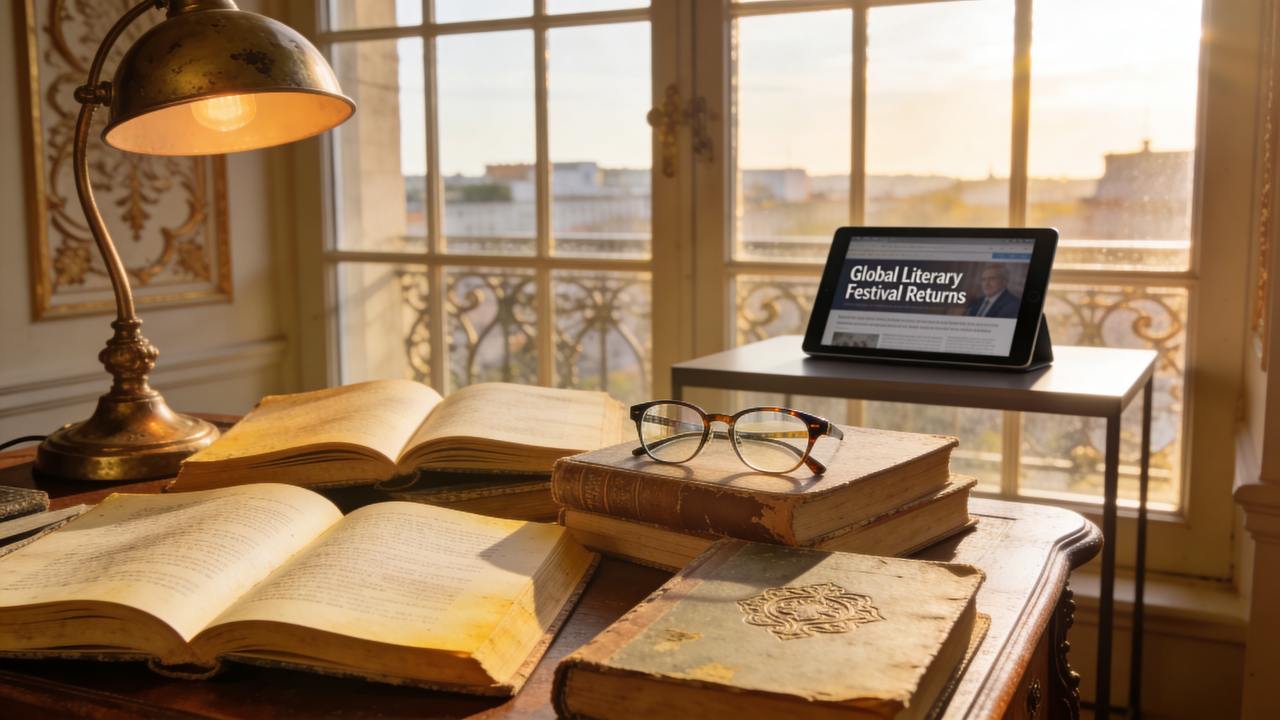
In today’s fast-paced digital world, where information is readily available at our fingertips, it might seem unlikely that second-hand books would be making a resurgence. Yet, against all odds, they are.
This article delves into why these pre-loved pages are finding their way back into the hearts of many readers. And if you’re someone looking to get your hands on affordable reads, don’t miss out on the latest World of Books discount codes and deals.
Nostalgia and Tangibility
There’s a specific kind of memory baked into a physical book. The weight of it. The soft dent in the cover where someone else’s thumb lived for 300 pages. The smell that’s part paper, part time capsule. Second-hand books don’t just contain stories — they look like they’ve survived them.
That’s the nostalgia factor. Even if you didn’t grow up haunting libraries or cracking spines at the kitchen table, a used book still feels like something from a slower world. A world where reading wasn’t constantly interrupted by a buzz, a banner, or a “recommended for you” pop-up. Picking up a pre-loved paperback is a tiny act of stepping out of the digital stream.
And then there’s the tangibility — the thing ebooks can’t fake no matter how crisp the screen gets. You can see progress in a physical book. The left side thickens, the right side thins. You remember scenes by location: “That happened near the coffee stain,” or “It was on the page with the folded corner.” It’s not just text; it’s terrain.
Second-hand copies crank that feeling up. Notes in the margin. An old receipt used as a bookmark. A name written on the inside cover in slightly dramatic cursive. These little leftovers create a quiet connection between readers who never meet. Digital books are clean and convenient. Used books are human.
Environmental Consciousness
Why second-hand matters
Buying a second-hand book is basically choosing not to manufacture a new one. That sounds small, but it adds up fast. New books come with a footprint, including:
- Trees (or other raw materials) for paper
- Ink and printing chemicals
- Energy used in printing and production
- Packaging materials
- Shipping and distribution
Even when publishers use “responsible” paper, the process still consumes resources to create something that, in many cases, already exists in perfectly readable form.
Reuse is the lowest-waste option
Second-hand books flip that logic: they keep what’s already been made in circulation and extend the life of an object built to last.
Instead of triggering more production, you avoid:
- A new print run
- Extra warehousing and inventory handling
- Fresh packaging (like cardboard wraps and fillers)
You’re not just buying a story—you’re preventing another round of industrial work from happening for the same story.
A sustainable choice without the sacrifice
That’s why pre-loved books fit so naturally with environmentally conscious readers. Many people want to buy fewer brand-new things—and when they do buy, they want it to feel intentional.
A used book is a low-waste choice that doesn’t ask you to give anything up:
- You still get the cover, weight, and margins
- You may even get that faint “old library” smell
- You avoid the guilt that can come with buying new
The satisfaction of circularity
There’s also something quietly satisfying about the cycle:
- Someone finishes the book
- They pass it on
- It finds its way to you
No landfill, no cluttered shelf doom—just a chain of readers sharing the same physical copy. In a world of constant upgrades and next-day deliveries, choosing second-hand is an easy, practical way to be a little less wasteful—one paperback at a time.
Cost-Effectiveness
Let’s be honest: books aren’t cheap anymore. A new hardback can cost the same as a decent meal out, and even paperbacks add up fast if you read a lot. Second-hand books cut through that. You can build a proper reading habit without treating every purchase like a mini financial decision.
The savings aren’t just “a little cheaper,” either. Used copies often land at a fraction of the original price—especially for popular titles that have been out for a while, last season’s bestsellers, or books that are widely printed. That means you can take more risks: try an author you’ve never read, grab something weird, start a series on a whim. If it’s not for you, you’re out a few quid, not twenty.
It also makes reading feel less precious in the bad way. With second-hand, you’re not scared to underline a line that hits hard, crack the spine, or toss a paperback in a bag without babying it. The book becomes a tool again, not a fragile product.
And for families, students, and anyone watching spending, it’s an easy win. Kids go through phases and reading levels in weeks. Course reading lists change. Interests shift. Buying second-hand keeps you stocked without the constant drip of full-price purchases.
In the end, the pitch is simple: same stories, less money. More reading, fewer regrets.
Unique Finds and Rare Editions
Second-hand books come with a feature ebooks can’t replicate: surprise. You’re not just buying a title—you’re rolling the dice on what version of that title you’ll find, and what’s been quietly riding along with it for years.
A used bookstore shelf is basically an offline algorithm, except it’s run by chance, donations, and someone’s long-forgotten taste. That’s how people stumble into things that aren’t neatly available in digital format: out-of-print covers, old translations, weird print runs, and editions that publishers stopped making because the market “moved on.” Which is exactly why they’re desirable now.
The thrill of the hunt beats the search bar
Online, you type a title and get the same standardized result as everyone else. In a second-hand shop, you find:
- Early printings with different artwork (sometimes wildly better, sometimes wonderfully ugly)
- Vintage paperbacks with era-specific design and typography
- Hardbacks with dust jackets that newer releases dropped to cut costs
- Annotated copies where someone else basically left a parallel reading experience in the margins
- Forgotten tie-in editions, academic versions, or regional prints you didn’t even know existed
It’s not just “rare” in the auction-house sense. It’s rare in the human sense: hard to reproduce, hard to predict, and full of little details that make the object feel earned.
Real collectors love condition—but they love story more
Ask any collector and they’ll tell you the same thing: the best finds are the ones you weren’t hunting for. The kind you spot half-buried on a low shelf, spine cracked, price penciled inside the front cover, and somehow it’s the edition you’ve been trying to track down for years.
People have found signed first editions mixed in with general stock. Others have picked up discontinued translations that are considered definitive by certain readers, even if they’re not fashionable anymore. Sometimes the “valuable” part is niche: a small press run, a misprint, a particular illustrator, a cover variant that only existed for one year.
And in second-hand shops, those discoveries don’t always come with the premium price tag you’d see online—because not everything gets instantly scanned, indexed, and marked up. Sometimes it’s just sitting there, waiting for the right person to recognize it.
Digital can’t do this
A digital library is clean. Efficient. Identical. A second-hand copy is messy in the best way: it has history. Even when the book itself isn’t rare, the edition might be. The physical object—the paper, the binding, the smell, the old publisher logo—becomes part of the appeal.
That’s a big reason second-hand is back. People aren’t only chasing stories anymore. They’re chasing artifacts.
Community and Shared Experiences
Second-hand bookstores aren’t just shops. They’re unofficial community centers with pricing stickers.
Walk into a good used bookshop and you can feel the pace change. People linger. They chat in the aisles without acting like it’s weird. Staff actually recommend things—and not because an algorithm decided you’re “likely to enjoy.” You’ll overhear micro-conversations that sound like: “Have you read this?” “I’ve been looking for that forever.” “Take it, I already own a copy.” That’s the magic: second-hand books make reading social again, but in a low-pressure way.
As Tom Church, Co-Founder of LatestDeals.co.uk (the discount code platform), puts it: “The best finds are the ones you didn’t plan—second-hand books turn shopping into a small adventure, and that shared ‘I can’t believe I found this’ feeling is what brings people back.”
There’s also something quietly bonding about the hunt. Everyone’s digging through the same stacks, hoping to strike gold. You’re not buying a product that exists in infinite supply; you’re finding a copy—sometimes the only one. That scarcity turns a purchase into a little story you’ll retell later: the £2 hardback you found under a wobbling table, the out-of-print paperback wedged between cookbooks, the novel with notes in the margins that made you laugh. You don’t get that from a “Buy Now” button.
Book clubs have caught on to this too. More groups now pick themes that work because members can source titles second-hand: “found in a charity shop,” “cover you couldn’t ignore,” “oldest book you can get for under a fiver,” “something with an inscription.” It makes discussion better. Instead of everyone showing up with identical copies, people arrive with different editions, different covers, different histories. Someone’s book smells like attic dust; someone else’s is pristine, like it time-traveled.
And then there are the swaps—library sale days, community shelves, little free libraries, Facebook “give away” posts. They’re all the same idea: books moving through a neighborhood like a friendly rumor. Passing along a second-hand book feels less like disposal and more like continuation. You’re not just done with a story; you’re sending it back out.
In a digital news era that’s loud, fast, and weirdly lonely, used books offer something simple: a shared space, shared tastes, and the quiet comfort of knowing other people were here first—and cared enough to turn the page.
Resurgence of Independent Bookstores
Independent bookstores are doing a lot of the heavy lifting in the second-hand book comeback. Not the big-box “order it in two clicks” vibe—these are the small shops with creaky floorboards, a cat that may or may not work there, and shelves that look like they’ve been argued with for decades. They’ve turned used books into something more than a cheaper alternative—they’ve made them feel like a choice.
Used Books as a Deliberate Choice
Second-hand thrives in indie spaces because the experience is part of the appeal:
- Slow browsing instead of instant checkout
- Attention from real people instead of algorithms
- Books with history, not just inventory
Curation Beats the “Swamp of Options”
Online, you can find any book—but you also have to wade through editions, seller notes, and “acceptable condition” that means “survived a flood.” In a good independent shop, someone has already done the sorting.
What that looks like in practice:
- Staff picks handwritten on little cards
- Tables that practically say: trust us, these are worth your time
- Sections that are oddly specific in the best way (e.g., “cozy mysteries and local history”)
The thrill isn’t just in the hunt—it’s stumbling onto shelves where every title feels intentionally placed.
Second-Hand, Made Personal Again
A used book is a used object, sure—but it’s also a passed-along story. Independent bookstores lean into that by keeping books circulating close to home:
- Stocking trade-ins
- Buying personal collections
- Rescuing out-of-print paperbacks
- Returning books to the same community they came from
That creates a quiet loop: readers feeding the shelves, shelves feeding readers. It’s local, circular, and oddly satisfying.
Community Culture You Can’t Algorithm Your Way Into
Independent bookstores also offer something second-hand marketplaces can’t build: atmosphere and connection. They host and support the kinds of moments that don’t happen in a recommendation feed:
- Readings and author events
- Book swaps
- Community noticeboards
- Accidental conversations that turn into real recommendations
You walk in for one book, walk out with three—and a suggestion from someone who actually listened when you said, “I loved this, but I’m picky.” That’s a relationship, not a transaction.
The Anti-Disposable Mood
In a digital news era where everything feels immediate and disposable, independent bookstores offer the opposite: slow browsing, real attention, and books that have already lived a little. Second-hand thrives there because it fits the mood—less hype, more heart, and a reminder that reading doesn’t have to be frictionless to be good.
Second-Hand Books as Gifts
Gifting a second-hand book used to feel like a budget move. Now it reads more like: I know you. In a world of same-day shipping and frictionless “add to cart,” a pre-owned book has texture—literally and emotionally. Someone else turned these pages. The story already has a small history, and you’re adding a new chapter by passing it on.
There’s also something quietly intimate about it. A used book isn’t trying to be perfect. It might have a softened spine, a dog-eared corner, a name on the inside cover from 2009. Those little imperfections can make the gift feel less like an object and more like a message: this is worth keeping around.
And unlike a generic bestseller gift set, second-hand books can be wildly specific. Out-of-print cookbooks from a person’s hometown. A battered sci-fi paperback with the original cover art. A poetry collection you found because you remembered one throwaway conversation from months ago. That kind of “I saw this and thought of you” is hard to replicate with something factory-fresh.
Thoughtful ways to gift a second-hand book (without making it weird)
- Write a short note inside: Not a formal inscription—just a sentence on why you picked it. Keep it simple.
- Pair it with a small add-on: A bookmark from a local shop, a tea/coffee sachet, a postcard. Low effort, high charm.
- Use the book as a time capsule: Gift a book from the year they were born, the year you met, or a milestone year.
- Give a “two-book set”: One comfort read, one wild-card pick. Like a mini curated shelf.
- Wrap it like it matters: Brown paper, string, old newspaper, a reused gift bag—lean into the second-hand ethos.
- Pick editions with character: Vintage covers, old publisher stamps, illustrated versions—things that feel collectible even if they’re cheap.
- Make it a shared experience: Give them a copy of a book you love and suggest reading it at the same time. Instant book club for two.
The point isn’t that it’s used. The point is that it’s chosen. Second-hand books make better gifts for the same reason they’re making a comeback at all: they feel real in a world that’s increasingly weightless.
Embracing the New-Age Digital Reader
Digital didn’t kill the printed book. It just changed the job description.
A lot of people now live in a mixed ecosystem: Kindle on the commute, paper at night. News alerts and longreads on a phone during the day, then a second-hand novel when the brain wants out. The “new-age reader” isn’t anti-book or pro-screen; they’re format-fluid. They pick whatever fits the moment.
And weirdly, digital habits can push people toward second-hand. Algorithms serve up recommendations at speed—reviews, author interviews, “if you liked that, try this.” Then the reader goes hunting for the physical copy, preferably cheap, preferably not new. A used-book site or local shop becomes the place where digital discovery turns into an actual object you can keep, lend, or scribble in.
As Tom Church, Co-Founder of LatestDeals.co.uk, the discount code platform, puts it: “People are comfortable switching between screens and paper—digital helps them discover what to read next, and then they look for the best-value way to get a physical copy.”
Second-hand also complements digital in practical ways:
- Low-risk experimenting: You can try a genre or author for a few quid, no commitment. If it’s a miss, pass it on.
- Offline comfort: A battered paperback doesn’t need charging, doesn’t glare back, and doesn’t tempt you with notifications.
- Collection without the premium: Digital libraries are convenient; used shelves are personal. One is a feed, the other is a footprint.
So the comeback isn’t a rejection of tech. It’s readers using tech to read more, then choosing second-hand books as the slower, sturdier counterweight. Screens for speed. Old pages for staying power.