
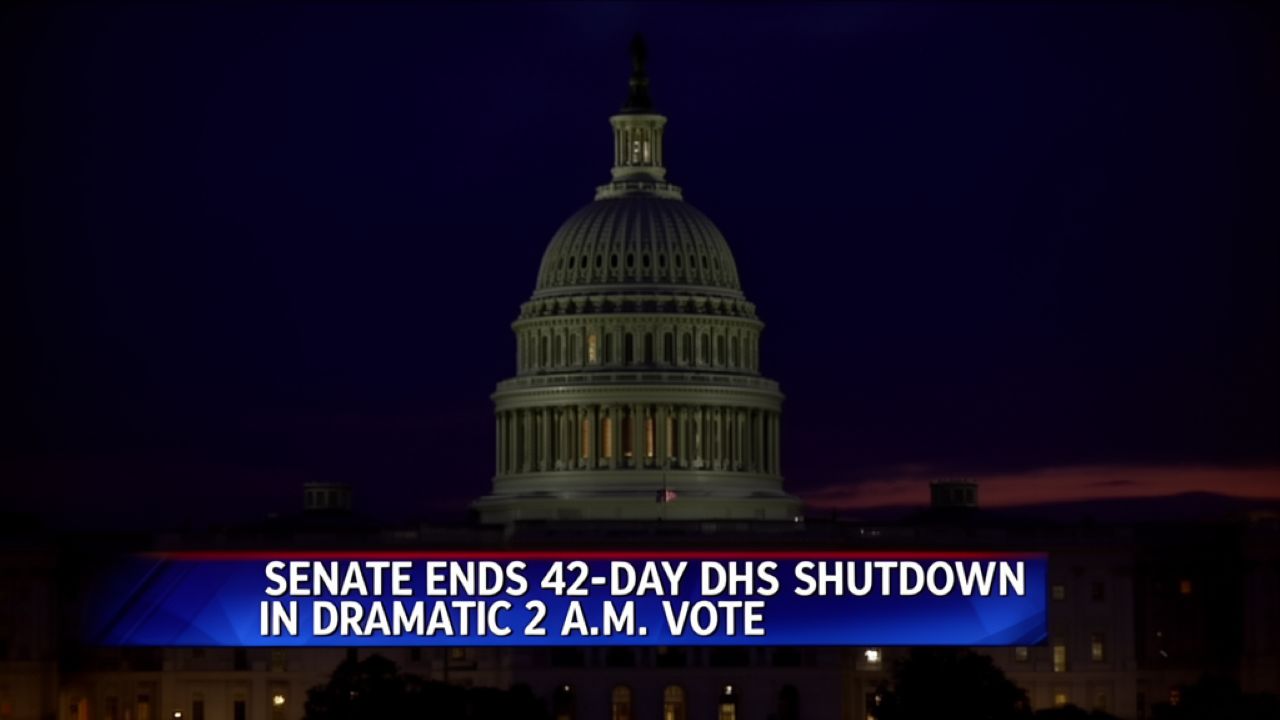
At 2:20 in the morning on Friday, after a marathon session that tested the limits of both procedure and patience, the United States Senate did something remarkable. It voted unanimously, by voice vote, to fund most of the Department of Homeland Security.
And then it did something even more remarkable: it deliberately left out the part that the Trump administration wanted most.
The deal that ended the 42-day DHS shutdown funds the Transportation Security Administration, the Coast Guard, FEMA, CISA, and customs officers at border checkpoints. What it does not fund: Immigration and Customs Enforcement and significant portions of Customs and Border Protection. That omission is not an oversight. It is the entire point.
How Democrats Won By Refusing To Blink
For six weeks, Senate Democrats held a position that many in Washington considered untenable. They refused to vote for DHS funding unless it came with meaningful reforms to ICE operations, specifically body cameras for immigration officers, restrictions on mask-wearing during raids, and limits on personnel shifting between departments. The demand was born from the fatal shootings of two Americans by immigration officers in Minneapolis in January, deaths that galvanized the No Kings protest movement and gave Democrats both a moral argument and a political one.
Republicans called their position reckless. House Speaker Mike Johnson called it “detestable.” Trump accused Democrats of holding “our Country hostage.” But as the weeks dragged on and the airport lines grew longer, it was the administration that blinked first.
On Thursday evening, Trump signed an executive order directing DHS Secretary Markwayne Mullin to “immediately” pay TSA officers using funds from the One Big Beautiful Bill Act passed last summer. The order, which Trump described as addressing an “emergency situation,” tacitly acknowledged what Democrats had been saying for weeks: that the pain at airports was unsustainable. Senate Majority Leader John Thune conceded the move “takes the immediate pressure off” negotiations.
With that pressure relieved, the deal fell into place within hours.
The Human Cost Of 42 Days Without Pay
The numbers tell one story: more than 480 TSA officers resigned during the shutdown. Call-out rates peaked at 11.7% on March 23, with 3,450 agents absent on a single day. At Houston’s Bush Intercontinental Airport, which became the poster child for the crisis, wait times hit four hours and call-out rates hovered around 40%. The airport was operating at between 30 and 50 percent of its normal TSA checkpoint capacity.
But the numbers do not capture the full picture. Atlanta’s Hartsfield-Jackson removed wait time data from its website entirely, advising passengers to simply allow four hours. In New Orleans, security lines extended into parking structures. Philadelphia closed three checkpoints. JFK suspended wait time reporting altogether. All of this during spring break travel season, with 2.8 million passengers projected daily.
Johnny Jones, the union secretary-treasurer for TSA workers, put the human toll plainly: “It’s not just financial stress. There’s been mental destruction, family destruction, and evictions.” The average TSA worker makes $35,000 a year. Missing two full pay cycles, as they did during this shutdown, is not an inconvenience. It is a catastrophe.
Acting TSA administrator Ha Nguyen McNeill added a warning that extends beyond the current crisis: staffing shortages have now compromised preparations for the FIFA World Cup. “If we bring on any new agents, those folks will not be deployed in time by FIFA,” she testified before Congress.
The ICE Standoff Is Far From Over
Senate Minority Leader Chuck Schumer declared the deal a victory without hesitation. “Throughout it all, Senate Democrats stood united. No wavering, no backing down,” he said. “Democrats held firm in our opposition that Donald Trump’s rogue and deadly militia should not get more funding without serious reforms.”
Thune, for his part, framed the outcome differently. He told reporters that Democrats had “kissed that opportunity goodbye” for reforms and “that ship has sailed,” signaling that Republicans plan to fund ICE through the reconciliation process, which requires only a simple majority and bypasses the Democratic filibuster entirely. Republicans had already allocated $172 billion for immigration enforcement through last summer’s reconciliation bill, giving them a significant financial runway.
The political calculus here is worth understanding. Democrats achieved something tangible: they forced a split in DHS funding that separates the broadly popular functions of the department (airport security, disaster relief, cybersecurity) from the deeply controversial one (immigration enforcement). That split creates a template. Future fights over ICE funding will now be fought on terrain that Democrats chose, not Republicans.
What Happens Today In The House
The House returned Friday morning at 9 a.m. with votes expected by 10. But Speaker Johnson has not committed to putting the Senate bill on the floor, and Republican leaders are discussing “procedural challenges” that could delay or modify the legislation. House rules typically prevent bills from passing under suspension of the rules on any day other than Monday through Wednesday, which could complicate the timeline.
House Democrats appear ready to vote yes. The question is whether Johnson will let them.
This is the third shutdown in recent months, following extended lapses in October-November 2025 and December 2025. Senator Mike Lee of Utah urged colleagues to “Cancel the recess. Fund DHS. Pass the SAVE America Act.” The Senate’s two-week Easter recess begins the week of March 31, adding pressure to resolve the House vote quickly.
The Larger Pattern
What the 42-day DHS shutdown revealed is a governing philosophy that treats institutional function as a bargaining chip. TSA officers, the people who stand between travelers and potential threats, became collateral damage in a fight about immigration enforcement that has nothing to do with airport security. The willingness to let that happen, and to let it continue for six weeks, tells you something important about where the priorities actually lie.
The Senate deal is a patch, not a fix. ICE remains unfunded through the normal appropriations process. The reconciliation path Thune described will produce its own political battles. And the 480 TSA officers who resigned are not coming back just because a voice vote happened at 2 a.m.
The airports may return to normal. The underlying dysfunction will not.