
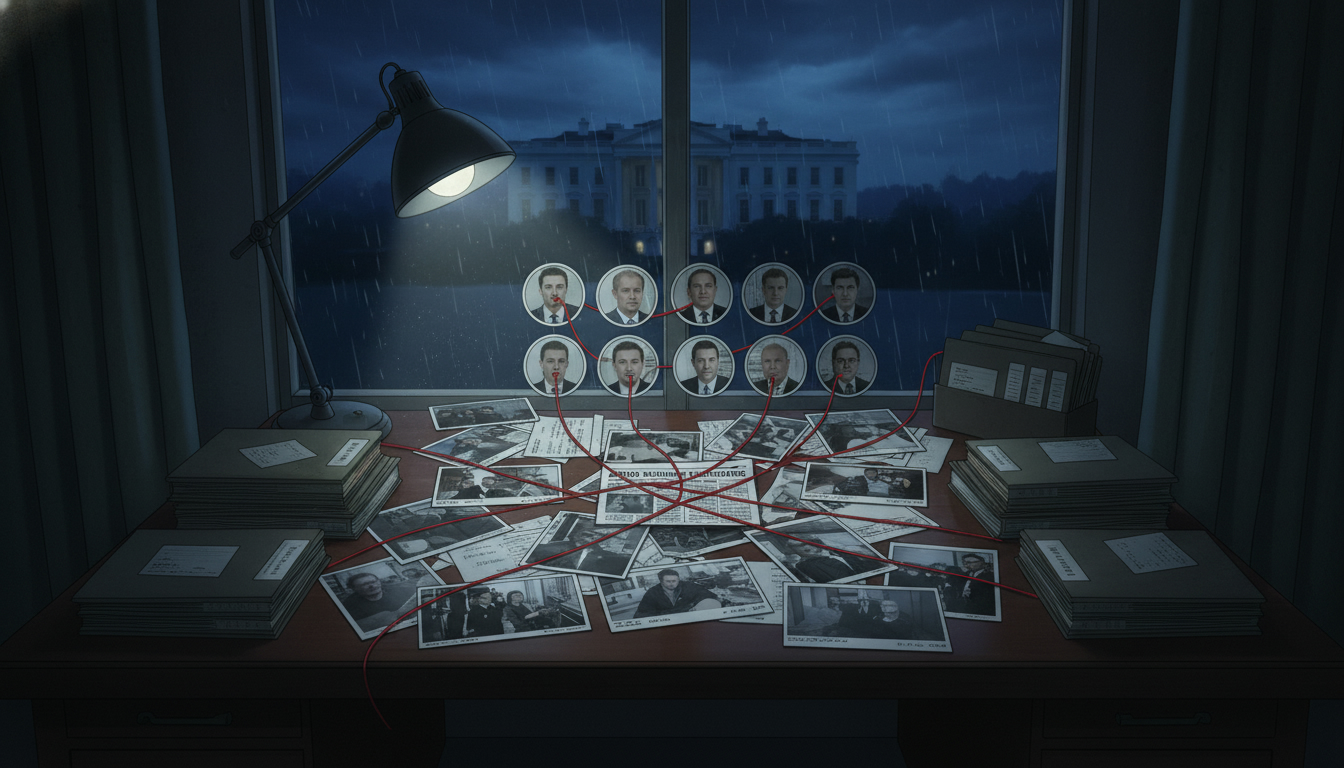
Somewhere between conspiracy theory and confirmed fact, there is a growing list of names that nobody in Washington can quite explain. At least 11 scientists and officials with ties to classified U.S. government work have either died under suspicious circumstances or vanished without a trace since mid-2024.
The White House confirmed Friday that it is investigating. And the more you learn about the individual cases, the harder it becomes to dismiss the pattern.
White House press secretary Karoline Leavitt wrote on X that the investigation will “leave no stone unturned.” It was the kind of statement that raises more questions than it answers, because if the federal government is taking this seriously enough to investigate, it means they cannot rule out what many have been speculating for months: that these cases might be connected.
The Names On The List
The cases span institutions, disciplines, and geography, but they share one thread: every person on this list had access to sensitive or classified U.S. government research.
Nuno Loureiro was an MIT physicist and the director of the university’s Plasma Science and Fusion Center. He was shot at his home in Brookline, Massachusetts in December 2025 and later died from his injuries. Loureiro’s work sat at the intersection of plasma physics and fusion energy, fields with obvious national security implications.
Carl Grillmair was a Caltech astrophysicist known for his work on exoplanets and the discovery of water on distant worlds. He was shot and killed outside his California home on February 16, 2026. His research involved data and systems connected to NASA and the broader U.S. space program.
Retired Air Force Major General Neil McCasland held senior roles at the Pentagon and in space research and acquisition programs. He disappeared on February 27, 2026. There has been no trace of him since. A two-star general with decades of work in classified aerospace programs does not simply vanish.
Four additional missing persons with nuclear ties have sparked particular alarm in New Mexico, home to Los Alamos National Laboratory and Sandia National Laboratories, two of the most sensitive research facilities in the country. The details of those cases remain sparse, which itself tells you something about the classification level of the work these individuals were involved in.
What The Government Knows (And Is Not Saying)
The Department of Energy’s National Nuclear Security Administration is running its own parallel investigation. This matters because the NNSA does not investigate random crimes. It is the agency responsible for maintaining the U.S. nuclear weapons stockpile and overseeing the national laboratories. If the NNSA is involved, it means someone in the national security apparatus believes these cases may touch classified programs.
Authorities have not established a concrete connection among the cases. That line, repeated in nearly every official statement, is doing a lot of work. It does not say there is no connection. It says they have not established one. In intelligence and law enforcement, those are very different things.
When White House Senior Correspondent Peter Doocy pressed the administration on whether the 10 (now 11) scientists had any “shared connection,” the response was notably careful. The White House did not dismiss the premise. It acknowledged the investigation and promised thoroughness. For an administration that typically bats away unfavorable questions with combative dismissals, the restraint here is telling.
The Historical Context Nobody Wants To Talk About
The United States has a long and uncomfortable history with the deaths of scientists connected to sensitive programs. During the Cold War, both American and Soviet intelligence agencies maintained extensive operations targeting the other side’s researchers. More recently, Iran’s nuclear program has been repeatedly set back by the targeted killing of its scientists, operations widely attributed to Israeli intelligence.
Nobody in an official capacity is suggesting that a foreign government is systematically targeting American scientists. But nobody is ruling it out either, and the timing is impossible to ignore. The United States is currently engaged in active military operations against Iran. Tensions with China over technology and military competition are at their highest point in decades. Russia remains a persistent intelligence threat. The idea that a hostile actor might target researchers with knowledge of classified weapons, energy, or space programs is not paranoid fantasy. It is a scenario that counterintelligence professionals plan for.
Why This Story Is Not Going Away
Several members of Congress have called for closer scrutiny. The list keeps growing: when Fox News first reported on the pattern, the count was at 10. Within days, an 11th case emerged. Each new name amplifies the sense that something is wrong, even if nobody can yet articulate exactly what.
The public fascination is understandable. This story hits every nerve at once: national security, government secrecy, unexplained violence, and the unsettling possibility that people with knowledge of America’s most sensitive programs are being targeted. It has the texture of a thriller novel, which is precisely why it demands careful reporting rather than speculation.
Here is what we know for certain. Eleven people connected to classified U.S. government work are dead or missing. The White House is investigating. The NNSA is investigating. No connection has been publicly established, but no connection has been ruled out. The list grew from 10 to 11 in a matter of days, suggesting that investigators are still discovering cases that fit the pattern.
What To Watch For
The key indicators in the coming weeks will be whether the FBI formally takes lead on any of these cases, whether the investigations are consolidated under a single task force, and whether Congress demands classified briefings. If any of those things happen, it will signal that the intelligence community believes these cases may be linked. If the investigations remain fragmented and local, it likely means authorities genuinely believe they are dealing with tragic coincidences.
But coincidence has a limit. At some point, a pattern of unexplained deaths and disappearances among people with access to the country’s most closely guarded secrets stops looking like bad luck and starts looking like something that demands answers. We appear to be approaching that point, and the White House investigation suggests that the people with the most information agree.
This is a story that will be updated as new information becomes available. The list, unfortunately, may not be finished growing.