
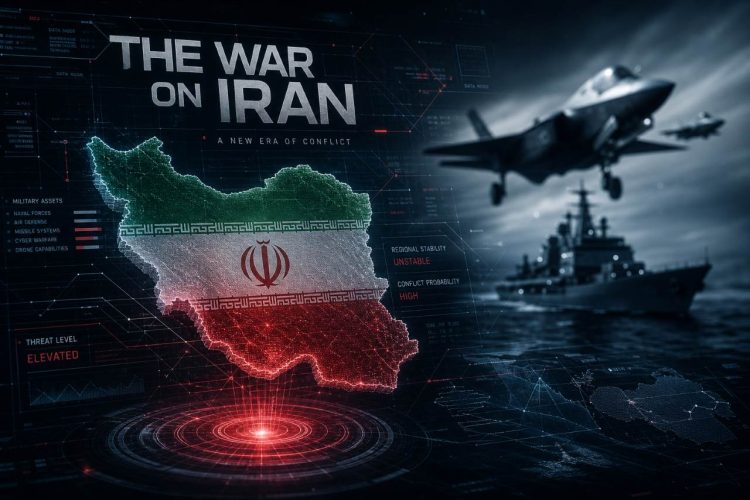
The United States just did the thing everyone feared would break the ceasefire. On Monday morning, President Donald Trump launched “Project Freedom,” a massive military operation to escort hundreds of stranded commercial ships through the Strait of Hormuz, the narrow chokepoint that Iran has blockaded since the war began. The operation involves guided-missile destroyers, more than 100 aircraft, and approximately 15,000 service members, according to U.S. Central Command. Two American-flagged merchant vessels have already made it through.
Iran’s response was immediate, incendiary, and, depending on who you believe, possibly kinetic. The Islamic Revolutionary Guard Corps claims two missiles struck a U.S. frigate operating near Bandar-e-Jask after it “ignored warnings from the Revolutionary Guard to halt.” CENTCOM flatly denies it, calling the claim propaganda and categorically false. So either Iran just fired on the U.S. Navy and Washington is covering it up, or Tehran is fabricating a military engagement for domestic consumption. Neither scenario is comforting.
What Project Freedom Actually Looks Like
Trump announced the operation on social media Sunday night, warning that Iranian efforts to block commercial transit “will, unfortunately, have to be dealt with forcefully.” The name itself, “Project Freedom,” carries the unmistakable branding of an administration that understands narrative warfare even when the actual warfare remains murky.
The operational details are significant. CENTCOM confirmed that Navy guided-missile destroyers are “currently operating in the Arabian Gulf after transiting the Strait of Hormuz in support of Project Freedom.” As a first step, two U.S.-flagged merchant vessels successfully completed transit and are safely continuing their journeys. Hundreds more remain stranded, their crews stuck in limbo since Iran imposed its blockade weeks ago.
The scale of the deployment tells you how seriously the Pentagon is taking this. Fifteen thousand service members is not a symbolic gesture. It is a combat-ready force positioned to respond if Iran follows through on its threats. Major General Pilot Ali Abdollahi warned that “any foreign military force, especially the aggressive US military, that intends to approach or enter the Strait of Hormuz will be targeted.” That is not diplomatic hedging. That is a direct threat of military engagement.
The Ceasefire Was Already on Life Support
The fragile ceasefire that held for more than three weeks was always more of a pause than a peace. Both sides used the breathing room to reposition, not to negotiate in good faith. Trump told reporters he was “looking at” a new Iranian peace proposal, but when pressed, acknowledged he had said the previous night that the U.S. might be better off not making a deal at all. That kind of rhetorical whiplash does not inspire confidence in diplomatic resolution.
The administration’s argument that the War Powers Act clock doesn’t apply during a ceasefire already raised constitutional questions about whether Congress has effectively been sidelined from oversight of a conflict that has cost taxpayers $25 billion and counting. Project Freedom adds a new layer: is escorting commercial vessels through a blockaded waterway a peacekeeping operation or an act of war?
The answer depends entirely on what happens next. If Iranian forces actually engage U.S. Navy ships (as Tehran claims already happened), the ceasefire is dead and the constitutional debate becomes academic. If the transit operations proceed without incident, Trump gets a made-for-television victory: American military power reopening global commerce while the enemy backs down.
The Drone Attack Nobody Is Talking About
While the frigate story dominated headlines, a separate incident may prove equally consequential. The government of the United Arab Emirates confirmed Monday that a tanker owned by Abu Dhabi’s state energy giant ADNOC was targeted by two drones as it attempted to transit the Strait of Hormuz. This matters because the UAE just left OPEC and has been positioning itself as a more independent energy player. An Iranian attack on Emirati shipping threatens to draw additional Gulf states into direct confrontation.
Oil markets are already pricing in chaos. Crude prices have been elevated for weeks, and the prospect of open conflict in the world’s most important oil shipping lane could send them higher still. American consumers are already paying the price at the pump, and every day of uncertainty in the Strait adds pressure to an economy that was already showing cracks before the war began.
The Propaganda War Within the War
The competing narratives around the alleged frigate strike reveal something important about how this conflict is being fought. Iran’s state media reported the missile hit with confidence and specificity, naming the location and describing the sequence of events. CENTCOM’s denial was equally categorical. There is no middle ground here. Someone is lying, and the information environment is so polluted that most observers will simply choose the version that confirms their priors.
This is the modern warfare problem that rarely gets discussed in cable news segments about troop movements and missile trajectories. When both sides have sophisticated media operations and neither has credibility with the other’s audience, the truth becomes functionally irrelevant to public opinion. What matters is what each side’s domestic constituency believes, and both governments are performing for their home crowds.
What Comes Next
The next 48 to 72 hours will determine whether Project Freedom is remembered as a successful show of force or the spark that reignited a war. The Pentagon has the firepower to protect commercial shipping. The question is whether Iran has the restraint to let those ships pass without turning a propaganda victory into an actual military confrontation.
For Congress, the calculus is shifting rapidly. A military operation of this scale, in contested waters, under ceasefire conditions that the administration itself has used to avoid War Powers oversight, creates a new set of legal and political questions that neither party seems eager to answer. The 2026 midterms are approaching, and “who authorized this?” is a question that tends to get louder once casualties start appearing on the nightly news.
Project Freedom may succeed in reopening the Strait of Hormuz. But the freedom it is least likely to deliver is freedom from the consequences of a war that keeps finding new ways to escalate.