
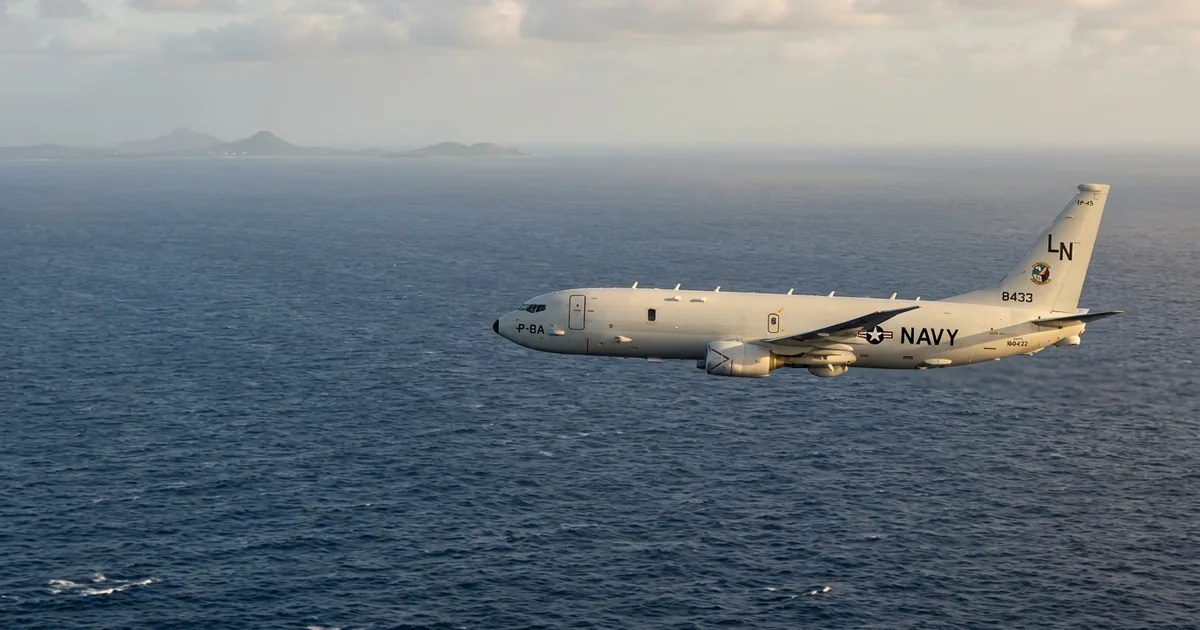
The U.S. military has flown at least 25 intelligence-gathering missions within range of Cuba’s coastline since early February, according to flight-tracking data CNN reported on May 10, ending a long stretch in which American spy aircraft were rarely visible in the area. The planes involved are capable of masking their transponders and they are choosing not to, which means this campaign is doing two things at once: collecting intelligence, and broadcasting that the collection is happening.
The flights have clustered along the northern Cuban coast, near Havana, and near Santiago de Cuba in the east, with some aircraft tracking inside 40 miles of the island. Public flight data places the surge between February 4 and the second week of May. Before February, similar visible operations in this corridor were, in the words of the CNN report, extremely rare.
What the Flight Logs Show
The pattern is being assembled in the open by anyone with a FlightRadar24 subscription. That is part of the story. U.S. Navy and Air Force aircraft routinely fly with their ADS-B beacons active when the mission is meant to be seen, and routinely fly dark when it is not. Twenty-five lit-up missions in 90-odd days is not stealth, and it is not accident.
Cuba’s air defenses are aging Soviet-era systems with limited reach against high-altitude assets, so the choice to fly with transponders on does not buy meaningful protection. It buys publicity. The audience for that publicity is the part of the story that is contested.
Three Aircraft Types, Three Different Missions
CNN identified three platforms doing the bulk of the work, and the mix matters because each one is a different kind of message.
The P-8A Poseidon, which Boeing builds on a 737 airframe for the U.S. Navy, is a maritime patrol aircraft. Its job in this corridor is tracking vessel movements, mapping coastal radar emissions, and listening for what is going in and out of Cuban ports. It is also the aircraft most often photographed off China in the South China Sea, and its presence is a recognizable signal to allies and adversaries alike that the Navy is treating this water as a watched theater.
The RC-135V Rivet Joint, a four-engine Boeing 707-derivative flown by the U.S. Air Force, is the signals-intelligence platform. It exists to intercept communications, scan radio-frequency emissions, and produce a near-real-time picture of who is talking to whom and on what frequency. It is the aircraft you fly when you want to read the network before deciding what to do with it.
The MQ-4C Triton, an unmanned high-altitude drone built by Northrop Grumman, fills in the persistent-stare layer, the orbit that can hold position for twenty-plus hours without crew rotation. Together the three platforms produce a full-spectrum collect across maritime surface, electronic emissions, and persistent overhead coverage. That is not a screening posture. That is what the Pentagon flies when it is building a target picture.
The Venezuela Playbook, Rerun
The sequence underway off Cuba is recognizable because it has been run before. In the months preceding the U.S. covert escalation in Venezuela last year, the same pattern played out: tightening sanctions, sharpening rhetoric out of Washington, and a sudden rise in visible reconnaissance flights along the target country’s coast. LNC’s own coverage of the covert war in Venezuela tracked the same buildup, including the September strike on a Venezuelan vessel in international waters that the Trump administration framed as a counter-narcotics action.
The pre-Iran sequence followed an even closer template. Defense News documented earlier this month that the Cuba surge uses the same airframe mix, the same coast-hugging profile, and the same Pentagon communications posture that preceded the Iran strikes in March. Several of the airframes now orbiting Cuba were photographed in the same role over the Persian Gulf only weeks before those operations.
A pattern is not a prediction. The pattern is also not nothing. The professional-analyst read on visible surveillance surges is that they are part of the political-military toolkit used to set conditions for escalation, and that they tend to either precede kinetic action or to bracket it as a deterrent against a counter-move. Either reading puts Cuba in a different posture than it has been in for most of the past decade.
What Congress Has Not Done
The Trump administration has spent the past four months tightening sanctions on Havana, restoring the state-sponsor-of-terrorism designation Biden briefly considered lifting, and elevating Cuba in the rhetorical lineup that runs through Secretary of State Marco Rubio’s speeches. None of that requires a single congressional vote. Reconnaissance flights in international airspace do not require one either. A military strike does, under the War Powers framework, even though the past two decades have shown how flexibly that framework can be interpreted when the White House wants to act.
The accountability gap matters here because the visible-surveillance posture is the part of the escalation ladder that sits entirely inside executive discretion. Congress has not been asked to authorize anything against Cuba, and Congress has not, on the public record, demanded a briefing. Senators who pressed for hearings on Venezuela and Iran have so far been quieter on this one. That silence is itself a signal, and it is the kind of signal that affects what the Pentagon believes the political ceiling looks like.
What to Watch
Three things in the next month. First, whether the flight cadence continues at the same pace, or accelerates. A move from roughly two flights per week to four or five would not be a routine cadence shift, it would be a posture shift. Second, whether the airframe mix changes. The arrival of B-52 bomber overflights, F-22 air-superiority patrols, or carrier-strike-group assets in the same corridor would be a different message entirely, and one that the Cuban government and its principal external partners, including the Chinese signals-intelligence facility on the island, would have to respond to. Third, whether the House Intelligence Committee or the Senate Armed Services Committee asks for a closed-session briefing.
The aircraft are not hiding. That is the message. The question is whether the intended audience is Havana, Beijing, Caracas, or the U.S. political establishment itself, and the answer determines what the next chapter looks like.
By the Live News Chat editorial desk. Reporting on U.S. foreign policy, military posture, and the institutional health of American democratic oversight since 2019.