
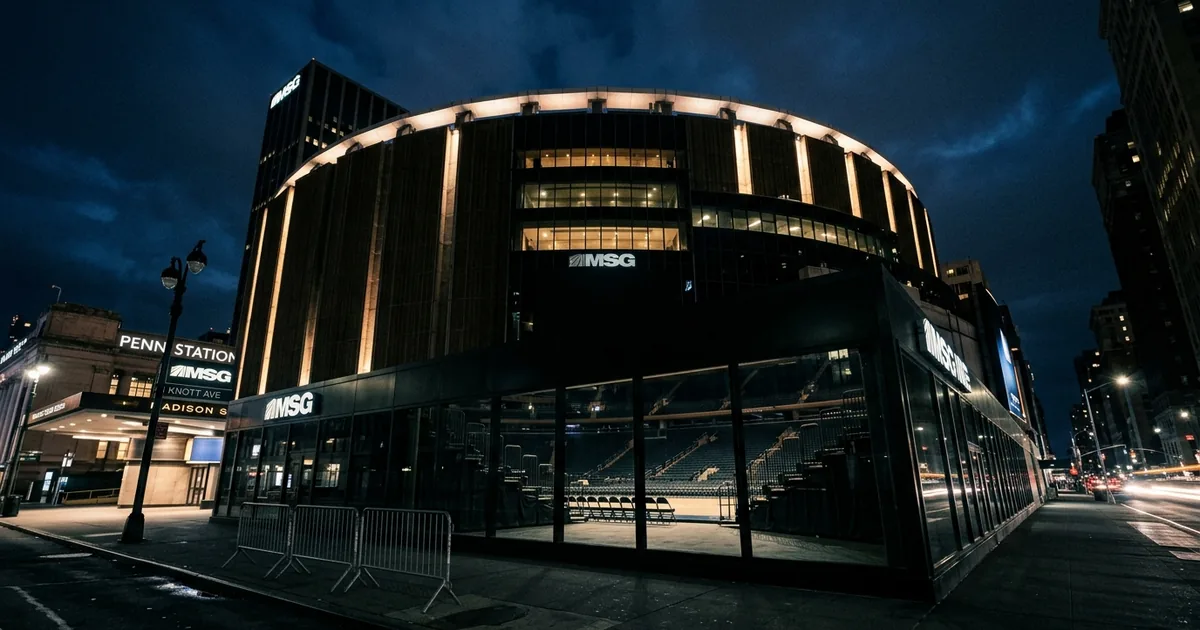
There are exactly two things you can say with certainty about James Dolan: he owns Madison Square Garden, and he holds a grudge like no one else in professional sports.
NBA Commissioner Adam Silver confirmed this week that both he and Michael Jordan personally attempted to broker peace between Dolan and former Knicks enforcer Charles Oakley, and both failed completely.
Nine Years and Counting
The feud traces back to a February 2017 incident that played out on live television. Oakley, one of the most beloved Knicks of his era, attended a home game and sat a few rows behind Dolan’s courtside seat. What happened next became one of the most embarrassing moments in franchise history: Dolan claimed Oakley was verbally abusive, and security surrounded the former fan favorite, physically dragged him from the arena, and put him in handcuffs.
Oakley responded with a defamation lawsuit. Dolan responded with a lifetime ban from the Garden. And that is essentially where things have stayed for nearly a decade.
Jordan and Silver Both Struck Out
Silver’s revelation came during a press conference timed to the Knicks’ NBA Finals appearance, and as Yahoo Sports reported, the commissioner did not mince words. “I tried. Michael Jordan tried,” Silver said, calling the ongoing rift “a shame” given that Oakley should be celebrating alongside the franchise he helped build.
The fact that Jordan got involved is significant. Jordan and Oakley are close friends dating back to their Chicago Bulls days in the early 1990s, and Jordan’s personal appeal to Dolan apparently carried no more weight than Silver’s institutional one. As Yardbarker detailed, the Knicks reportedly offered Oakley full reinstatement as a celebrated alumnus in May 2025 if he dropped the lawsuit. He rejected the deal.
Why This Matters Beyond Basketball
This is not just a sports story. It is a story about power, pettiness, and what happens when a billionaire owner treats a franchise like a personal fiefdom. Oakley gave the Knicks ten years of ferocious, physical basketball during an era when the team actually mattered in the national conversation. He is not some fringe figure demanding attention. He is a legitimate franchise icon, and his treatment mirrors a pattern of Dolan alienating the people who built the Knicks’ brand while the team itself languished for decades.
The legal dimension adds another layer. A federal judge sanctioned Oakley in November 2025 for deleting five years of relevant text messages, ordering him to pay MSG more than $642,000 in attorney fees. That ruling weakened Oakley’s legal position but did nothing to resolve the underlying dispute. Both sides seem committed to spending more on lawyers than the original incident could possibly justify.
The Knicks Are in the Finals, and Oakley Cannot Watch in Person
The cruelest irony is the timing. The Knicks are playing in the NBA Finals for the first time since 1999, and Oakley, the man who spent a decade throwing his body around for this franchise, cannot set foot in the building to watch it. Silver clearly finds this embarrassing for the league. Fans overwhelmingly find it absurd. Dolan, apparently, does not care what anyone thinks, and that intransigence is the whole story in miniature.
The ban will outlast the Finals. It may outlast Dolan’s ownership. And it will certainly outlast any reasonable interpretation of what happened in Section 101 nine years ago. That is the James Dolan experience in one sentence.