
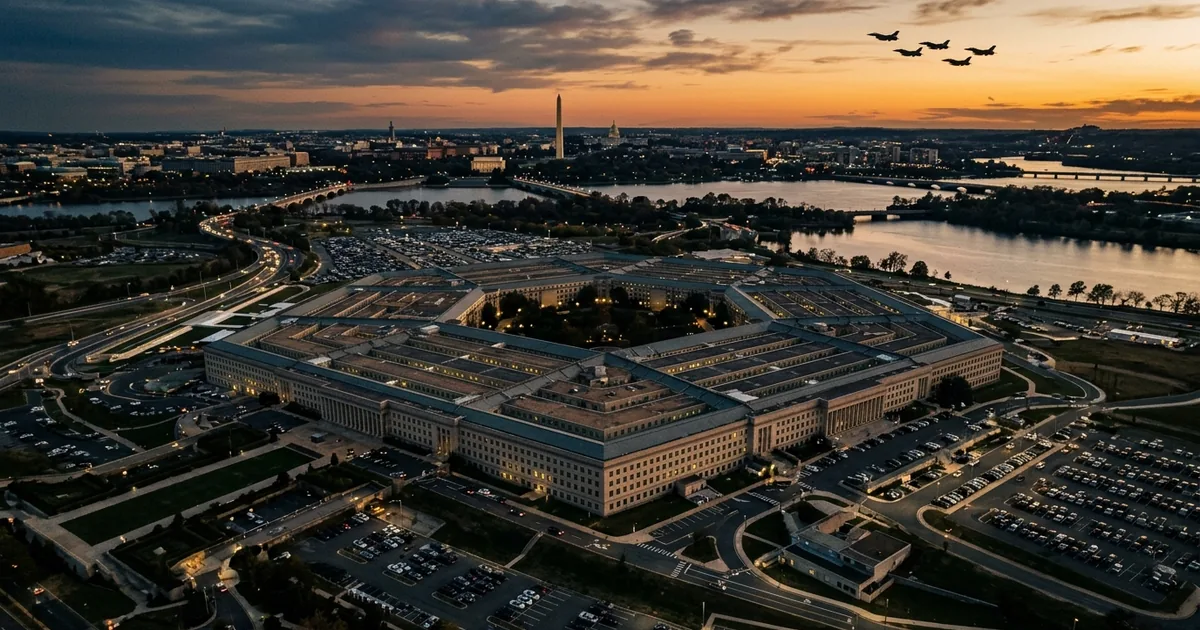
Deputy Defense Secretary Stephen Feinberg told senators last week that the Pentagon needs roughly $80 billion to cover the cost of the U.S. military operation in Iran, a figure that dwarfs the $29 billion estimate that Defense Secretary Pete Hegseth gave Congress just weeks ago.
The gap between those two numbers tells you everything about how the administration has managed the public accounting of this war.
The Money Trail
The $80 billion request has been sent to the Office of Management and Budget but has not yet been formally submitted to Congress, according to ABC News. It comes on top of a White House budget proposal that already seeks $1.5 trillion for the Pentagon, a nearly 50 percent increase over current fiscal year funding levels. To put that in context, the United States spent approximately $2.3 trillion on the entire 20-year war in Afghanistan.
Feinberg communicated the request in private calls with several senators, a delivery method that avoids the public scrutiny of a formal budget hearing. The quiet approach is deliberate. When Hegseth testified before Congress, he pegged war costs at $29 billion, a number that was already facing skepticism from military analysts. The jump to $80 billion, disclosed through backchannel conversations rather than sworn testimony, raises immediate questions about whether the initial estimate was a lowball designed to secure political buy-in.
Where the Money Goes
Military.com reported that the bulk of the funding covers munitions, fuel, and operational costs for sustained air and naval operations in and around the Persian Gulf. The U.S. military has maintained a significant presence in the region since hostilities escalated earlier this year, and the logistics of projecting force across thousands of miles of ocean consume money at a rate that peacetime budgeting never contemplates.
The request also includes funds for missile defense systems, intelligence operations, and the kind of force protection spending that balloons when troops are deployed in hostile territory. None of this is surprising to anyone who has watched American military spending in the Middle East over the past two decades, but the speed of the cost escalation is notable. The war is months old. The price tag has nearly tripled.
Congressional Resistance Is Building
The funding package faces significant opposition from lawmakers in both parties. Anti-war Democrats have refused to support additional military spending without a formal authorization for the use of military force, which the administration has not sought. Fiscal hawks on the right are uncomfortable adding $80 billion to a defense budget that is already the largest in American history.
The political dynamics mirror the early years of the Iraq War, when bipartisan coalitions initially supported military action before fracturing as costs mounted and the strategic rationale eroded. The administration has invoked the Defense Production Act to accelerate weapons manufacturing, a move that signals the Pentagon expects the operation to continue well beyond the current fiscal year.
The Credibility Problem
The central issue is not the dollar amount. Wars are expensive, and Congress has consistently funded them regardless of price. The problem is the gap between what the administration told Congress the war would cost and what it is now asking for. A $29 billion estimate that becomes $80 billion in weeks is not a rounding error. It is either a miscalculation of staggering proportions or a deliberate strategy to secure incremental commitments that make it politically impossible to reverse course.
Bloomberg Government noted that the request is being framed as emergency supplemental funding, which allows it to bypass normal budget caps and appropriations processes. Emergency designations are standard practice for wartime spending, but they also reduce congressional oversight at precisely the moment when oversight matters most.
The $80 billion question is not whether Congress will approve it. History suggests it will. The question is whether anyone in a position of authority will demand an honest accounting of where this war is headed and what it will ultimately cost before writing the check.