
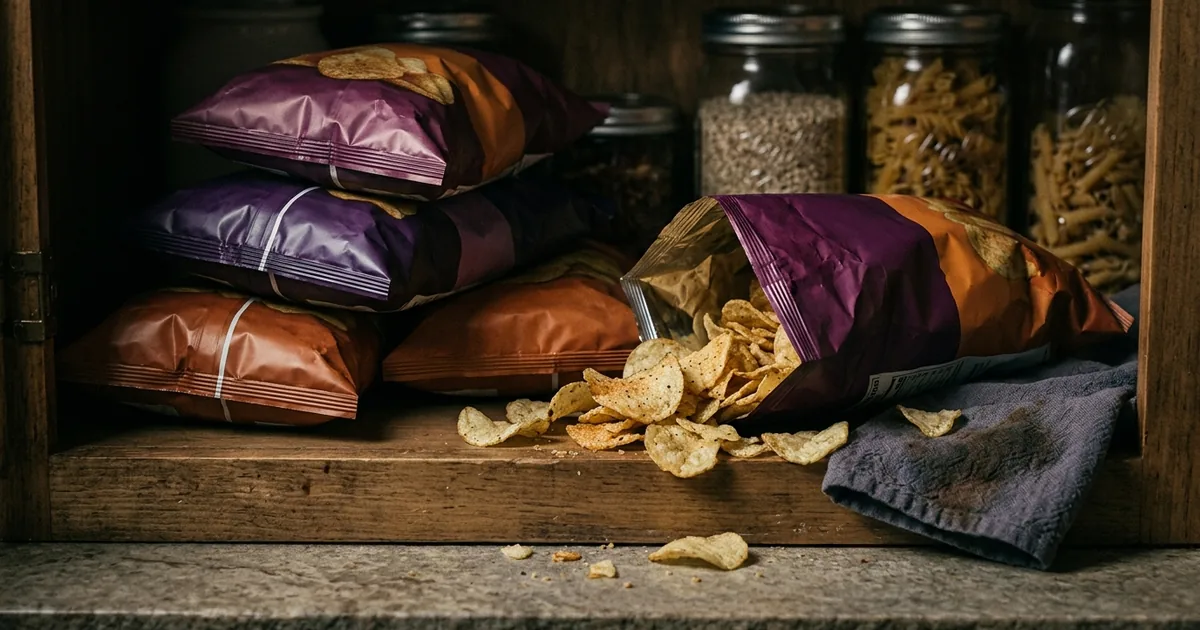
Nearly 685,000 bags of Zapp’s and Dirty brand potato chips are now under the Food and Drug Administration’s most serious recall classification, a Class I designation that means eating them carries a reasonable probability of serious illness or death.
The unsettling part is not the chips themselves, which have made nobody sick, but the two months it took for the public to learn how seriously regulators rate the risk.
Utz Brands, the Pennsylvania snack giant that has owned the beloved Louisiana-born Zapp’s label since 2011, quietly pulled the products in early May after learning that a dry milk powder used in its seasoning blends might be contaminated with salmonella. NBC News reported Thursday that the FDA has now listed the recall as Class I in its latest enforcement report, the agency’s strongest warning category, reserved for situations where exposure could cause serious adverse health consequences or death.
Which Chips Are Affected, and Which Are Not
Nine products across two brands fall under the recall. On the Zapp’s side: Bayou Blackened Ranch in 1.5-ounce, 2.5-ounce, and 8-ounce bags, Salt and Vinegar in 1.5-ounce bags, and Big Cheezy in 1.5-ounce and 8-ounce bags. On the Dirty side: Salt and Vinegar in 1.5-ounce and 2-ounce bags, plus Maui Onion and Sour Cream and Onion, each in 2-ounce bags.
The affected bags carry best-by dates from July 27, 2026 through August 31, 2026, which means every one of them is still inside its freshness window. A bag bought in May could easily be sitting unopened in a pantry right now. That is precisely why the classification matters even though the recall itself is weeks old.
Fans of Zapp’s signature Voodoo flavor can exhale. The brand’s best-known chip is not part of the recall, and neither are Utz’s flagship namesake products.
The chips were distributed across 34 states, UPI reported Thursday, a footprint wide enough that most American shoppers should check their snack shelves. Consumers who find a recalled bag should not eat the chips. Utz is offering refunds through its customer care line at 1-877-423-0149, open weekdays from 9 a.m. to 6 p.m. Eastern.
How One Milk Powder Supplier Rippled Across 34 States
The contamination risk did not start at Utz. The company was notified that a dry milk powder ingredient, sourced from California Dairies Inc. and supplied through a third-party vendor, may have contained salmonella and had been recalled separately upstream. That single ingredient flows into the seasoning blends that give Bayou Blackened Ranch and Big Cheezy their flavor, and from there onto shelves in dozens of states under two different brand names.
This is the recurring structure of modern food recalls, and it deserves more attention than it gets. A handful of large ingredient suppliers feed hundreds of consumer brands, so one contamination event at a dairy processor can cascade into recalls of chips, sauces, seasonings, and snack mixes that appear unrelated on the shelf. Shoppers saw the same dynamic last month when a salmonella-linked alfredo sauce recall spread across 41 states from a single production source. The supply chain is efficient, concentrated, and largely invisible to the person deciding between two bags of chips.
Here is the twist in this case: the seasoning batches Utz actually used tested negative for salmonella before production, and the company says it issued the recall out of an abundance of caution. To date, Today.com reported, no illnesses or adverse health complaints have been linked to any of the recalled chips.
Why a Recall With Zero Illnesses Gets the FDA’s Most Severe Rating
If nobody got sick and the seasoning tested clean, why does this recall now carry the same classification as recalls that have killed people? Because the FDA’s classification system grades the hazard, not the body count. Class I asks a forward-looking question: if a contaminated product did reach a consumer, how bad could it get? For salmonella in a ready-to-eat food, a product nobody cooks before eating, the answer is bad. Salmonella infection can cause fever, diarrhea, and vomiting in healthy adults, and it can turn severe or fatal in young children, older adults, and people with weakened immune systems.
That hazard-based logic is defensible, even prudent. What is harder to defend is the timeline. Utz initiated the recall in early May. The FDA’s Class I determination surfaced in an enforcement report published at the end of June, and most consumers are hearing about the severity rating only now, in July. For eight weeks, a shopper who vaguely remembered a chip recall had no official signal that regulators would eventually place it in the highest risk tier. The bags in question remain within their best-by window the entire time.
This is a structural gap in how American food safety communicates risk. The recall system front-loads the company’s voluntary announcement, which tends to be carefully worded and easy to miss, and back-loads the government’s independent severity judgment by weeks or months. The classification lag is routine at the FDA, which processes hundreds of recalls a year through its enforcement reporting pipeline. Routine is not the same as acceptable when the product is a snack food with a three-month shelf life and a cult following.
Check the Pantry, Not the Headlines
The practical guidance is simple. Look for the nine recalled products, check the best-by dates against the July 27 through August 31 window, and throw out or return anything that matches. Do not taste-test your way to reassurance; salmonella does not announce itself in flavor or smell.
The larger question is worth sitting with longer than the chips will last. Utz did what the system asks of a company: it traced the ingredient, pulled the product, and notified regulators, all without a single reported illness. The system still left consumers waiting two months to learn how seriously the government viewed the risk. As ingredient supply chains keep consolidating, the distance between one contaminated batch of milk powder and 685,000 bags of chips in 34 states keeps shrinking. The distance between a recall announcement and an honest public accounting of its severity should be shrinking too. So far, it is not.