
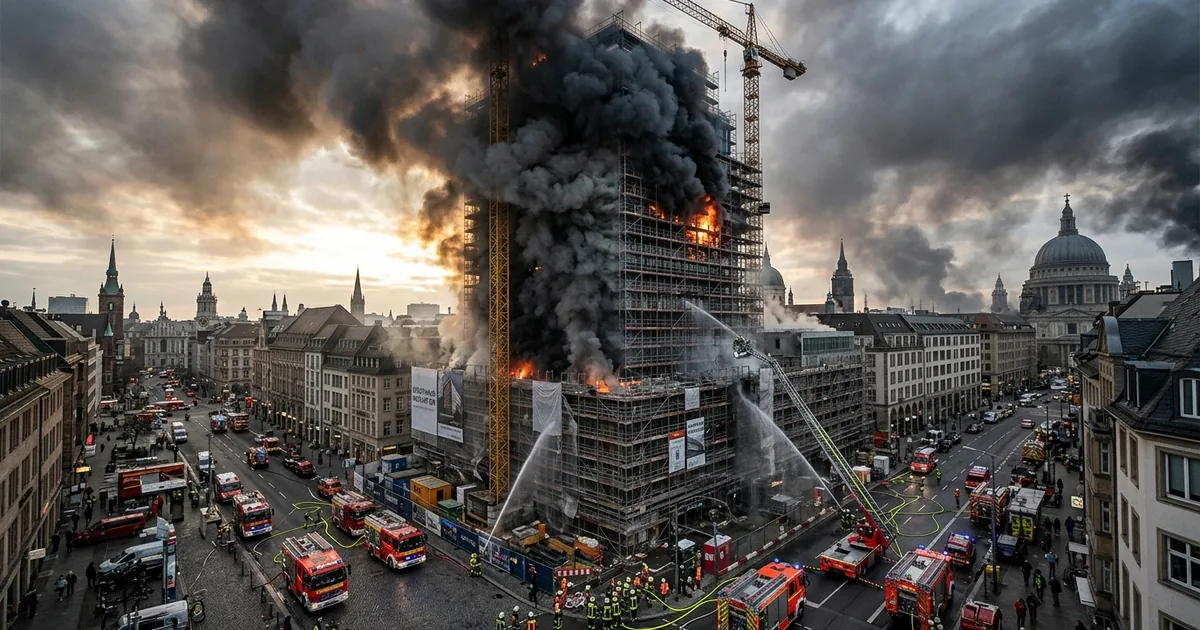
A fire at the Oxy Tower renovation project in central Brussels killed several construction workers trapped inside an elevator shaft on Monday morning, with six more people still unaccounted for as rescue crews work to reach a second stuck lift.
The blaze broke out shortly before 8 a.m. local time on the second floor of the building on Place de Brouckere, one of the Belgian capital’s busiest public squares. Around 250 construction workers were on site when the fire started, and what happened next exposed a vulnerability that workplace safety regulators across Europe have warned about for years: vertical fire spread through elevator shafts in buildings under active renovation, where standard fire suppression systems are often incomplete or offline.
The Fire Spread Fast, and It Spread Vertically
Brussels firefighters initially brought the second-floor blaze under control quickly. But the flames had already jumped into the building’s lift shaft, a vertical chimney that carried fire and toxic smoke from the upper floors down to level minus two, two stories underground.
Two elevators became stuck inside two separate shafts. Rescue crews managed to cut a small opening into one of the lifts, where they found several victims inside, according to Euronews. The second elevator remains inaccessible. The six missing workers are people site managers confirmed were working that morning but have not been able to contact since the fire broke out.
One worker was evacuated with burn injuries. The rest of the roughly 250-person crew made it out, but the rescue operation is far from over.
Why Elevator Shafts Turn Small Fires Into Fatal Ones
The structural cause here is well documented and persistently under-addressed. Elevator shafts in buildings under renovation function as vertical chimneys. In a completed building, fire-rated doors, shaft enclosures, and pressurization systems prevent this exact scenario. But during active construction, those protections are routinely incomplete, removed for access, or not yet installed.
The result is a known hazard pattern: a manageable fire on one floor gets a vertical express lane through the shaft, bypassing every horizontal containment barrier in the building. The fire moves faster than evacuation can keep up, particularly for anyone inside the elevator or in below-grade levels where escape routes are limited.
European construction safety authorities, including Belgium’s own Federal Public Service for Employment, have flagged shaft-related fire risks on renovation sites repeatedly. The question Brussels prosecutors and safety inspectors will now have to answer is whether the Oxy Tower site had adequate interim fire protections in place for its elevator infrastructure, and whether the 250 workers on site had been briefed on shaft-fire evacuation protocols.
The Oxy Tower Is a Landmark Renovation
The Oxy building sits at the heart of Brussels, directly on Place de Brouckere. The tower has been undergoing a major renovation program, the kind of large-scale urban construction project that European capitals are dotted with as aging commercial real estate gets repurposed for modern use. VRT, Belgium’s public broadcaster, reported that the fire broke out in the early morning as the full construction crew was arriving for the workday.
The location and scale of this project mean the investigation will draw scrutiny not just from Belgian regulators but from EU-level workplace safety bodies. Construction site fatalities have been declining across the EU over the past decade, but fire-related deaths on renovation sites remain a stubborn outlier, partly because renovation work requires dismantling the very safety systems that would prevent incidents like this.
The tragedy also echoes a pattern that extends well beyond Europe. Just days ago, a deadly factory fire in Jinjiang, China killed 28 workers in a building where fire safety infrastructure was reportedly inadequate. The common thread is not geography; it is the gap between safety regulations on paper and safety infrastructure in practice, particularly in buildings that are mid-construction or mid-renovation and operating without their full complement of fire suppression systems.
What Happens Next
The immediate priority is reaching the second stuck elevator. Six workers remain missing, and their families are waiting for answers. Brussels fire brigade and civil protection officers are still searching the building, and the cause of the initial fire on the second floor is under investigation.
Belgian prosecutors are expected to open a formal inquiry into the site’s safety compliance. The central questions will be whether the elevator shafts had interim fire barriers during the renovation, whether the construction crew had adequate fire evacuation training, and whether the general contractor met Belgium’s legal obligations for fire risk management on active work sites.
For the 250 workers who made it out of the Oxy Tower on Monday morning, and for the families of those who did not, those questions needed answers before the fire started, not after.