
President Donald Trump announced late Saturday that he was canceling a planned attack on Iran because “the perimeters of a deal has been agreed to,” a claim Iranian state media has pointedly declined to corroborate.
That gap between what Washington says was agreed and what Tehran will admit to is not a detail, it is the whole story, and it is the second strike pause in under a week to rest entirely on an understanding nobody has produced in writing.
What Trump Actually Posted
The announcement arrived on Truth Social, not from the Pentagon or the State Department. Trump wrote that the United States is “locked and loaded and ready to go against the Islamic Republic of Iran, at levels of Military Terror, Strength, and Power not seen since World War II,” then pivoted inside the same post: “we have just been asked by Iran, and other Middle Eastern Countries, to hold off any attack in that the perimeters of a deal has been agreed to.”
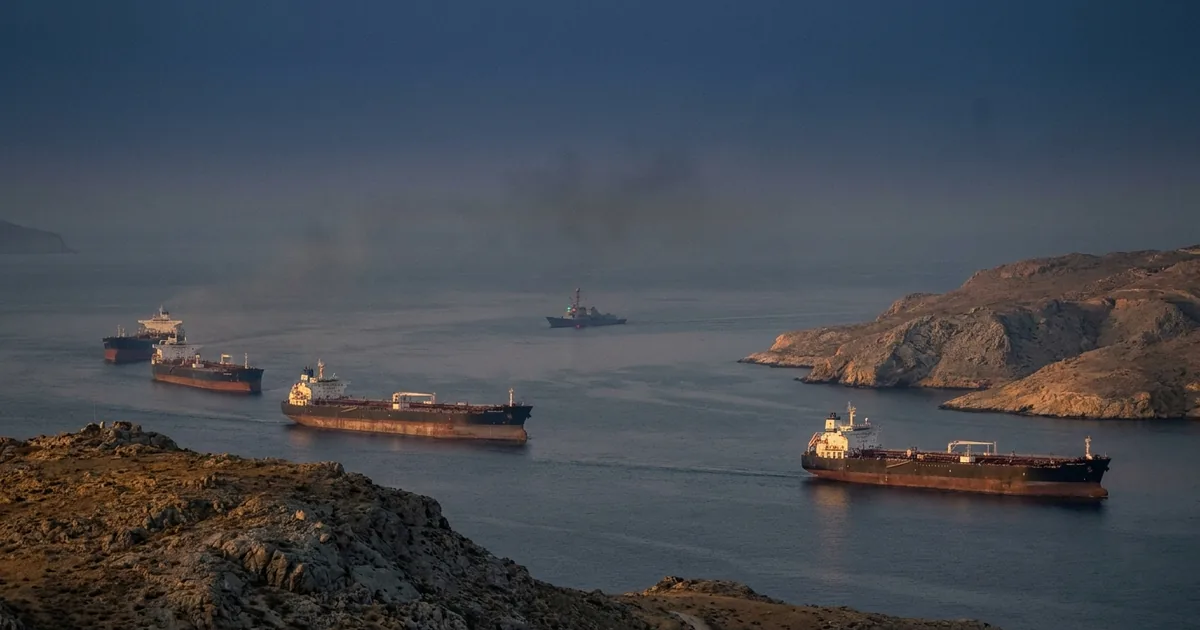
The terms he named were specific. Al Jazeera reported that the proposed agreement would cover the “Immediate, Complete, and Total OPENING OF THE HORMUZ STRAIT” and an end to Iran’s nuclear threat, with the cancellation conditional on a deal being reached rapidly. He added that Israel “joins me in this commitment.”
The sequence matters as much as the content. The post landed roughly a day after US outlets reported that Washington and Israel were preparing to hit Iranian energy infrastructure, and on the same weekend the State Department warned American citizens across the Middle East, which CNN tracked through Saturday. Leak the target set, cancel the strike, then describe the cancellation as a concession extracted from Tehran.
The Part Tehran Has Not Said
Iranian state media gave no indication that Iran asked for the attacks to be called off, and none that it has moved on the Strait of Hormuz. Newsweek noted that Trump’s demand for the waterway’s reopening was aimed at a government that has not publicly agreed to reopen anything.
That asymmetry is the part worth sitting with. A deal whose existence only one party will confirm is not a deal, it is a negotiating position announced as a fact. Maybe Tehran has agreed privately and prefers not to say so, which is ordinary enough in this region. Maybe what Trump is calling agreed perimeters is a set of demands relayed through intermediaries that Iran never accepted. From the outside those two situations look identical, right up until the moment one of them falls apart.
The Gulf Capitals Are Doing the Actual Work
Read the supporting detail and a different cast comes into focus. Saudi Crown Prince Mohammed bin Salman spoke with Trump on Saturday, expressed concern and asked for clarity about American plans, according to a US official, and the Saudi Press Agency said he stressed the “necessity of prioritising dialogue to de-escalate tensions.” Qatar, the United Arab Emirates, Turkey and Pakistan have all pushed both sides toward the same exit.
Trump’s own phrasing gives the game away. He said he had been asked to hold off by “Iran, and other Middle Eastern Countries.” The other countries are the ones on the record. Iran is not.
So here is the more plausible reading of the weekend. The Gulf states, who would absorb the economic and physical damage of a strike on Iranian energy infrastructure and a fully closed Hormuz, built an off-ramp, Trump took it, and then narrated it as Iranian capitulation. That framing costs Tehran nothing to ignore and gives Washington something to hold up. It is also precisely why the agreement has no text.
We Published This Same Story Last Week
The case for skepticism here is not partisan, it is empirical. Last week we covered the collapse of the previous strike pause, and the failure mode then was this exact one. The pause had no written terms, so when Iran’s Revolutionary Guard fired on a base in Jordan there was no agreed text against which to judge who had broken what. Both sides could credibly blame the other, because both were describing an arrangement that existed only as an assertion.
Nothing structural has changed since. This pause is again undocumented, again conditional on speed, and again announced unilaterally by the side with the bombers. The Jerusalem Post’s account of the cancellation carries the same open-endedness. An arrangement that can be revoked by the party that announced it, on a timetable that party alone sets, is not a ceasefire. It is a pause button held down by one hand.
Nobody in Washington Is Positioned to Ask
The institutional question is getting the least attention and deserves the most. The Senate blocked the binding war powers vote last week that would have forced a congressional judgment on this campaign. That failure is why the strike calendar now runs through one man’s social media account.
The practical consequence is visible this weekend. There is no body with the standing to ask what the perimeters of the deal actually are, whether Iran has agreed to them, what verification looks like, or what happens on the day Trump decides a deal is not coming rapidly enough. When Congress declined to assert a role, it did not merely cede the decision to strike. It ceded the decision to stop, the decision to start again, and the ability of anyone outside the executive branch to know which of the two is currently in effect.
What Would Make This Time Different
One test is cheap and available: a text. If a memorandum surfaces with signatories, a verification mechanism, and a stated position on the Strait of Hormuz, then this is real de-escalation and the doubt was misplaced. If the coming week produces only more posts describing what Iran has supposedly agreed to, while Iranian officials keep saying nothing at all, then the pause is a pause in name and the strike package is still sitting exactly where the leaks put it.
Watch Tehran, not Washington. The tell will not be another Truth Social post. It will be the first Iranian official who confirms, on the record, that there is something to sign.