
Immigration and Customs Enforcement has been the operational center of this administration’s signature domestic project for a year and a half, and it still does not have a Senate-confirmed director.
The reason is not Democratic obstruction. It is the Republican chairman of the committee that would have to hold the hearing.
A June Nomination, Still Waiting for a Date
President Donald Trump announced in June that he was nominating Lance Schroyer, a former Oklahoma state trooper, to run ICE. Schroyer spent roughly 29 years in Oklahoma law enforcement and came to Washington as a senior adviser to Homeland Security Secretary Markwayne Mullin, having previously served on Mullin’s security detail. Al Jazeera noted at the time that his federal immigration experience amounted to participation in a 287(g) agreement, the program that deputizes local police for immigration enforcement.
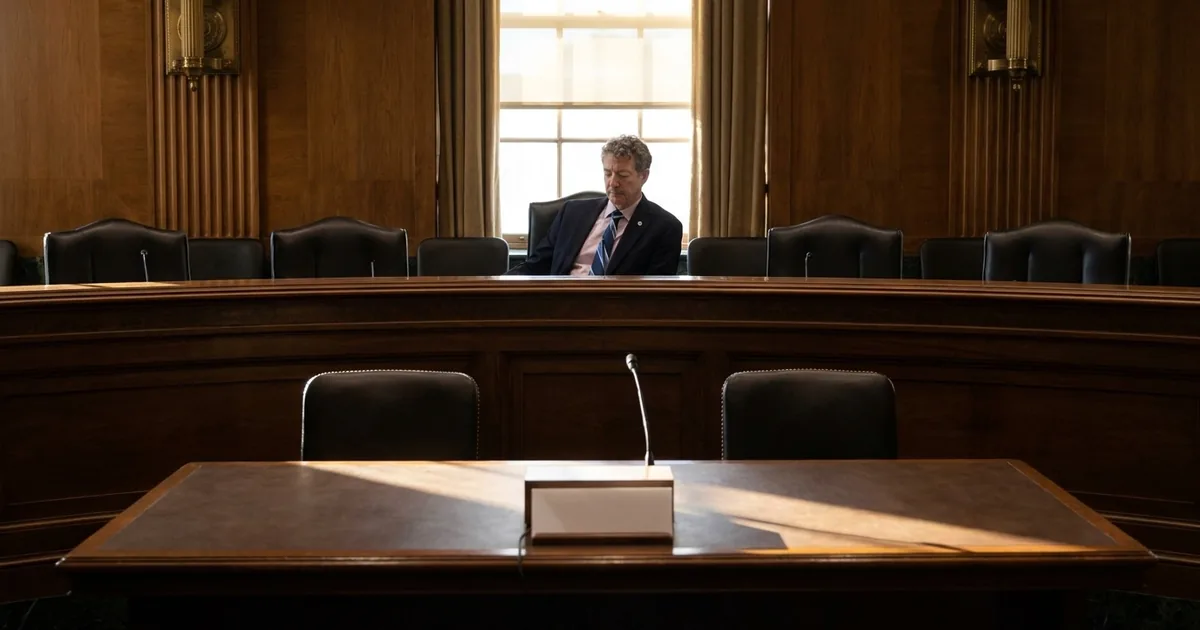
Two months later there is no hearing on the calendar. Senator Rand Paul of Kentucky chairs the Homeland Security and Governmental Affairs Committee, and a committee chairman decides when a nomination gets a room, a witness table and a microphone. Paul has declined to schedule one.
His condition is specific and he has not softened it: the administration hands over what it knows about its own investigations into the killings of two American citizens by federal agents in Minneapolis in January, or the hearing does not happen.
Renee Good, Alex Pretti, and a Question the Administration Has Not Answered
The two people were Renee Good, an unarmed mother of three who was watching an immigration operation from her vehicle, and Alex Pretti, an intensive care nurse and lawful gun owner who was filming federal agents. Both were shot by federal officers. Both were American citizens. Neither killing has produced a public independent finding.
Paul’s framing of it has been blunter than anything coming from the other side of the aisle. He asked, publicly, who federal agents are allowed to kill and when they are allowed to kill them, and he has said that the Department of Homeland Security and ICE need to restore trust rather than litigate the narrative. That is a Republican committee chairman saying it about a Republican administration’s flagship agency.
The reason there is nothing for Paul to read is structural. The reviews of both shootings are internal to the executive branch, and the FBI has already stepped back from investigating shootings by ICE agents, which removed the one investigative body with a tradition of independence from the agency it was examining. When the FBI stops looking, the only remaining record is the one DHS writes about itself. Paul is not withholding a hearing because he read something troubling. He is withholding it because there is nothing to read, and a nomination is the only object he controls that the White House wants.
The Résumé Problem Is Real, and It Is Not the Blockage
Plenty of people would like Schroyer stopped for reasons that have nothing to do with Minneapolis. The Daily Beast reported an internal revolt inside ICE itself, with career officials arguing he has never run a federal agency, never managed a budget of this scale, and never held a leadership position remotely comparable to the one he has been handed. Several would rather the acting director stay in place. Resurfaced court filings from 2021, in which his ex-wife alleged years of unpaid child support, have added a second line of attack.
Those are real objections. They are also not what is holding the nomination, and conflating the two lets the administration treat the whole thing as a personality dispute it can wait out. Paul’s demand is institutional. It survives a change of nominee.
The Confirmation Calendar Is the Last Oversight Tool Standing
This is the part worth sitting with, because it explains far more than one stalled nomination.
Congress has spent this term losing its leverage over DHS piece by piece. Funding riders have not held. Subpoenas have gone unanswered or been answered with documents that arrive redacted past usefulness. Oversight hearings have produced testimony that generated headlines and no follow-through. The Justice Department has meanwhile been willing to run the pressure in the other direction, charging protesters who confronted ICE operations under a conspiracy statute rarely used this way. Even the narrow procedural fights, such as when body camera footage from an ICE shooting gets released and who decides that it is in anyone’s best interest, have gone the agency’s way.
What is left is scheduling. A chairman cannot compel a document, but he can refuse to move a nomination, and that is a power no floor vote can strip from him. So the oversight of an agency that has killed American citizens now runs through a single senator’s calendar. That is not a healthy design. It is what remains after everything better has been tried.
It also means the outcome is personal rather than institutional. If Paul relents, or loses the gavel, or decides the fight has cost him enough inside his own party, the record on Good and Pretti simply never gets built. Nothing in the system produces it automatically. One man is currently the entire mechanism, and mechanisms made of one person do not tend to last.