
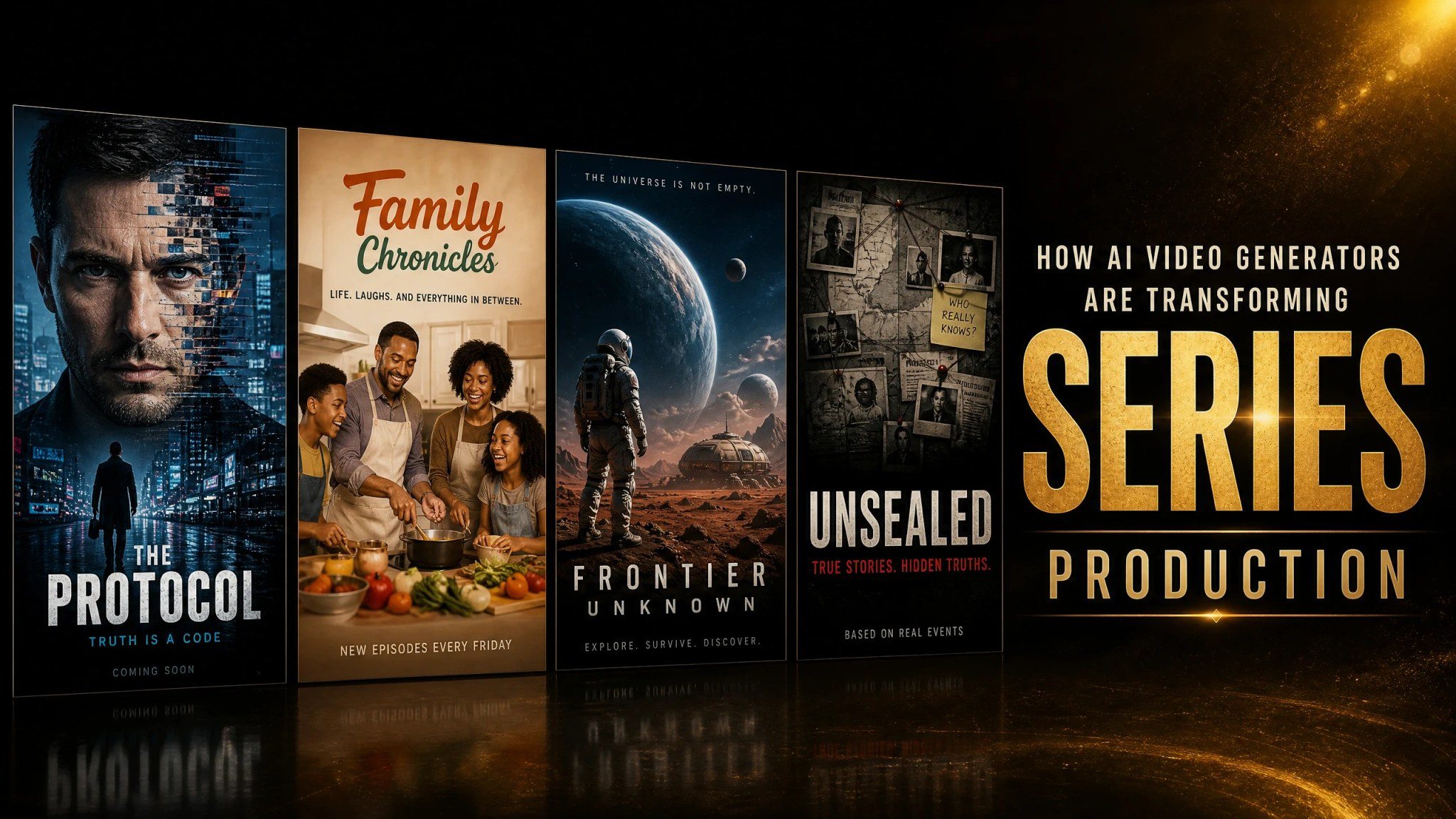
When Prime Video added Castle Walls this summer, a short series made in Istanbul using generative AI, it became one of the first AI-generated shows to reach a global streamer. The bigger shift, though, is happening on smaller screens. On vertical drama apps, AI-generated titles now make up a large share of new releases, and creators of every size are asking how far AI video agents can take a story.
Making a clip is not the same as making a series. A series needs the same characters, the same look, and a plot that holds together across episodes. This article looks at why AI series are gaining momentum, how the workflow differs from traditional production, where it still falls short, and how the tools are responding.
Why AI-Generated Series Are Gaining Momentum in 2026
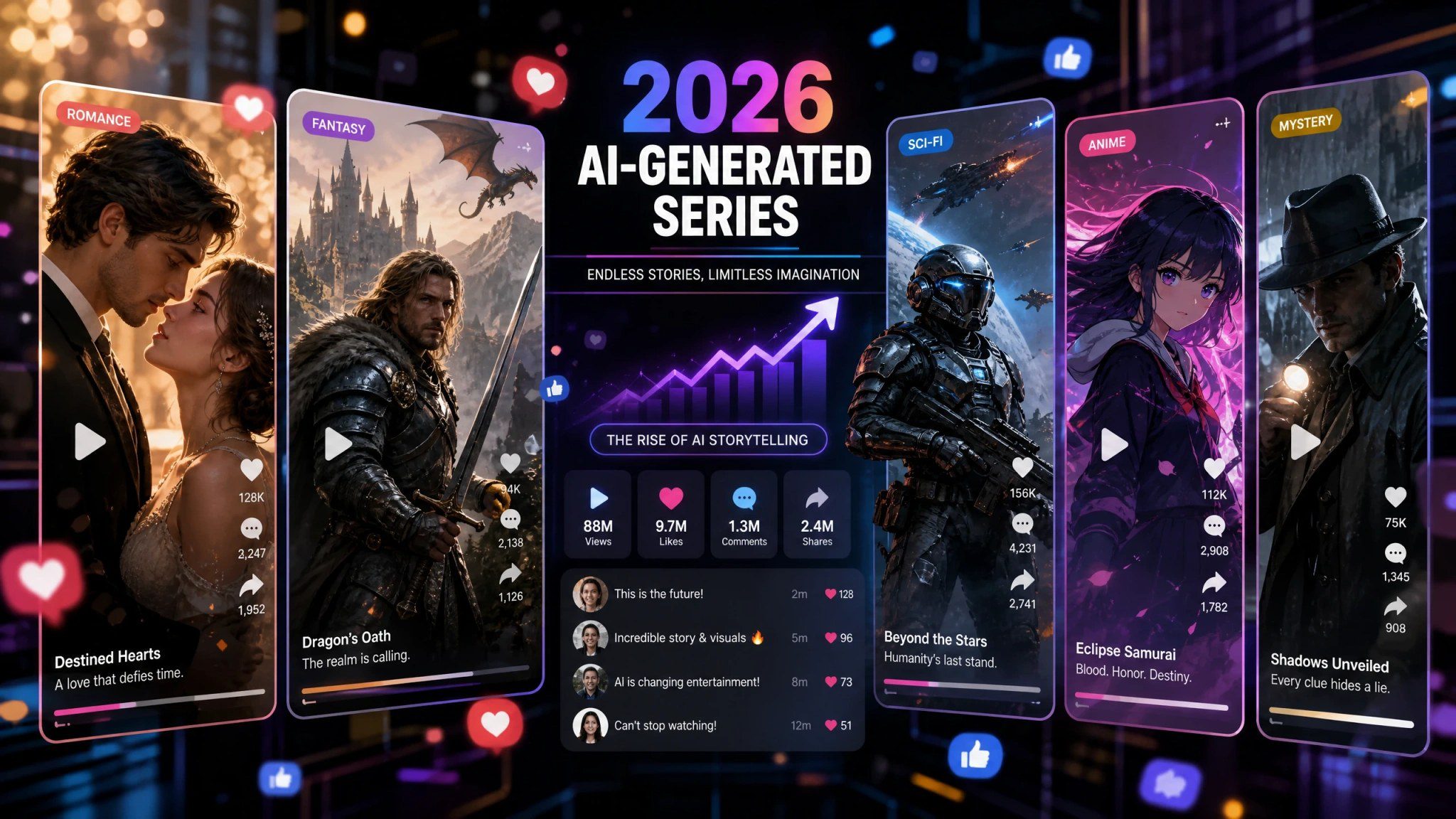
Video Models Are Getting Better at Continuity
Until recently, AI video was best at standalone clips. A series asks for more: the same character, in the same outfit, in the same world, episode after episode.
Google Research tackled this directly in a September 2026 study on long-form video. It describes how generated videos tend to drift as they grow longer: clothing changing, scenery shifting, and stories failing to move forward.
It proposes a multi-agent framework that plans visual continuity before footage is generated. The problem is not solved, but the industry’s focus is moving from making one good shot to keeping an entire story coherent.
Micro Dramas Show Strong Audience Demand and Business Potential
Series only work if people watch them, and micro dramas have shown that vertical, episodic stories can build a large audience. YouTube said microdramas passed 6.5 billion views on its platform in the first half of 2026, with watch time up more than 50% year over year.
Producers are turning to AI to feed that demand. According to an Owl & Co report covered by The Hollywood Reporter, about two-thirds of new vertical drama releases outside China in the third quarter were AI-generated. Rising demand and cheaper production are meeting in the same place, which is why AI short drama generators are drawing attention from independent creators and small studios.
Social Platforms Expand the Reach of Serialized Stories
Platforms are building for serialized content too. At its September Made on YouTube event, YouTube introduced Shorts Series, which lets creators group vertical videos into seasons and episodes with sequential playback across mobile, web, and TV.
YouTube also said microdrama views on TV grew by more than 90% year over year, and TikTok has offered a similar Series feature since 2023, and Meta began testing one for Reels on Instagram and Facebook in June 2026. For creators, that means a series now has a proper home, not just a string of loose clips.
AI Series Are Expanding Beyond Traditional Short Dramas
Micro dramas have typically leaned on a handful of familiar genres, partly because live-action budgets limit what can be staged. Producers say AI’s lower costs are letting them try fantasy, period drama, and sports stories that were out of reach before. Fantasy worlds, historical settings, and sci-fi cityscapes are expensive to build on location, but they are far cheaper to generate.
Traditional vs. AI Series Production: How the Workflow Differs
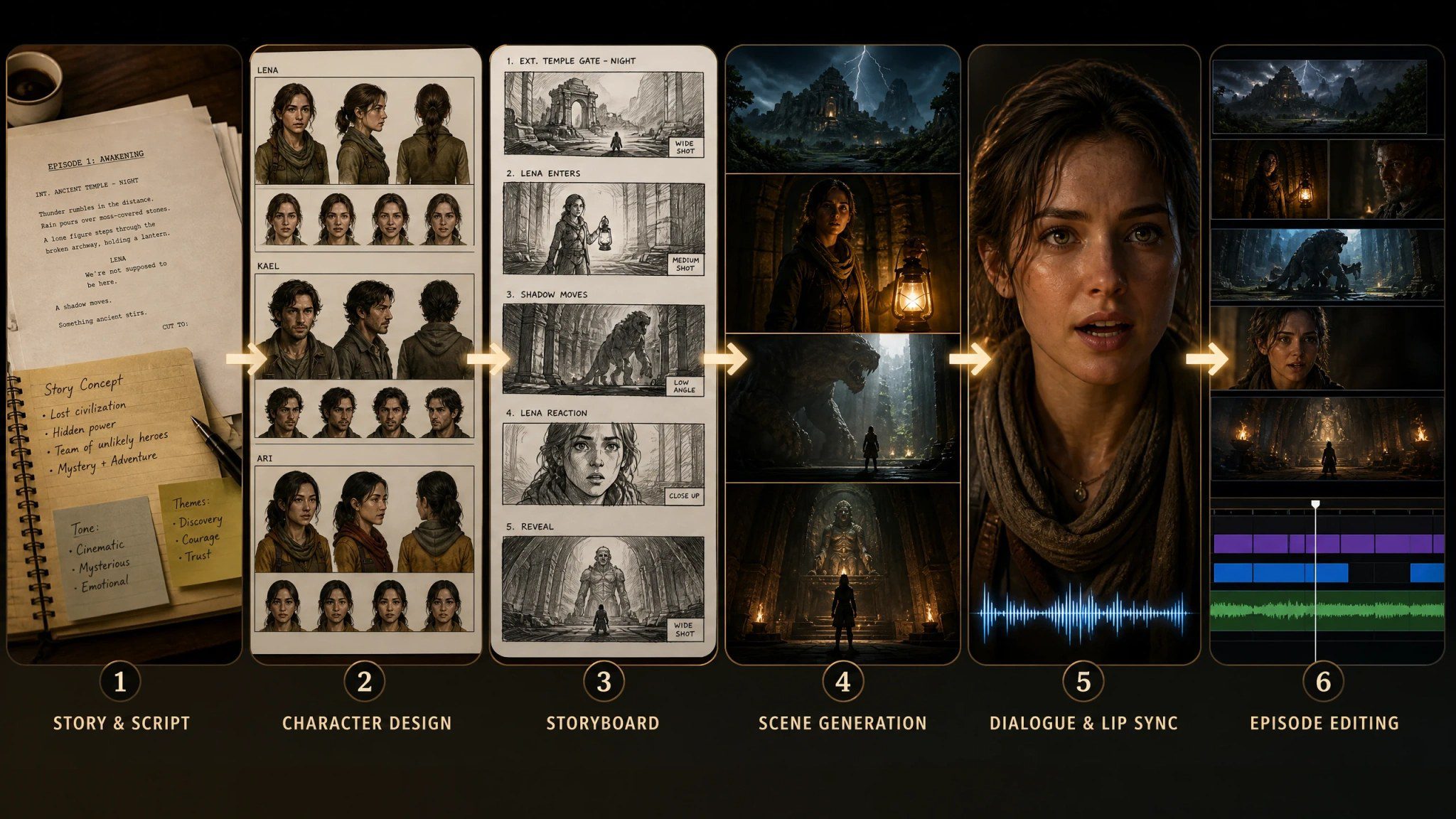
The clearest difference between the two approaches is how the work is divided. A traditional series moves through casting, shooting days, and post-production. An AI-assisted series replaces much of the physical production with generation and editing, while people may still leading the writing, direction and final polish.
The term “AI-assisted” is used deliberately here: most AI series are not made by automation alone. Human creative decisions remain part of the process.
| Stage | Traditional series production | AI-assisted series production |
|---|---|---|
| Story & Episode Planning | Writers develop the season arc, scripts, and episode breakdowns over weeks | AI can expand a short idea into a full outline, or polish an existing script, and break it into scenes, while writers review and steer the result |
| Characters, Look and Continuity | Concept art, costumes, and sets, with returning actors and wardrobe keeping characters consistent | Reference images and character sheets define the look, and consistency depends on reusing them |
| Casting & Performance | Auditions, on-set actors, and directed performances | No on-set cast; relies on voice library, performance capture, or generated performances, with varying emotional nuance |
| Scenes & Camera Work | Locations, lighting, camera crews, and shooting days | Scenes generated shot by shot from prompts or storyboards, with camera moves described in text |
| Dialogue & Audio | On-set sound, dubbing, music, and mixing | Generated or recorded voices, lip sync; extra languages can be added without new studio sessions |
| Editing, Assembly & Revisions | Editors cut footage, and reshoots need cast and locations | Many short clips assembled into episodes; clips are regenerated or edited, often at a usage cost |
| Team, Timeline & Cost | Larger crew; about several weeks to several months; roughly $100,000 to $300,000 per micro-drama series | Smaller team; about three to four weeks; $60,000 or less |
Where AI Series Production Still Falls Short
Faster and cheaper does not mean finished. Creators and researchers keep running into the same four problems.
- Character and Voice Consistency Across Scenes and Episodes: Video models often generate clips separately. As a result, a character’s face, outfit, or voice can change from one shot to the next. Some creators also describe the same problem, especially when scenes with dialogue are merged and a character’s voice shifts slightly between them.
- Emotional Performance and Dialogue Scenes: AI handles spectacle better than subtlety. AI-generated dramas tend to suit effects-heavy genres, while live action keeps an edge in emotionally complex scenes.
- Limited Creative Control and Costly Iteration: A prompt is an imperfect steering wheel. A shot that is close but not quite right often means generating it again, and because many platforms bill by credits per generation, retries add up.
- From Short Clips to Complete Episodes: Most generators still produce clips of a few seconds up to roughly fifteen, with a few reaching around thirty. An episode is therefore assembled from many separate generations that must be selected, trimmed, and stitched together without breaking continuity. Longer clips are arriving, but for now assembly remains a large share of the work.
How AI Video Agents Are Tackling These Challenges: Anijam AI as an Example
Tools are beginning to respond to these problems, and the most useful ones treat a series as a project rather than a pile of clips. Anijam AI, an AI creative platform built around an AI Agent and a growing library of ready-made templates, is one example of this approach.
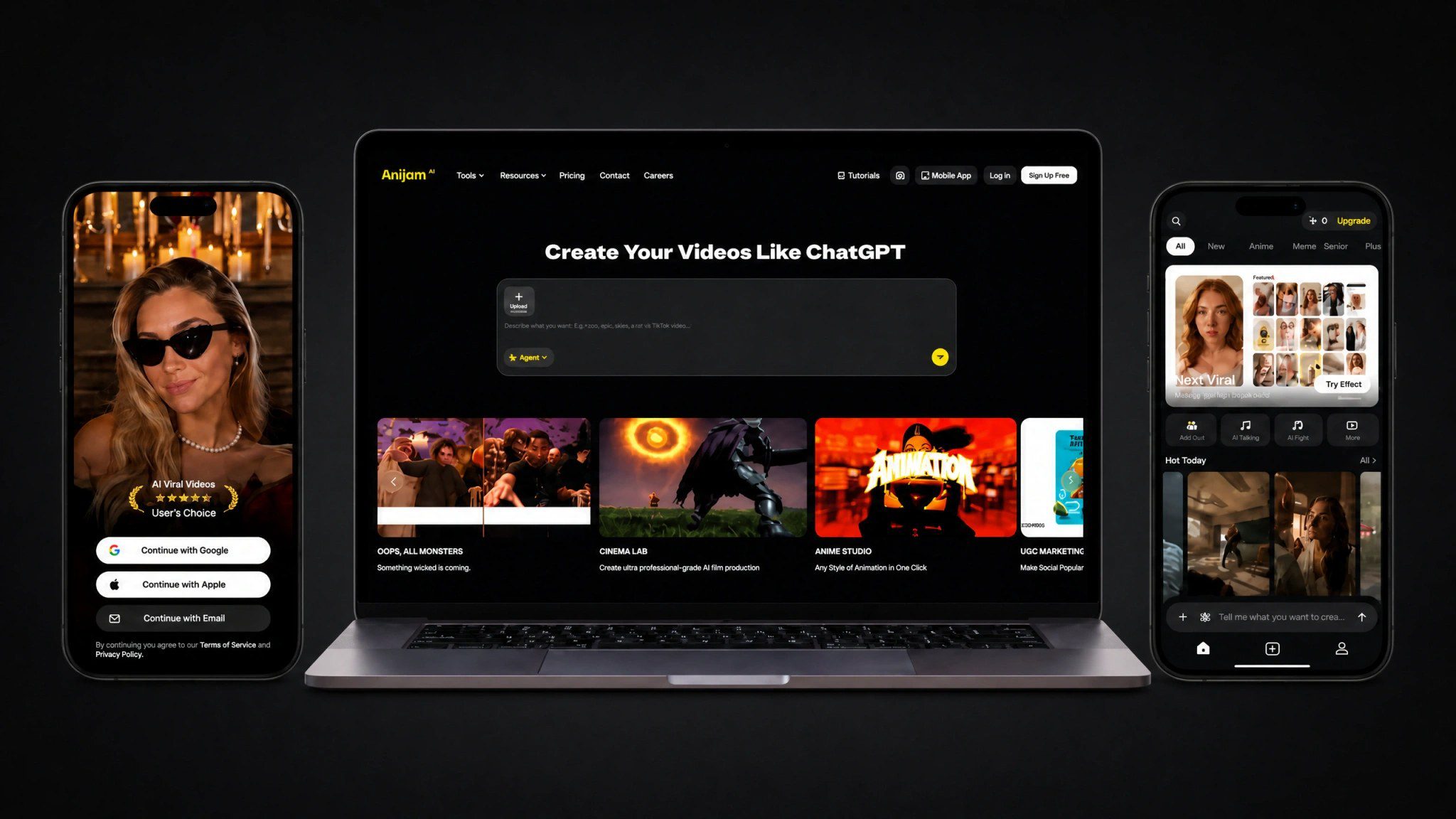
It is designed so a creator can plan, generate, and edit a series in a single workspace and it brings several leading image and video models into that same space so creators are not tied to a single one. New users can currently get 50% off their first month, which makes it easier to try the workflow on a small project.
- Create, Add, and Manage Episodes in One Project: With Anijam AI, creators can start an episode within a series project, then use “Add Episode” to build the next chapter. They can switch between episodes and choose to “Continue the Previous Plot” or “Add a New Twist”. Its AI Agent uses the existing story context to help carry the narrative forward.
- Reference-Based Workflows Keep Characters and Voices Consistent: Reference images help maintain a character’s appearance, while character-linked voices help preserve voice consistency. With Anijam AI series generator, for instance, a character is set up once and reused across scenes, and a single project can hold an entire season so later episodes pick up the same cast and visual style.
- Native Dialogue, Lip Sync, and Performance Capture: Some AI models generate speech and picture together and can assign lines to specific characters, while performance-capture tools transfer recorded expressions and gestures to generated characters. Anijam AI also offers lip sync and voices in more than 30 languages, with its agent designed to pick camera moves that suit each scene’s emotional beat.
- Storyboards, Keyframes, and Multi-Shot Planning: A storyboard turns the script into a visual plan: the story is split into beats, each beat becomes a shot with a size, angle, and camera move, and a still keyframe shows how it will look. Anijam’s AI agent can draft an outline, character designs, and a storyboard with camera notes for creators to review and edit.
- Targeted Editing Instead of Full Regeneration: More precise editing lets creators change individual elements without rebuilding an entire clip. In Anijam AI, creators can edit storyboard text, replace reference images, reorder shots, or redo a single panel. The timeline editor also allows individual shots in a finished episode to be re-rendered.
- Conversational AI Agents Connect the Production Workflow: A conversational AI agent can coordinate multiple production stages, from developing an idea and designing characters to planning shots and carrying context across episodes. Anijam AI brings this process into a chat-based workspace where creators can guide the Agent, edit their videos, and export the results.
The Future of AI Series Production
The next few years are likely to be shaped by four trends.
- Longer, More Coherent Stories: Generation lengths are growing and research on long-form coherence is advancing, so the basic unit of work is likely to shift from the clip toward the scene and, eventually, the episode. Expect tools that plan whole story arcs and track characters, locations, and plot points across them, with fewer manual repairs along the way.
- Faster Localization and Global Distribution: AI dubbing, lip sync, and translation can make it easier to release the same series in several languages, which matters on platforms with global audiences. How well this works will depend on voice quality and cultural adaptation, not only on translation speed.
- Human Creativity Meets AI Automation: The most credible near-term model is a hybrid one. Castle Walls kept human voice actors, and AI is best suited to repetitive production steps while people handle story judgment, taste, and emotional performance. The strongest work may come from creators who automate routine steps and spend more time on the decisions that shape the story.
Anijam’s Creator Program, for example, invites creators to submit original work and unlock rewards, with up to 1,000,000 points available to claim, a sign that originality, not output volume, is what platforms increasingly want to encourage.
- Greater Focus on Copyright, Transparency, and Content Quality: As AI series reach bigger audiences, scrutiny rises. Since May, YouTube has automatically labeled videos it detects as containing significant photorealistic AI content, even when creators do not disclose it. Rules on who owns AI-assisted work, and on the use of people’s likeness, differ by country and are still evolving, so creators should check them before publishing.
Final Thoughts
AI video agents are making series production more reachable. From a single idea to a finished season, more of the work, from outlines and characters to shots, voices, and edits, can now be done with AI.
The strongest series will still depend on a coherent story, consistent characters, and a human sense of what is worth telling. As platforms add tools for serialized video and AI video makers mature, the question is shifting from whether AI can make a series to whether it can make one people want to keep watching.