
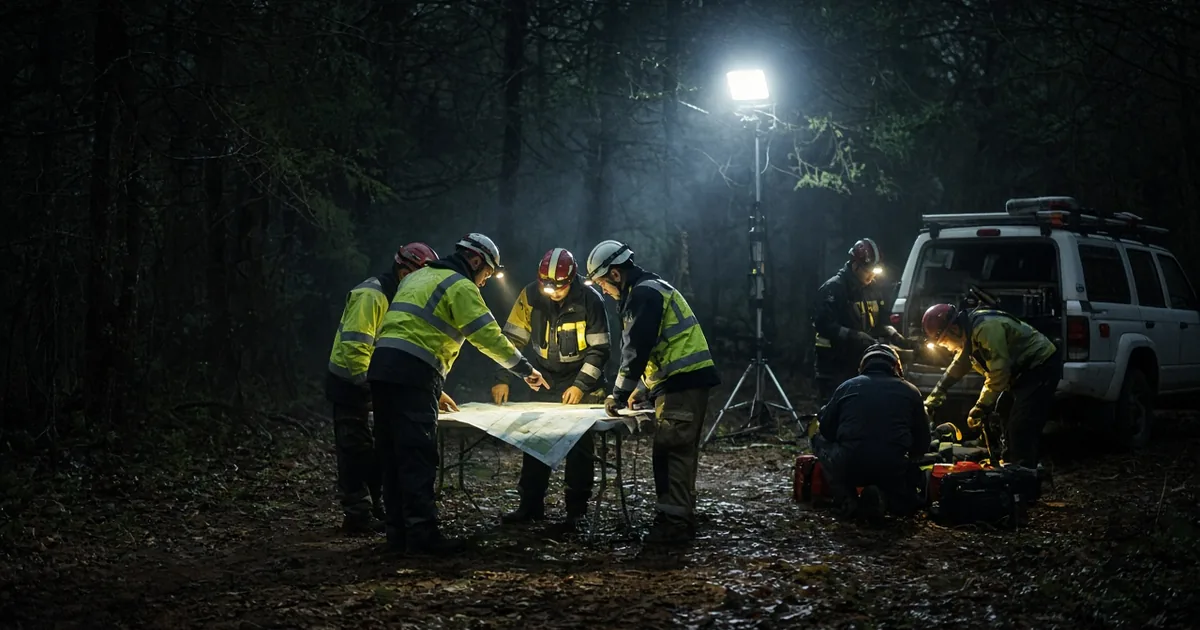
At night, it is more difficult to assess the terrain and notice obstacles. After several hours of work, fatigue inevitably sets in, which in turn leads to reduced concentration and slower reaction times.
And if a heavy downpour or snowfall begins, it simply becomes impossible to rely on familiar landmarks.
Therefore, preparation for the operation should be built around four tasks:
- See what’s happening.
- Maintain communication.
- Move safely.
- Maintain the operational capacity of personnel.
Each task requires its own approach. Let’s take the problem of poor visibility in low light. Today, night vision goggles for tactical use are widely used here, providing enormous benefits for observation and movement. A helmet mount frees up the hands, which can then be used to work with maps, carry equipment, or climb difficult terrain. At the same time, image intensification devices do not replace flashlights and thermal imagers. Each technology has its own capabilities and limitations.
A good set of emergency response equipment is an interconnected system. In it, the failure of one element should not stop the entire operation.
More light does not always mean better visibility
Let’s consider a typical nighttime search operation in the forest. Two rescue teams, medics, and security personnel are working at the site; the security personnel restrict access to outsiders. Each participant turns on a powerful flashlight in a random direction. As a result, the area will quickly turn into a space with chaotic glare and blinding flashes of sharp shadows.
There’s a lot of light, but it’s almost impossible to see anything.
Therefore, the lighting of the territory should be divided into several levels.
Stationary lighting is necessary at the command post and near cars. It should also be in the places of triage and medical care. Portable LED floodlights and lighting masts perform well here. Individual lighting is required for each participant who goes outside the equipped area.
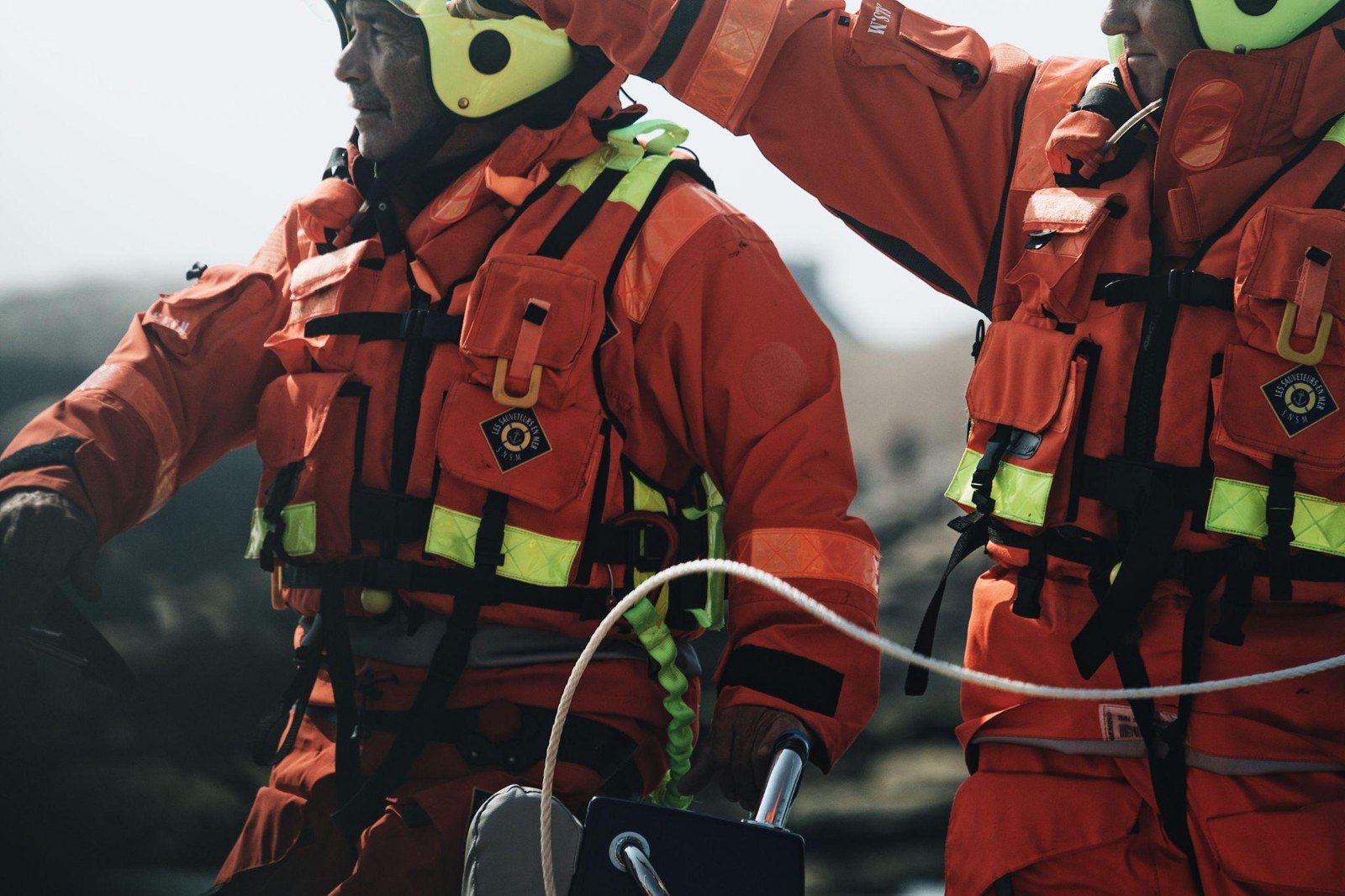
It is essential to ensure low‑light operational safety. In areas near the roadway, personnel need to wear appropriate safety clothing with reflective elements.
Night vision optics and thermal imagers
Modern tactical surveillance gear may include night‑vision devices and thermal imaging monoculars. It is important to understand that these devices obtain information in fundamentally different ways:
- Devices with electro‑optical converters. They amplify available light. They help to distinguish the outlines of trails, vegetation, stones, fences, and other terrain features.
- Thermal imagers. Infrared (thermal) radiation of objects is recorded. They can detect the temperature contrast between humans and the environment even in complete darkness.
Combined systems combining images of different spectral ranges remain a promising area. But before equipping a unit with them, it is worth finding out how stable the equipment works in the rain, cold and with sudden changes in illumination.
What is changing in the equipment used for night operations?
Technologies continue to expand the capabilities of rescue units. Compact thermal imagers are becoming more affordable, digital radio systems facilitate information exchange, and portable power stations make it possible to deploy autonomous control points without the constant operation of a generator.
The role of drones, geographic information systems, and AI in coordinating searches is becoming increasingly prominent. The observation data can be displayed on a digital map, helping the supervisor to compare information from different groups and identify areas requiring re-examination.
At the same time, professional equipment should be evaluated not by the number of devices in the inventory, but by three practical indicators:
- How quickly the unit is deployed.
- How long it retains its autonomy.
- Whether it is able to safely continue operation in the event of a failure of an individual element.
When a call arrives in the middle of the night, there is no time to find the missing cable, charge the batteries, or find out the radio frequencies. All this must be decided in advance.