
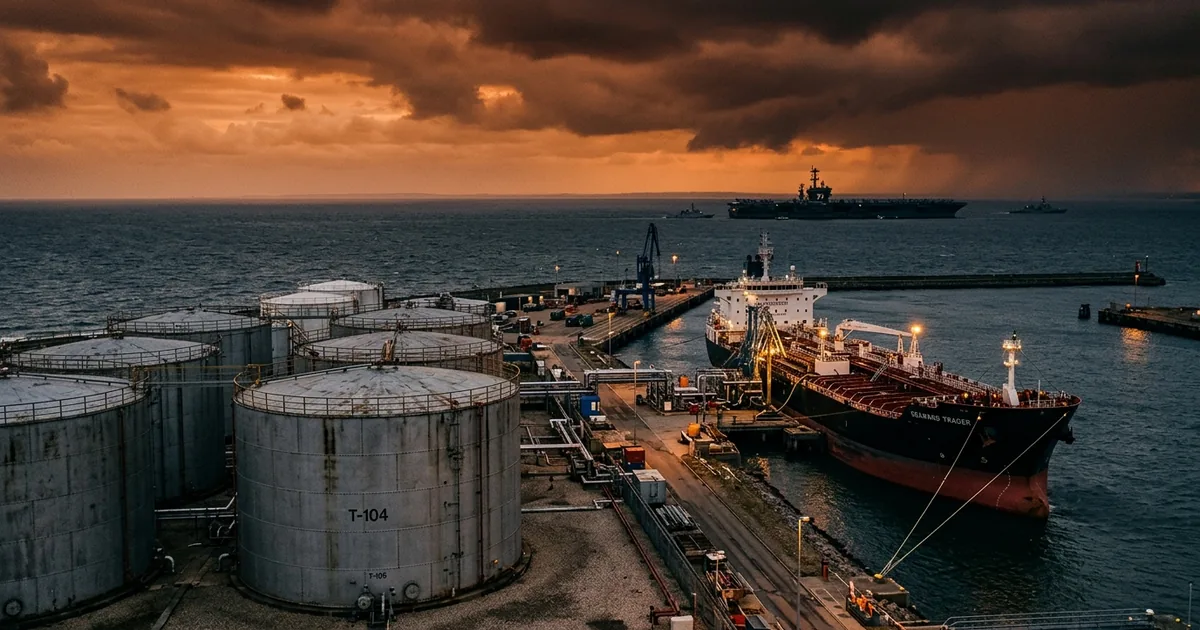
Washington wants Europe to hand over a lot of diesel, and it is attaching a threat to the request. The terms, as reported so far:
- The Trump administration has asked France and Germany to draw down emergency diesel stocks, according to Reuters, citing three sources close to the discussions.
- A European-based source put the ask at roughly 120 million barrels over six months.
- The alternative on the table is a US diesel export ban, which President Trump says he is “thinking about.”
- A third US aircraft carrier group is heading to the Middle East, and it is reportedly due there in November, after the midterms.
Read those four lines together and the deal is clear: Europe is being asked to spend its insurance policy against the Iran war so the White House can lower pump prices before the election, with the supply of American diesel to Europe as the leverage.
What the US Is Actually Asking For
Treasury Secretary Scott Bessent said European partners should “accelerate delivery on their existing commitments and make additional supplies immediately available,” in remarks NBC News reported. Energy Secretary Chris Wright told Fox News it was “a time for a coordinated release of diesel stores as we go into harvest season and winter heating oil season.” US diesel has jumped about 70% since late February and sits above $6 a gallon.
France and Germany hold more than a third of the EU’s strategic diesel reserves, and both already pledged to release emergency stocks under a March International Energy Agency agreement. So the new request is not the first draw. It is a second draw, and the threat attached to it is new.
The Counterparty Problem
Think about it from the European side. Europe banned Russian diesel imports and now leans heavily on US supply. Washington’s threat is to restrict the very product it wants Europe to add to the market. EU trade chief Maros Sefcovic said a US ban would be “unexpected for Europeans” and would have “very dramatic consequences for our economic performance.” France’s trade minister Nicolas Forissier said he could not imagine a ban happening.
That is diplomatic language for a bad idea. A country does not usually threaten to cut off an ally’s fuel and ask for that ally’s emergency reserves in the same week, and the EU’s energy taskforce was due to take a call on it Friday morning. Commission officials would only say they are in “very close contact” with member states and Washington. They made no commitment.
“It would have very dramatic consequences for our economic performance.”
Why Europe Cannot Simply Say Yes
Emergency stocks exist for one scenario: the supply shock that has not happened yet. Right now that scenario is not hypothetical. The same administration asking Europe to drain its reserves is reportedly telling aides it expects to resume bombing Iran after the November elections, and the carrier now steaming toward the region is the buildup that makes that possible. Oil jumped more than 4% on the carrier report alone.
So the sequence the White House is proposing is this: Europe empties its tanks this winter, prices fall at the pump before voters decide, and strikes that could disrupt supply again would follow when Europe has the least cushion to absorb them. We have already covered Trump’s admission to TIME that he extended the war by choice, which is the context for reading this request.
What We Think
This is bad policy and worse alliance management. The administration is entitled to ask allies to share the burden of a fuel shortage that its own war helped create. It is not entitled to treat an export ban as a lever when allies depend on those exports, and Europe is right to refuse to be the shock absorber for a domestic election calendar.
If the Commission agrees to a release, it should demand something in return that the US has so far not offered: a written pledge that no strikes resume while the stocks are being drawn down, and a commitment to drop the export-ban threat. Without that, Europe is pre-paying for a risk it cannot insure against once the reserves are gone. Watch the Friday call, and watch whether Berlin and Paris answer separately.