
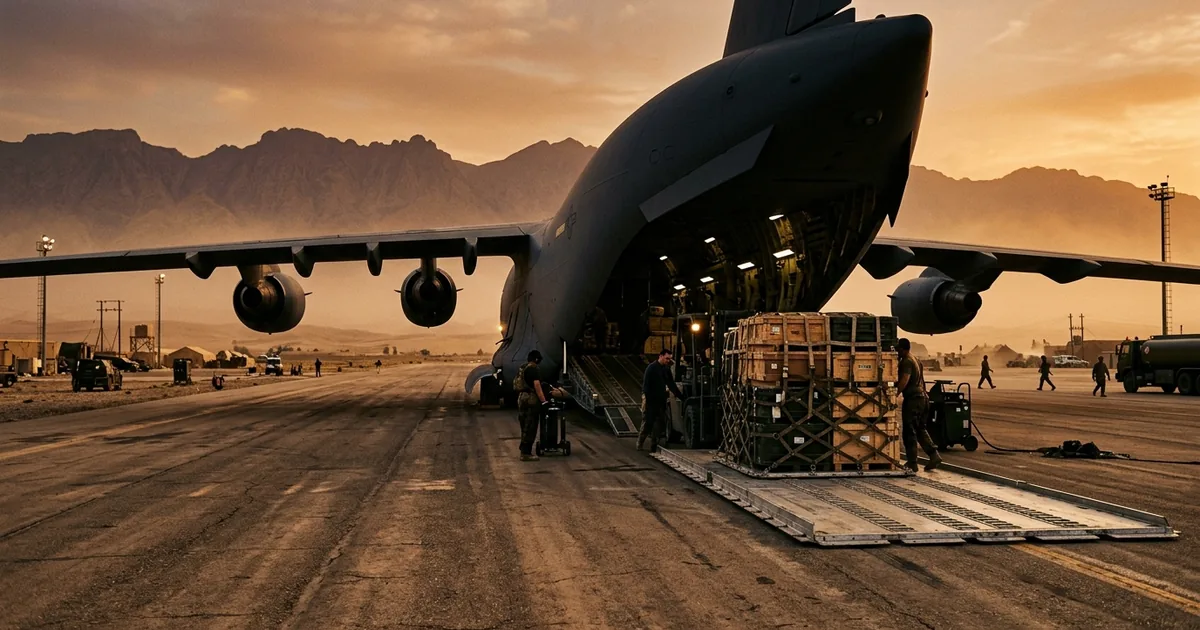
The last American troops left Iraq on Wednesday, finishing a withdrawal timetable that Washington and Baghdad agreed in 2024, and Donald Trump is describing it as “a victory for the United States, a victory for Iraq.” The date was set by the previous administration. What the victory language skips is who benefits: Iran-aligned militias are celebrating, and the Kurdish region the troops leave behind says it is being left without air defense after more than 1,000 drone and missile attacks.
A Schedule, Not a Decision
The Biden-era deal had counter-ISIS operations in Iraq end in September 2025, then one more year for troops to stay in Erbil supporting operations in Syria. That year ended Wednesday. Analyst Victoria Taylor told The World the aim of the deal was to secure as long a lead time as possible while keeping the option of a bilateral presence. That option was not used. According to UPI, about 2,500 personnel and their equipment came out in the final phase.
Pentagon spokesperson Sean Parnell called it the “success of a 12-year campaign that defeated ISIS as an organised military threat,” and Iraqi Prime Minister Ali al-Zaidi presided over the handover as proof of “Iraq’s sovereignty, the strength of its institutions, the readiness of its forces,” as ABC Australia reported.
The departure of the United States from the Kurdistan Region under these complex regional circumstances, without the provision of a defence system, is a matter of concern.
That is the Peshmerga Ministry, which noted the region absorbed more than 1,000 drone and ballistic-missile attacks during the recent US-Iran conflict.
Who Is Claiming the Win
Kataib Hezbollah security official Abu Mujahid al-Assaf called the departure “the beginning of full sovereignty.” Taylor said Iran views it as a significant victory, since Tehran has been pressing to remove the American presence across the Middle East. Two of the three parties calling this a victory are on opposite sides of the war that just ended.
Where We Land
Ending a 23-year deployment on a negotiated timetable is a good outcome, and Iraqis are entitled to feel it. But Trump did not make this decision, he completed it, and a schedule written in 2024 is not a win in a war that began in February. What belongs to him is the handling: leaving Erbil without air defense right after the region was under sustained fire, with militias openly gloating, is a choice that could have been made differently.
Washington owes its Kurdish partners a plain answer on who defends Erbil now. If the answer is nobody, the administration is asking a region that stood beside American forces for a decade to trust that Iran-backed groups will respect a sovereignty they have already claimed credit for.