
Federal prosecutors in Manhattan unsealed an eight-count indictment on Tuesday charging three men accused of working for Iran’s Revolutionary Guard and Kata’ib Hizballah in nearly 20 attacks and attempted attacks across Europe and the United States. The plot against RAF Fairford is the headline, but most of the document is about the spring: arsons, bombs and a stabbing, some of it directed live over a video call.
The framing. A foiled plot on a British base that housed U.S. aircraft, with three vans, some carrying fuel barrels, at the center.
The record. Eighteen attacks claimed in Europe in spring 2026, seven of them in Britain, before the base was ever surveilled.
Seven Attacks in Britain Before the Base
The Justice Department says the spring attacks were claimed by a group calling itself Harakat Ashab al-Yamin al-Islamiya. It calls that name a front for Kata’ib Hizballah.
Of the 18 attacks the group claimed in Europe, seven were in the United Kingdom, the most of any country. They included arson, explosives and a near-fatal stabbing of two Jewish men in London, one a dual U.S.-British citizen.
On April 17, the release says, Mohammad Baqer Saad Dawood al-Saadi, Mohsen Mohajeri and Mohammad Ali al-Hassani sat in one room and watched an attack unfold on FaceTime. Al-Hassani allegedly told the man on the line to “light it.”
The next day came a second call, with the group’s logo behind al-Hassani. He is quoted telling a man at a London synagogue to “light it up like a Christmas tree,” and the man threw an improvised explosive device at a building.
Thirty-Five Days From Payment to Vans
We lined up every date in the release, then checked them against the British charging reports. The sequence:
- May 1: al-Saadi is arrested abroad and later moved to U.S. custody.
- Aug. 22, 113 days later: al-Hassani pays someone to survey the perimeter of RAF Fairford.
- September: associates buy vans and fuel barrels, research chemical accelerants such as potassium chloride, source metal objects usable as shrapnel, and order decals that make the vans look like a fuel delivery firm’s and a pool supply company’s.
- Sept. 24: al-Saadi, on a jail call, tells his family to “give him money so we can do it.”
- Sept. 26, 35 days after the payment: three vans head for the base, and at least two meet a security roadblock.
- Sept. 27: British police recover three white vans and arrest the occupants.
- Oct. 27: Britain charges two men.
- Nov. 10: the indictment is unsealed.
One match is worth flagging. Britain’s case against Nouman Essghir, 24, covers a reconnaissance trip to film the base on Aug. 22, the same day the U.S. says surveillance was paid for. The release names no one but “Individual-1,” so the overlap is a date, not an identification.
The Jail Calls Are the Part to Press
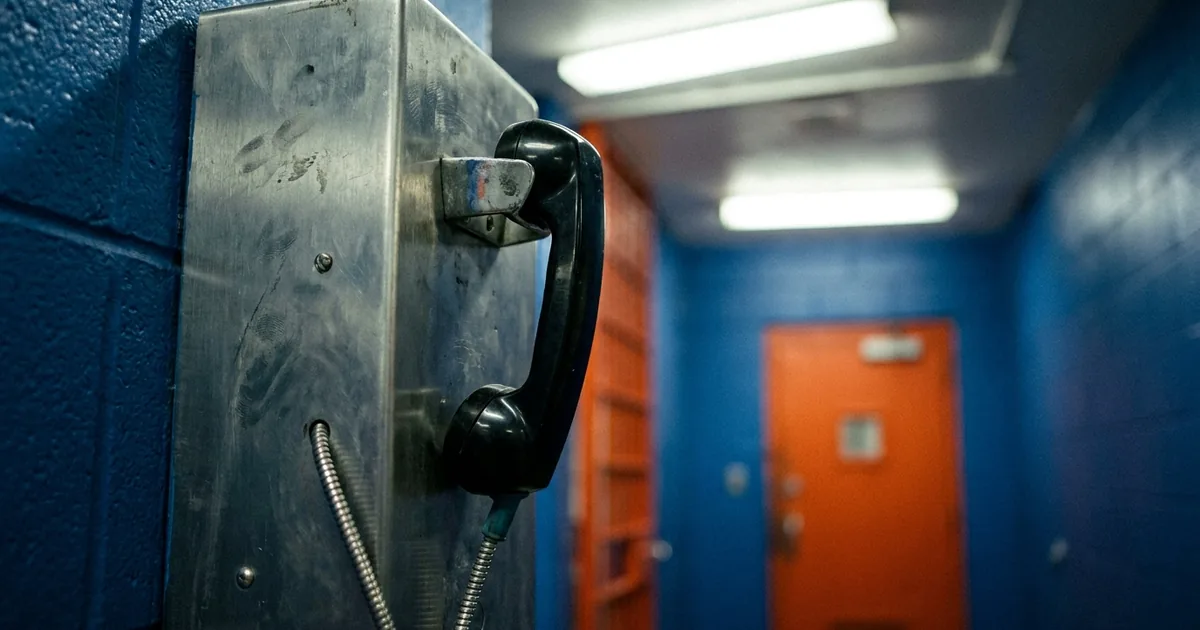
The accused was in a federal jail in New York. Al-Saadi allegedly used calls to his mother and sister in Iraq to pass messages, and asked his sister whether the “old work” was cancelled or just paused. She answered that “it isn’t cancelled.”
Three days before the vans moved, he allegedly told them to fund al-Hassani. Attorney General Todd Blanche said al-Saadi “allegedly coordinated with his co-defendants in the days leading up to the attempted terrorist plot.”
The release does not say when anyone understood those calls. Quoting them in an indictment shows they were captured, not that anyone read them before Sept. 26, and the release mentions a roadblock, not a warning.
We think that is the first question for Congress and the Bureau of Prisons, because a man in a New York jail allegedly kept steering an overseas plot through phone calls to his mother and sister.
Only al-Saadi is in custody. The release puts al-Hassani and Mohajeri in Iran during the Fairford plot and says nothing of their arrest. Iran’s ambassador to Britain has denied the base activity was coordinated in Iran, and we found no Iranian response to the indictment. An indictment is an allegation, and all three men are presumed innocent.
The president’s line this week is that the Iran war is “effectively over”. Prosecutors describe a network still working in September to hit a base where the U.S. kept 12 B-1 bombers it has since pulled out. We think “over” describes the strikes, not the war.
The question owed now is short: who heard the call on Sept. 24, and when?