
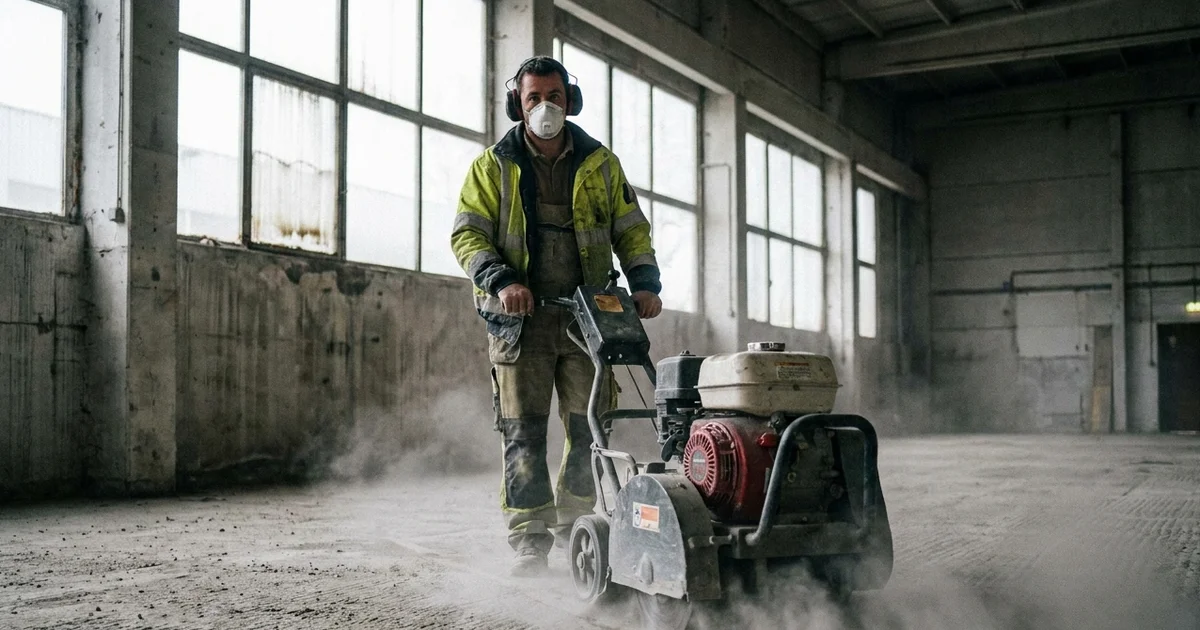
Preparing an old or uneven concrete floor can be a challenging job, particularly when the surface contains thick coatings, damaged areas or material that needs to be removed before a new finish can be applied.
A floor scabbler can be a useful solution in these situations. Designed for aggressive surface preparation, scabbling machines can remove material and create a textured surface that may be better suited to subsequent treatments.
For contractors, tradespeople and project managers, a Floor Scabbler Hire can provide access to specialist equipment without the need to purchase and store a machine permanently.
What Is a Floor Scabbler?
A floor scabbler is a surface preparation machine designed to mechanically roughen, reduce or remove material from concrete and other hard surfaces.
Unlike a conventional grinder, which generally uses an abrasive action, a scabbler works through a rotating drum fitted with flails that impact the surface. This makes it particularly useful where more aggressive material removal or surface texturing is required.
Depending on the machine and application, scabbling can be used for tasks such as:
- Removing old coatings
- Reducing high areas of concrete
- Removing damaged or failed surfaces
- Creating a key for subsequent materials
- Preparing concrete before resurfacing
- Roughening smooth surfaces
- Removing certain types of screed
- Repairing heavily worn concrete surfaces
The appropriate equipment depends on the condition of the floor and the amount of material that needs to be removed.
When Might You Need to Hire a Floor Scabbler?
1. Removing Old or Failed Surfaces
Old flooring materials do not always need to be removed using manual methods.
Where a thick or failed surface is bonded to concrete, mechanical preparation can make the removal process considerably more practical.
A scabbler can be particularly useful when the surface needs to be reduced rather than simply cleaned or lightly abraded.
2. Creating a Surface Key
Some flooring systems and coatings require a suitably prepared substrate to achieve effective adhesion.
A smooth concrete surface may not provide the texture required for certain applications. Scabbling can create a more textured profile, helping prepare the surface for the next stage of the project.
The exact surface profile required will depend on the material being applied afterwards, so preparation should always be matched to the manufacturer’s requirements.
3. Repairing Worn Concrete
Concrete floors can become damaged, uneven or heavily worn over time.
In some situations, removing the most deteriorated surface layer can form part of the preparation process before repair or resurfacing work begins.
A scabbler can therefore be useful when ordinary cleaning or light grinding is not aggressive enough.
Choosing the Right Floor Scabbler
Not every floor preparation project requires the same machine.
Consider the Size of the Area
For a relatively small repair, a compact machine may be more practical. Larger areas may benefit from a wider working width to improve productivity.
Hire ranges can include different machine sizes, such as narrower units for more controlled work and larger machines designed to cover more floor area.
Consider the Surface
Think about what needs to be removed and how much material needs to be taken off.
A lightly contaminated floor may require a completely different approach from a concrete surface covered in thick coatings or damaged screed.
Understanding the substrate before hiring equipment can help prevent choosing a machine that is either insufficient for the task or unnecessarily powerful.
Check the Power Requirements
Floor preparation equipment can have different electrical requirements.
Some machines are designed for standard site supplies, while larger industrial machines may require a three-phase power supply. Checking the available power before arranging equipment hire is therefore essential.
Floor Scabbler vs Floor Grinder
Scabbling and grinding are both used for floor preparation, but they perform different functions.
A grinder is generally associated with smoothing, polishing or removing thinner layers of material through abrasion. A scabbler, by contrast, uses an impact action to aggressively texture or reduce a surface.
Choosing between the two depends on the desired result.
If the objective is to achieve a smoother finish or remove a relatively thin layer, grinding may be appropriate. If the surface needs more substantial removal or aggressive texturing, scabbling may be the better option.
In some projects, several preparation methods may be used at different stages.
Important Considerations When Hiring
Before collecting or arranging a floor scabbler, consider the following:
Measure the Work Area
Knowing the approximate floor area can help determine how much equipment and hire time may be required.
Assess the Floor
Identify the substrate, existing coatings, damaged areas and approximate depth of material that needs to be removed.
Check Access
Large machines may need suitable access through doorways, corridors or loading areas. Transport and handling should be considered before the hire period begins.
Consider Dust Control
Mechanical floor preparation can generate dust and debris. Appropriate dust-control equipment, extraction and site controls may therefore be required depending on the material and working environment.
Follow Safety Requirements
Operators should understand the equipment before use and follow the manufacturer’s instructions and relevant site safety procedures. Suitable PPE and workplace controls should also be considered.
Why Hire Instead of Buy?
Buying specialist floor preparation equipment may not make financial or practical sense for every contractor.
Hiring can be useful when the machine is only needed for a particular project. It can reduce the need for long-term storage and avoid tying up capital in equipment that may spend much of its time unused.
For contractors handling different types of flooring projects, hire can also provide access to equipment with different working widths and specifications depending on the job.
Conclusion
Floor scabbler hire can be a practical option for projects involving demanding concrete floor preparation. Whether the objective is to remove a failed surface, reduce uneven areas, create a suitable key or prepare heavily worn concrete, the right machine can make difficult preparation work more manageable.
The important thing is to select equipment based on the surface, project size, required depth of removal, available power and working conditions.
By assessing these factors before hiring, contractors and project teams can choose a suitable approach and prepare the floor more effectively for whatever comes next.