
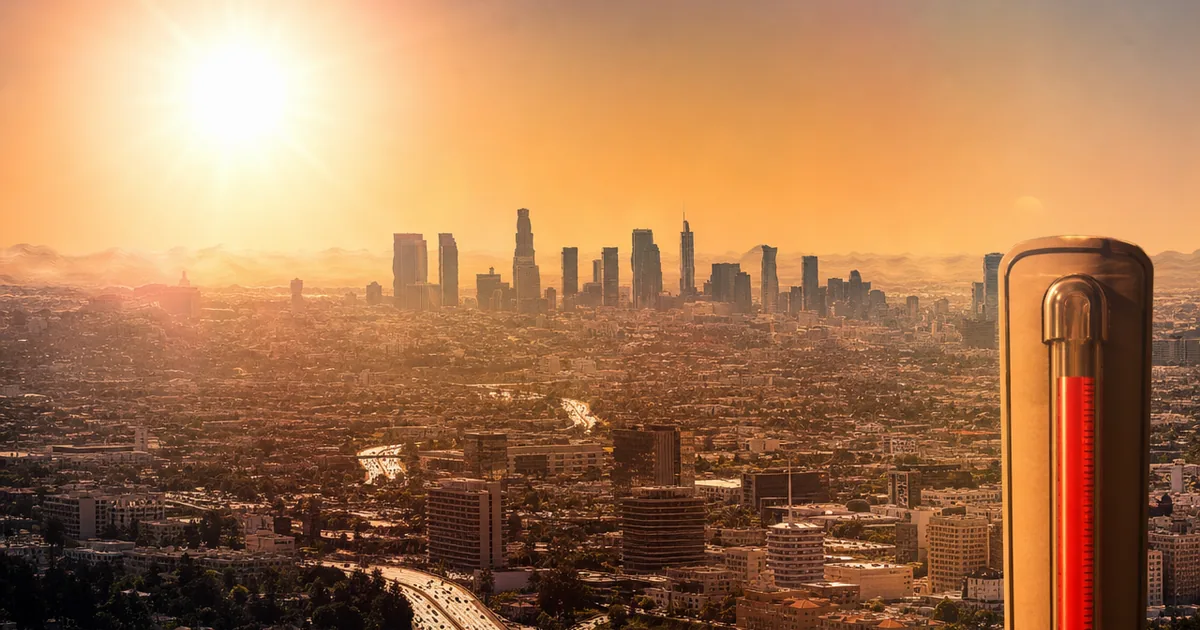
A heat dome that already obliterated all-time temperature records across the Northern Rockies and Plains is now expanding into the Midwest and the Eastern Seaboard, threatening to push heat indices above 115 degrees in major cities from Chicago to Washington, D.C. by midweek. More than 100 record highs could fall through Saturday, according to the National Weather Service, in what is shaping up to be one of the most punishing heat events in American history.
The Numbers Are Staggering
Billings, Montana, hit 111 degrees over the weekend, its first reading in the 110s since recordkeeping began in 1934. Salt Lake City topped out at 109, also setting a new all-time high. These are not marginal nudges past old marks. They represent the kind of departures, 15 to 25 degrees Fahrenheit above normal, that NBC News meteorologists are calling historically rare.
The problem is that the dome is not sitting still. It is migrating east, dragging triple-digit heat indices across the Great Lakes, Ohio Valley, and Mid-Atlantic by Tuesday and Wednesday. New York City, Philadelphia, Baltimore, and Washington are all forecast to flirt with or exceed 100 degrees, and overnight lows in dense urban areas may not drop below 80. That matters enormously. The human body recovers from daytime heat stress during cool nights. When that reset disappears, cumulative strain on the cardiovascular system spikes, and emergency rooms fill up fast.
Why This Wave Hits Different
The United States has been running a brutal heat gauntlet since late June, when an earlier dome scorched the East Coast over the July Fourth holiday. Atlantic City reached 106 that weekend, shattering its all-time record. The current wave is a sequel that arrived before the country could fully catch its breath, and the compounding effect makes it far more dangerous than any single spike.
The CDC has already flagged “extremely high” rates of heat-related emergency visits in the wake of the July Fourth dome. Stacking a second event on top of populations that are already dehydrated, sleep-deprived, and physiologically stressed is a textbook recipe for mass-casualty heat emergencies, particularly among the elderly, outdoor workers, and communities without reliable air conditioning.
Power grids are also under strain. The earlier wave knocked out electricity for hundreds of thousands of homes across the Midwest and Mid-Atlantic, and grid operators have warned that sustained demand could force rolling conservation measures or outright blackouts during peak afternoon hours this week.
The Broader Climate Pattern
None of this is happening in isolation. The 2026 North American heat wave, as severe-weather.eu documented, has already affected more than 200 million Americans, making it one of the largest-footprint heat events in the country’s modern meteorological record. The pattern is consistent with what climate scientists have been warning about for years: heat domes are getting bigger, lasting longer, and stacking more frequently as atmospheric warming loads the dice toward extreme events.
Forecast models do show some relief arriving. A cold front is expected to push out of eastern Canada into the Northeast by mid-to-late week, potentially breaking the dome’s grip from the Great Lakes to New England. But for cities in the Southern Plains and the mid-South, where the dome’s center of gravity sits, there is no clear exit ramp before the weekend.
The immediate calculus for tens of millions of Americans this week is straightforward: find cooling, stay hydrated, check on vulnerable neighbors, and take the heat advisory warnings from earlier this summer seriously. The records being broken are not curiosities. They are signals of a system operating well outside the bounds that infrastructure, agriculture, and human physiology were built to handle.