
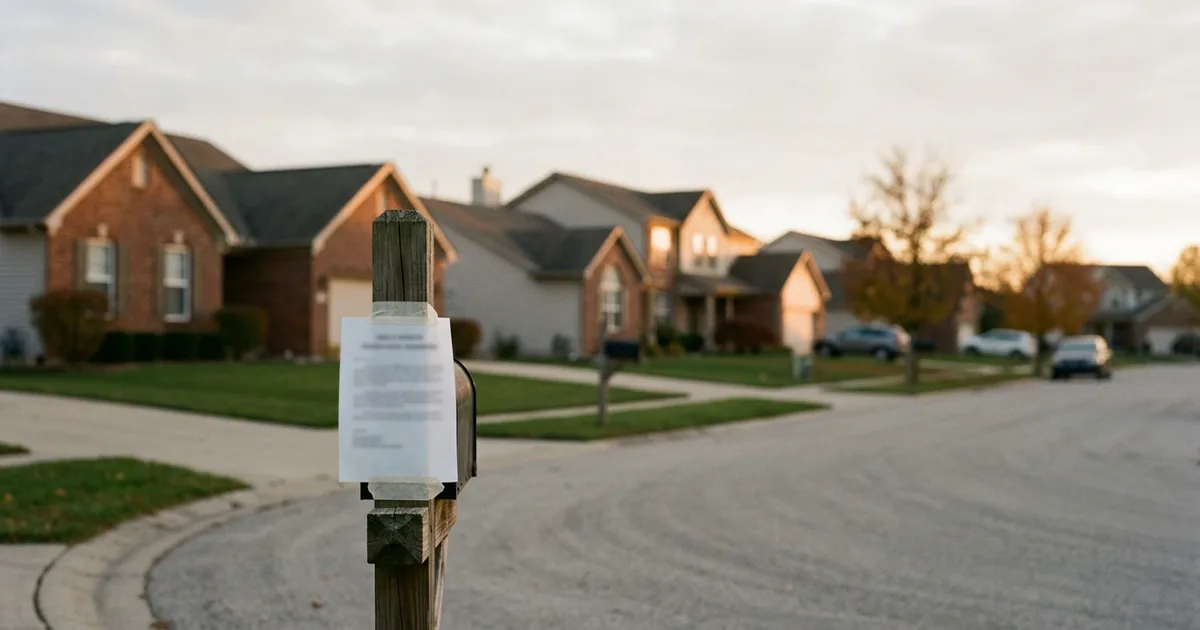
More than 6,300 properties picked up an HOA-related foreclosure filing in the first quarter of 2026, a nearly 40% jump from two years earlier, according to figures from the real estate analytics firm Attom. The number is small next to the national mortgage foreclosure count, and it is the more revealing of the two, because it is climbing faster than the thing everyone is actually watching.
Foreclosure coverage this year has been a story about mortgages. Attom counted 118,727 properties with foreclosure filings in the first quarter, up 26% year over year, and the framing has mostly been about normalization: rates reset, forbearance ended, the post-pandemic distortion is working its way out. That framing is defensible for mortgages. It does not explain why the lienholder growing fastest is not a bank at all. It is the volunteer board that runs your subdivision.
The Association Is Not Getting Greedier. It Is Getting Insolvent.
The reflex read on an HOA foreclosure story is that petty boards have discovered a weapon and started swinging it at people over unpainted mailboxes. That read is emotionally satisfying and mostly wrong, and it obscures the actual mechanism.
Homeowners associations are being squeezed from two directions at once. Property insurance for multifamily and association-governed communities has repriced brutally in the past three years, and the association cannot decline to carry it. At the same time, a late-2025 Reserve Study report found that nearly three-quarters of association-governed communities are underfunded, meaning the pot of money reserved for the roof, the elevators, and the structural work is not big enough to do the work when it comes due.
Those two pressures land on the same line item, and the association has exactly one revenue source: the people who live there. When the premium goes up and the reserve is empty, the board raises dues or levies a special assessment. In Florida, where mandatory reserves and milestone structural inspections became law after Surfside, those assessments have run from roughly $10,000 to north of $100,000 per unit. Some owners cannot pay a five-figure bill on ninety days’ notice. That is not delinquency in the moral sense. It is a cash-flow mismatch.
And here is where the escalation becomes automatic rather than malicious. An association that misses its own insurance payment or cannot fund a legally mandated inspection is in breach, and the board members are personally exposed. The one collection instrument that reliably produces cash is the assessment lien, because in most states it attaches to the property and can be foreclosed. So the board uses it. Fox Business reported that cash-strapped associations are ramping up collections precisely because their own balance sheets are strained, and The Real Deal’s account of the Attom data makes the same point: the pressure is flowing downhill from the association’s books to the individual owner’s title.
The homeowner, in other words, is the reserve fund of last resort.
Liens Are the Leading Indicator, and They Are Up Too
Foreclosures are the visible end of a longer pipeline, and the earlier stage is moving as well. Associations filed more than 285,000 liens against homeowners last year, an 8.8% increase over the prior year, per data from the real estate technology firm Benutech. A lien is not a foreclosure. It is the paperwork that makes one possible, and it clouds title immediately, which means an owner who wanted to sell their way out of the problem now has a harder time doing it.
That sequencing matters for anyone trying to read where this goes. The 6,300 first-quarter filings reflect liens placed months earlier under insurance and assessment conditions that have not improved. The pipeline is already loaded.
The Amounts Are Frequently Trivial, Which Is the Actual Scandal
The part of this that should bother people regardless of where they sit politically is the ratio. A foreclosure extinguishes a homeowner’s entire equity stake. The debt that triggers it is often a few thousand dollars in unpaid assessments, sometimes less, plus attorney’s fees that can exceed the underlying debt. ProPublica’s reporting on Colorado documented associations foreclosing over comparatively small sums, including cases where fines and collection costs did most of the work.
That is a remedy wildly out of proportion to the breach, and it exists because assessment liens were designed for a world where the association needed leverage against a genuinely absent owner, not a world where a retiree on fixed income gets a $60,000 structural assessment.
Eleven States Are Now Looking at Taking the Tool Away
The legislative response is the part of this story that has gotten almost no national attention, and it is where the next two years actually get decided. Roughly eleven states are weighing restrictions on or elimination of community associations’ authority to foreclose for debt, with Florida, Georgia, Colorado, and North Carolina among the more active.
Colorado has already moved furthest and offers the clearest template. An association there may foreclose only when the amount secured by the lien equals at least six months of common expense assessments, and it may not foreclose at all when the debt consists solely of fines or of the collection costs and attorney’s fees the association itself ran up. House Bill 24-1158 added a notice requirement before an account goes to collections or to a law firm.
Read those two Colorado provisions together and you can see the theory: separate the association’s legitimate need for operating cash from the fee-generating machinery that grew up around collections. An association that genuinely cannot make payroll on six months of unpaid dues has a real claim. A law firm billing $8,000 to collect $1,200 in fines does not, and stripping fines and fees out of the foreclosable amount kills that business model without touching the association’s actual solvency.
Florida is the harder case, because Florida is where the assessments are largest and where the post-Surfside inspection mandates are least optional. Restricting foreclosure there without addressing why the assessments are enormous just moves the insolvency from the homeowner back to the association, and eventually to the building.
What to Watch
The honest version of this story is that there is no villain with a lever, which is why it has been slow to land as national news. Insurers repriced catastrophe risk. Legislatures, correctly, mandated that buildings not fall down. Boards staffed by unpaid neighbors got handed the bill and the only collection tool anyone ever gave them.
The question worth tracking through the rest of 2026 is whether the state bills that pass separate the fee machinery from the solvency problem, the way Colorado tried to, or whether they simply cap foreclosure and leave underfunded associations with no way to fund mandatory work. LiveNewsChat has covered how Congress moved on housing supply and private equity ownership of single-family homes and how Florida’s push to eliminate property taxes ran into the Save Our Homes math, and this belongs in the same file. Housing cost in America is increasingly not the mortgage. It is everything stacked on top of it.
If you own in an association, the practical move is unglamorous and worth doing this month: read the reserve study, not the newsletter. It will tell you whether a special assessment is coming long before the board does.