
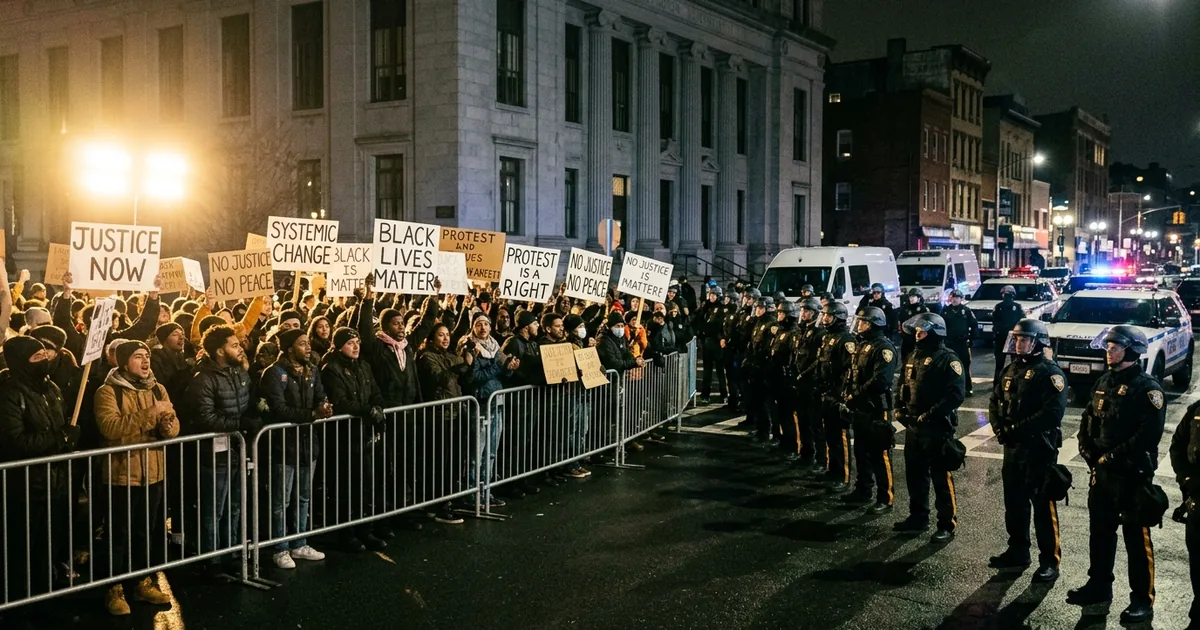
Newark Mayor Ras Baraka imposed a mandatory 9 p.m.-to-6 a.m. curfew Saturday night around the Delaney Hall detention facility after multiple nights of increasingly violent clashes between protesters, counter-protesters, and law enforcement.
New Jersey State Police have now taken operational control of the area surrounding the facility, displacing ICE agents who had been managing the perimeter.
How a Hunger Strike Became a Street Confrontation
The situation at Delaney Hall didn’t start with protests. It started with detainees. Over a week ago, people held inside the ICE facility launched a hunger strike, citing spoiled food served in small portions, medical needs going ignored, and conditions congressional members who toured the facility described as dire. The facility, a privately operated center in Newark’s Ironbound neighborhood, became a flashpoint for the broader national tension around immigration enforcement and detention conditions.
The hunger strike drew supporters to the facility gates. Then counter-protesters arrived. Then state police. By Saturday night, the situation had escalated through two consecutive nights of clashes that prompted the curfew order.
The Curfew and the Power Shift
The curfew applies to a half-mile radius around Delaney Hall, ABC7 New York reported, and will remain in effect “until further notice.” New Jersey Attorney General Jennifer Davenport confirmed the terms in a statement, and Governor Mikie Sherrill deployed state police to take over from ICE agents at the perimeter.
That last detail matters. The decision to have state police replace ICE agents was a deliberate de-escalation move, one that acknowledged the obvious: having the agency that runs the detention facility also policing the protests against it was creating an inherently adversarial dynamic. ICE agents agreed to stand down, which itself is an unusual concession for a federal agency that has generally resisted state-level oversight of its operations.
Mayor Baraka has positioned himself as one of the most vocal critics of federal immigration enforcement among big-city mayors, a stance that has repeatedly put Newark in the crosshairs of the Trump administration’s deportation push. The curfew is a pragmatic move to prevent further violence, but it also creates a new tension: civil liberties groups are already questioning whether a half-mile protest-free zone around a detention facility effectively suppresses the right to demonstrate.
The Broader Pattern
Delaney Hall isn’t happening in isolation. The protests follow months of escalating confrontations around ICE operations that have pushed into constitutionally fraught territory, from DNA collection at protest sites to the firing of immigration judges who ruled against administration priorities. The DHS shutdown crisis in March, which saw ICE agents deployed to airports as TSA officers quit en masse, deepened the institutional distrust that is now playing out on Newark’s streets.
What makes Delaney Hall different from previous ICE protest sites is the duration and the escalation. This isn’t a one-day demonstration. It’s entering its ninth day. The hunger strike inside and the protests outside are feeding each other’s momentum, and the introduction of organized counter-protesters has transformed what began as an advocacy action into a recurring street-level confrontation.
What Comes Next
The curfew buys time, but it doesn’t resolve anything. The detainees are still inside. The conditions that prompted the hunger strike haven’t changed. And the political dynamics pushing both sides toward escalation are only intensifying as the 2026 midterm campaign heats up.
For the immediate term, the question is whether state police can hold the perimeter without further violence, and whether the curfew survives a legal challenge. For the longer term, Delaney Hall is becoming a symbol of something the country has been avoiding: an honest conversation about what it means to detain people in conditions that elected officials, after seeing them firsthand, describe as inhumane. That conversation is now happening in the streets, and it isn’t going well.