
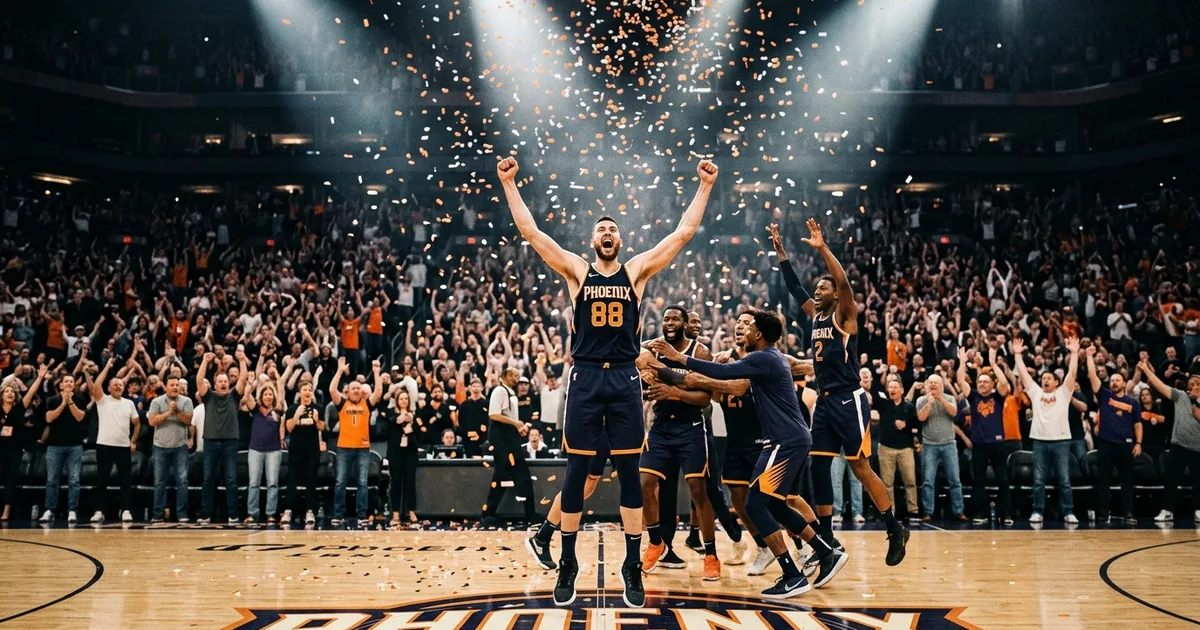
Victor Wembanyama scored 22 points and led the San Antonio Spurs to a 111-103 Game 7 road win over the Oklahoma City Thunder on Saturday night, punching the franchise’s ticket to the NBA Finals for the first time since 2014 and ending the defending champions’ repeat bid in the process.
The Numbers Tell One Story, the Context Tells a Bigger One
Across the seven-game Western Conference Finals series, Wembanyama averaged 27.3 points, 10.9 rebounds, 3.1 assists, 1.4 steals, and 2.7 blocks in 37.7 minutes per game. The NBA unanimously named him Western Conference Finals MVP, a distinction that surprised exactly no one who watched the series.
But the raw statistics don’t capture the structural shift. This is a 22-year-old in his third NBA season who just eliminated the league’s best regular-season team on their home floor in a winner-take-all game. The Thunder were the defending champions. They had the best record in the West. They had home-court advantage. None of it mattered.
San Antonio’s Rebuild Wasn’t Supposed to Work This Fast
The Spurs were supposed to be in the middle of a long rebuild. After the Tim Duncan/Tony Parker/Manu Ginobili dynasty ended and the Kawhi Leonard trade fractured the franchise’s identity, San Antonio bottomed out deliberately, tanking for the 2023 draft lottery and landing Wembanyama with the first overall pick. The standard timeline for a generational prospect: two years of development, then a playoff push in year four, maybe a contender by year five.
Wembanyama skipped the timeline. NPR reported that the French standout’s progression has been the fastest from draft to Finals appearance by a number-one pick since LeBron James, and James didn’t get there until his seventh season with a different team.
The 1999 Rematch Nobody Expected
The Finals matchup is San Antonio vs. New York, starting Wednesday night on ABC. It’s a rematch of the 1999 NBA Finals, when the Spurs beat the Knicks in five games to win the franchise’s first championship. That series launched the Duncan dynasty. This one could launch the Wembanyama era.
The Knicks, who fought through their own grinding Eastern Conference playoff run, represent a different kind of story: a big-market franchise that has been mostly irrelevant for two decades finally returning to the biggest stage. For fans following through streaming and digital platforms, the series represents the kind of live sports event that has reshaped how audiences consume real-time coverage. The contrast with San Antonio’s small-market model, built on scouting, development, and one transcendent draft pick, is the kind of narrative the NBA’s broadcast partners dream about.
What Makes Wembanyama Different
The easy comparison is to past unicorn big men: Hakeem Olajuwon, Kareem Abdul-Jabbar, even the early version of Kevin Garnett. But Wembanyama’s game doesn’t map cleanly onto any of them. At 7-foot-4 with a 8-foot wingspan, he defends the rim at an elite level while also spacing the floor as a legitimate three-point threat. He runs the break. He facilitates. The defensive versatility alone would make him a franchise cornerstone; the offensive package on top of it is what makes the Spurs legitimate title contenders in year three.
The Olympics.com profile of the series captured the emotional weight of the moment: Wembanyama was visibly moved after the final buzzer, embracing teammates and coaching staff in a scene that played as both personal milestone and franchise turning point.
For Oklahoma City, the loss stings on multiple levels. The Thunder were supposed to be the West’s dynasty-in-waiting, built around Shai Gilgeous-Alexander and a stockpile of draft capital. They might still be. But the lesson of Saturday night is that Wembanyama has compressed the competitive window in ways no front office can model. The Spurs didn’t just beat the Thunder. They announced that the balance of power in the Western Conference has already shifted, and the kid from France is the reason why.