
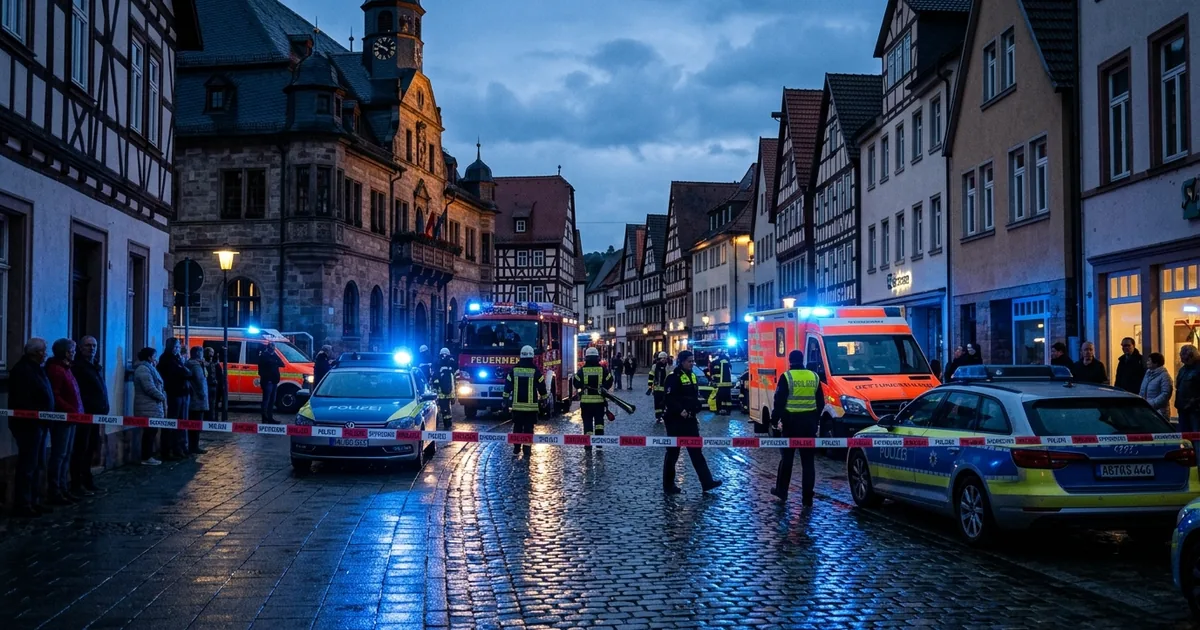
A gunman killed five people at a youth center in Stade, a town of roughly 50,000 west of Hamburg in northern Germany, before being detained by police on Sunday.
The motive remains unclear, and investigators have released few details about the suspect or the victims, but the sheer scale of the violence at a community space has already shaken a country that prides itself on tight firearms regulation.
What Happened in Stade
Police in Luneburg confirmed that five people died in the shooting, which took place at a youth center in central Stade. A male suspect was detained at or near the scene, though authorities have not released his name, age, or any information about his connection to the location. Euronews reported Sunday that a large emergency response had been deployed across the area.
The Luneburg police headquarters posted on the social media platform X urging the public to avoid the area around the youth center as investigators worked the scene. Early reports from some outlets referenced the possibility of multiple suspects, but police have not confirmed that detail as of Sunday afternoon.
A Pattern Europe Cannot Ignore
Mass shootings in Germany are rare by global standards, but they are not unheard of, and each one reopens questions about how such events penetrate a regulatory framework designed to prevent them. Germany’s firearms laws are among the strictest in Europe, requiring background checks, mental health assessments, and demonstrated need for gun ownership. When the system fails, the failure demands explanation.
The shooting comes at the end of a devastating weekend for Europe. Just a day earlier, a skydiving plane crashed near Nancy, France, killing all 11 people on board, and a helicopter crash in Saudi Arabia killed 14. The clustering of mass-casualty events across the continent will test emergency response systems and political patience alike.
Why a Youth Center Matters
The location is as important as the body count. Youth centers in German towns like Stade are municipal institutions: gathering places for teenagers, social workers, and community programs. They are, by design, accessible and open. An attack on one strikes at the fabric of local civic life in a way that a workplace or domestic incident does not.
That distinction matters for how German authorities and the public process what happened. If the suspect had a connection to the center, whether as a former participant, employee, or someone denied services, the investigation will focus on institutional safeguards and whether warning signs were missed. If the attack was random, the political conversation shifts to broader security posture and the limits of prevention in open democratic spaces.
What Comes Next
German federal and state officials will face immediate pressure to explain how the suspect obtained a firearm and whether any red flags were documented before Sunday. RTE reported that the motive remains entirely unclear, which means the investigation is in its earliest phase.
Stade is a quiet town. It sits on the Elbe River, known more for its half-timbered old town and its role as a commuter suburb of Hamburg than for violent crime. That ordinariness is precisely what makes this shooting so disorienting for residents and so politically charged for a country already navigating rising tensions over migration, security, and the social safety net.
The victims have not been identified. Their families are waiting. The suspect is in custody. The questions that will define this story, why this person, why this place, why now, have not been answered yet. They will be.