
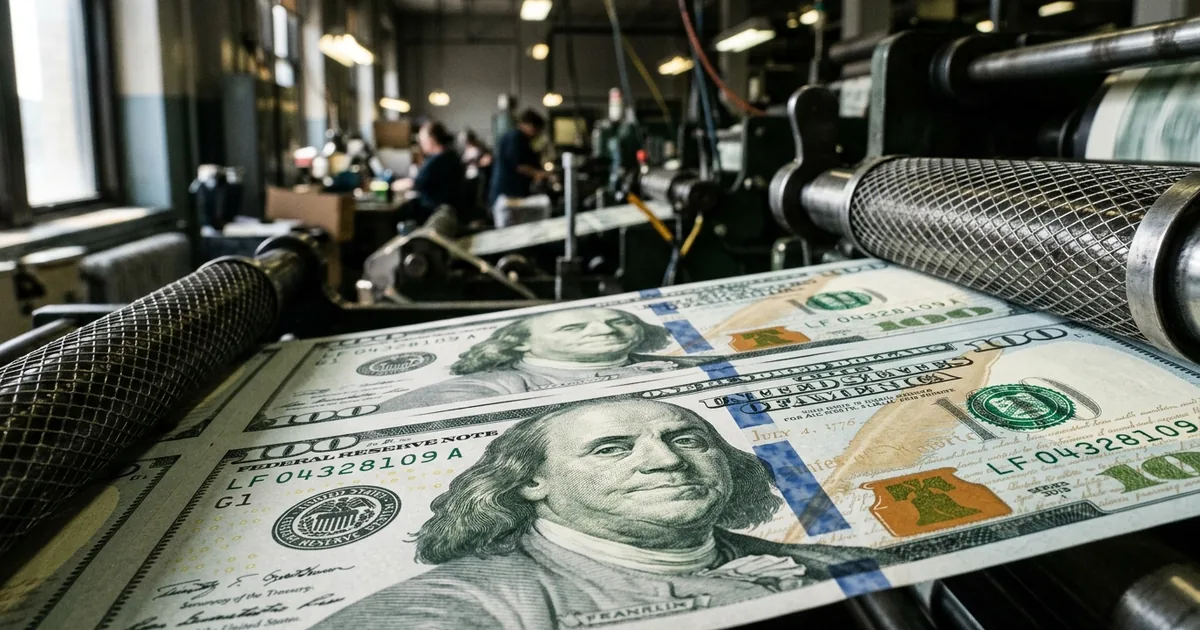
Treasury Secretary Scott Bessent unveiled a proposed $250 bill featuring President Trump’s face in late May, framed as a tribute to the nation’s 250th anniversary in July.
The idea has run into something the administration did not expect: resistance from its own base. A YouGov poll found that roughly 26 percent of MAGA loyalists oppose putting Trump on currency, while only 48 percent approve, a weak showing for a president who rarely struggles with his core supporters.
The Legal Barrier Is Real
Federal law currently prohibits living people from appearing on U.S. currency, a restriction that has been in place for over 160 years. The last time a living American appeared on paper money was during the Civil War, and Congress enacted the ban specifically to prevent the kind of political self-promotion that this proposal represents.
For Bessent’s design to become reality, Congress would need to pass new legislation. Rep. Joe Wilson of South Carolina introduced a bill last year directing the Bureau of Engraving and Printing to produce $250 notes with Trump’s portrait, but the legislation has not advanced through committee. With Democrats uniformly opposed and Republicans split, the math does not work without significant arm-twisting.
Jeffries Called It What It Is
Democratic Minority Leader Hakeem Jeffries did not mince words. “Hard No on a Trump $250 bill. Get over yourself,” he wrote on X. “The upcoming July 4 anniversary is not about a wannabe King. It’s about celebrating the American journey.”
The framing matters here. The administration positioned the bill as a Semiquincentennial tribute, but critics point out that no previous president has pushed to put their own face on currency while still in office. The tradition of honoring deceased leaders on money exists precisely to avoid turning the dollar into a political loyalty test.
The Practical Problems Nobody Is Talking About
Beyond the politics, a $250 denomination raises genuine practical questions. The U.S. has not introduced a new bill denomination since the $100 note became the largest circulating bill after the Treasury discontinued the $500 through $10,000 bills in 1969. Currency experts have questioned who would actually use a $250 bill, since it falls awkwardly between the $100 bill that dominates cash transactions and the electronic payments that have replaced high-denomination notes entirely.
A Northeastern University analysis noted that the bill could complicate cash-handling systems at banks and retailers, which are calibrated for existing denominations. Vending machines, ATMs, and cash registers would all need modifications. The practical infrastructure cost of introducing a new denomination has not been addressed in any of the administration’s public statements.
The MAGA Split Is the Interesting Part
The 26 percent opposition within Trump’s own base is the number that should worry the White House. Trump’s approval rating among self-identified MAGA supporters rarely dips below 85 percent on policy questions. A quarter of that base pushing back on a symbolic gesture suggests even loyalists have a threshold for what feels like vanity over governance.
The Axios analysis of the YouGov data showed that the strongest opposition came from MAGA supporters under 35, who viewed the bill as unnecessary when the administration should be focused on the economy and immigration. The generational split within the base is a dynamic that does not get enough attention.
A Snopes investigation also examined reports that a senior Treasury official was fired after internally opposing the bill’s production timeline. The Treasury Department has not confirmed or denied the account, which only deepens questions about how much internal pushback the proposal generated before it went public.
Whether or not the $250 bill ever reaches a wallet, it has already revealed something about the limits of political branding. There is a line between honoring a leader and building a personality cult around one, and Trump’s own supporters are telling him he is getting close to it.